
September 11, 2026
Ready to increase your revenue?
Join thousands of ecommerce brands using PostPilot to acquire more customers & keep them coming back again (and again).
No contracts. No minimums.


What do telephones, TVs, cars, and sliced bread have in common? They’re all more recent inventions than direct marketing.
While the term was officially coined in 1967 by the “father of direct marketing” Lester Wunderman, direct marketing has existed in some form since 1,000 B.C. Now, we’re not sure how many of you reading this are history buffs, but that’s an extremely long time.
Yet over the last 15+ years, ecommerce brands have built their acquisition stacks almost entirely around digital, with paid social, email, and retargeting pixels becoming the norm.
Things were great… until they weren’t.
iOS 14.5 happened. Cookies died. Privacy regulations got stricter.
This all had a massive impact:
Meta CPMs hit $10.88 in Q1 2025, up 19.2% YoY
Saying things have changed in digital marketing would be an understatement, but don’t light those funeral pyres just yet. Digital isn’t dead, but it does need some help.
And who better to answer the call than our 3,000+ year-old friend, direct marketing?
It’s not a replacement.
But going back to basics with 1:1 direct marketing, this time with a modern twist, is the perfect complement to digital in your acquisition strategy.
In the spirit of topical alignment, we’ll be direct with our definition of direct marketing: the tactic of reaching specific people with specific messages to drive a measurable action.
The channel used varies, but at its core, direct marketing relies on targeting a specific customer to take action, such as clicking, purchasing, or signing up.
If this was a bit too direct for you, we’ve got you! We wrote the definitive guide on direct marketing if you want a comprehensive breakdown.
For a long time, digital was the marketing playbook. It practically wrote itself: run Meta ads, capture emails, retarget cart abandoners. Rinse, repeat, scale.
Then the foundation started to crack:
So what does all of this doom and gloom actually mean?
It means brands are paying more to reach fewer people, with far less reliability. They’re fighting for attention amidst a sea of constant digital noise: 61% of smartphone use occurs alongside the usage of another device, and the average customer receives 46 push notifications a day.
Years ago, out-of-home marketing became oversaturated. Today, the same thing is happening with digital.
Now, this doesn’t mean you should slash your digital budget and bust out the branded hot air balloons. But it does mean it’s important to start thinking outside the (in)box.
Brands that are successfully navigating direct response marketing aren’t abandoning digital, they’re complementing it. It’s the perfect first touchpoint in a deliberately sequenced stack that both brings things back to basics and moves the needle forward.
Let’s explore some brands that are actually doing this and finding success with omnichannel direct marketing in 2026.
Email, paid search, and SMS aren’t broken. They’re just not enough on their own anymore.
This article isn’t about direct marketing vs digital marketing, it’s about how they can complement each other: With the right marketing flow, they’re still powerful initial touchpoints for getting customers into your funnel.
The best brands are rethinking their “traditional” use cases and using each one differently:
Digital has shifted to being a fantastic starting point in a direct marketing flow, letting you cast a wide and targeted net. But you shouldn’t stop there.
When subscribers stop opening emails, and cart abandoners are ghosting your texts, you can then retarget them through other tactics like… (drum roll) direct mail.
And that’s where this next tactic picks up.
During the digital boom, inboxes started overflowing while actual mailboxes started drying up.
These days, receiving something physical and tangible in the mail is almost a novelty and can help you stand out from the crowd.
All of this points to the same conclusion: in 2026, direct mail is more than a nostalgia play – it’s a strategic layer in your marketing flow.
For example, you can trigger direct mail through your always-on cart abandonment flow after the final email is sent, but the conversion fails. Direct mail has also become a powerful way to adjust marketing strategy in the wake of tightening privacy laws, with 85% of marketers adjusting their strategy and reallocating budget to direct mail due to data privacy concerns.
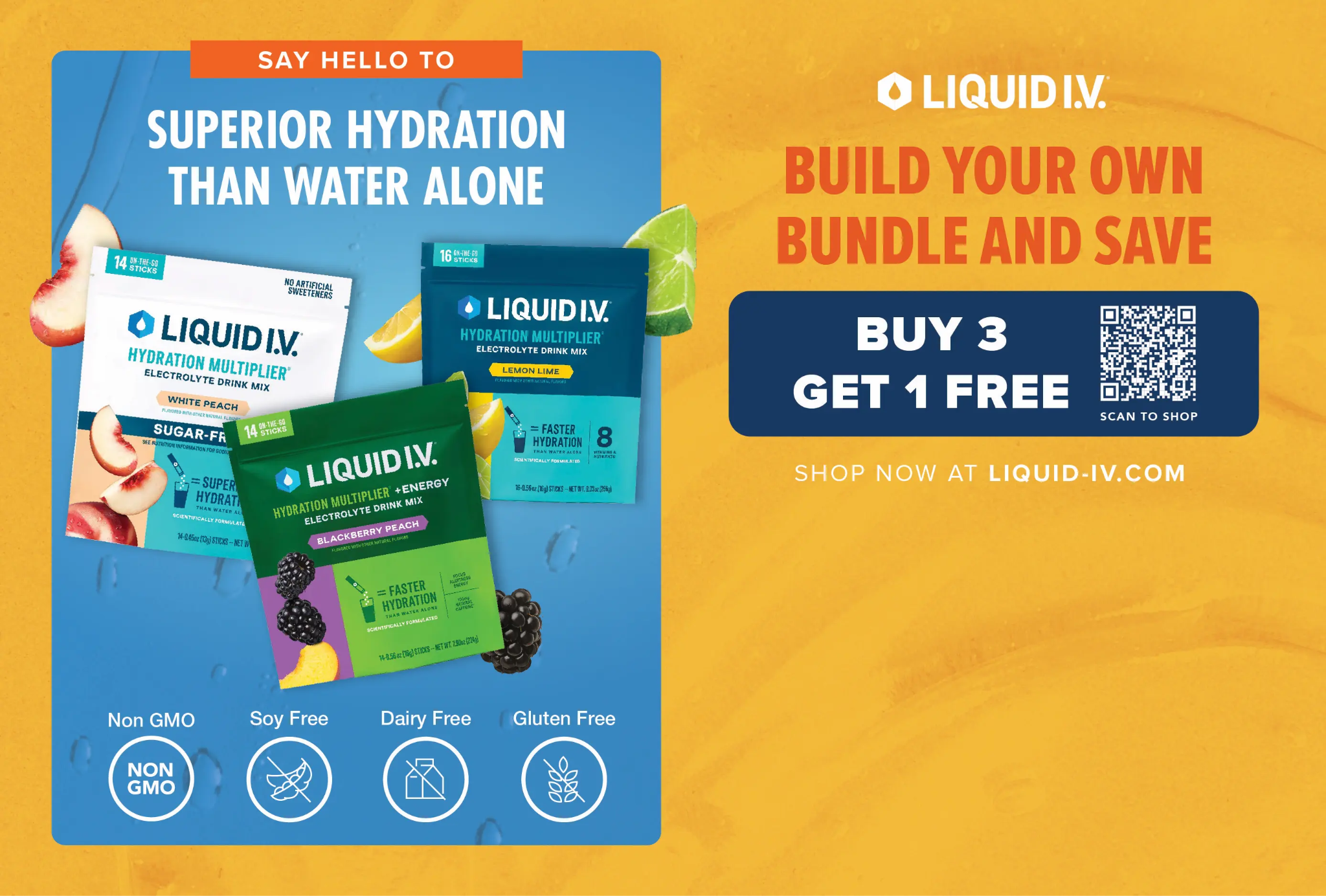
There are 3 major direct mail formats that brands are seeing success with in 2026: postcards, handwritten notes, and Cardalogs™.
Sometimes it’s fun to get carded!
Postcards are the main element of any direct mail program and are typically sized at either 4x6 or 6x9. At PostPilot, our creative team will design your postcards for you, or you can build them from your existing assets.
Postcards are a great tool for retargeting, cart abandonment, winbacks, and seasonal campaigns – and sending them out couldn’t be easier.
Rest assured, you won’t be manually writing out addresses and heading to the post office. Through PostPilot, postcards are triggered automatically via our native Klaviyo and Shopify integrations.
When a customer hits a cart abandonment threshold, lapses past an RFM window, falls out of a welcome flow, or hits whatever other milestone you’ve deemed postcard-worthy, a postcard is sent out without any manual intervention.
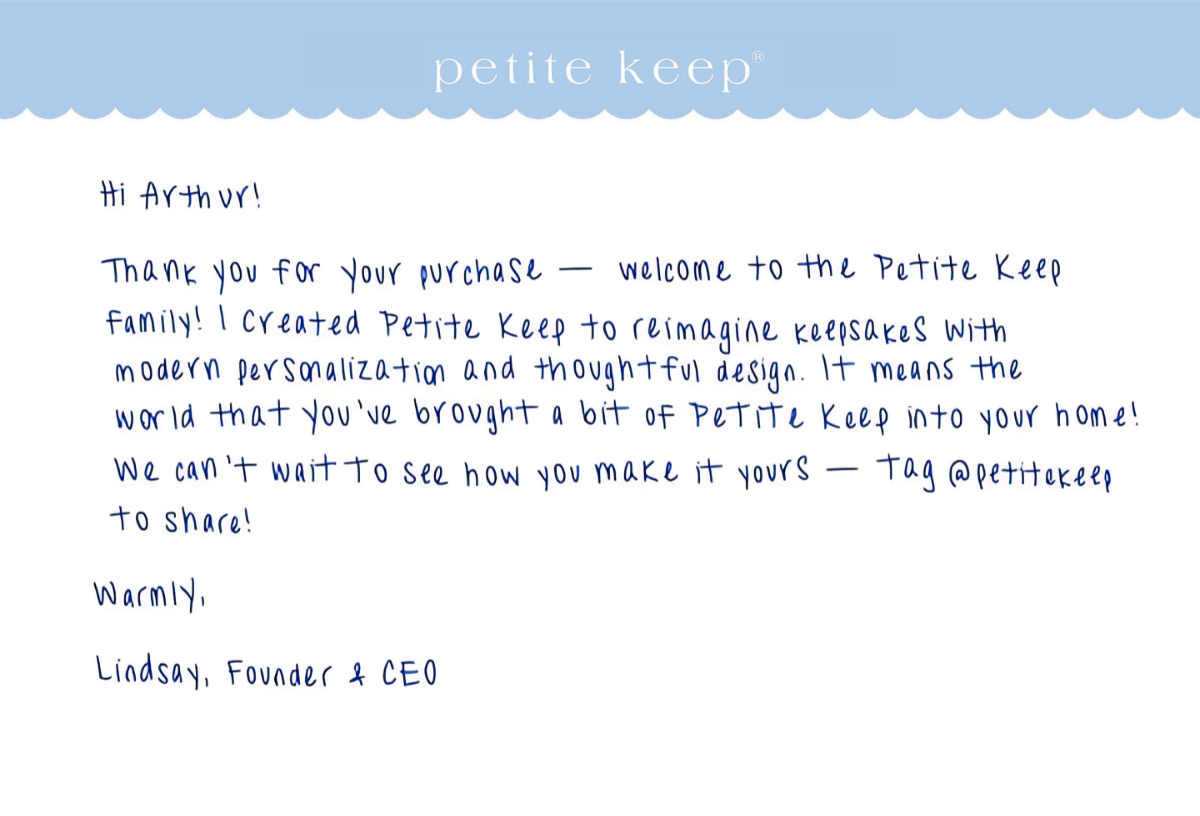
In life, handwritten notes are special. In marketing, they should be too. They’re not for everyone, and that’s the point.
PostPilot’s handwritten cards are produced at scale, but look and feel genuinely personal – real pen, real ink, and a real sense of individuality. They signal effort and add a human touch that can build loyalty and strengthen brand connection.
With this in mind, you don’t want to go the way of the Beanie Baby and produce these en masse – that will lessen the impact. Instead, reserve handwritten notes for your highest-LTV customers, meaningful post-purchase moments, or re-engaging a lapsed VIP who’s ignored every email.
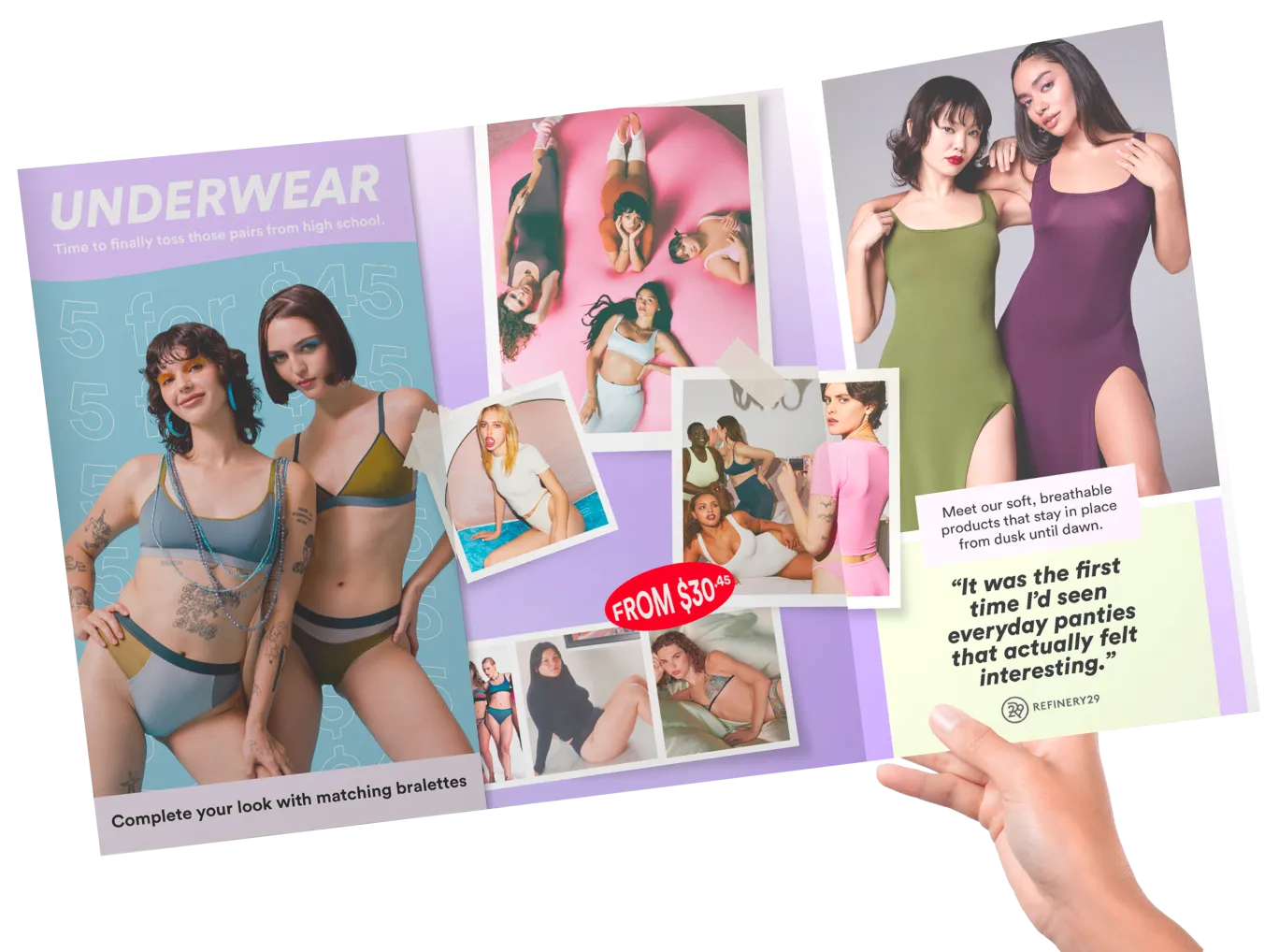
As much fun as flipping through a Sears catalog used to be, that format isn’t practical anymore – for customers or for brands.
Cardalogs™, PostPilot’s proprietary format, are our 2026-ified take on catalogs. They sit between a postcard and a full catalog: multi-panel, product-rich, and designed to be kept rather than tossed.
They pair naturally with SiteMatch™, allowing you to reach anonymous visitors who browsed but never converted, giving them something tangible to come back to on their own timeline.
Cardalogs are a strong solution for brands with longer consideration cycles, where purchase decisions take days or weeks and staying top-of-mind matters – think high-end home goods, premium apparel, or wellness equipment.
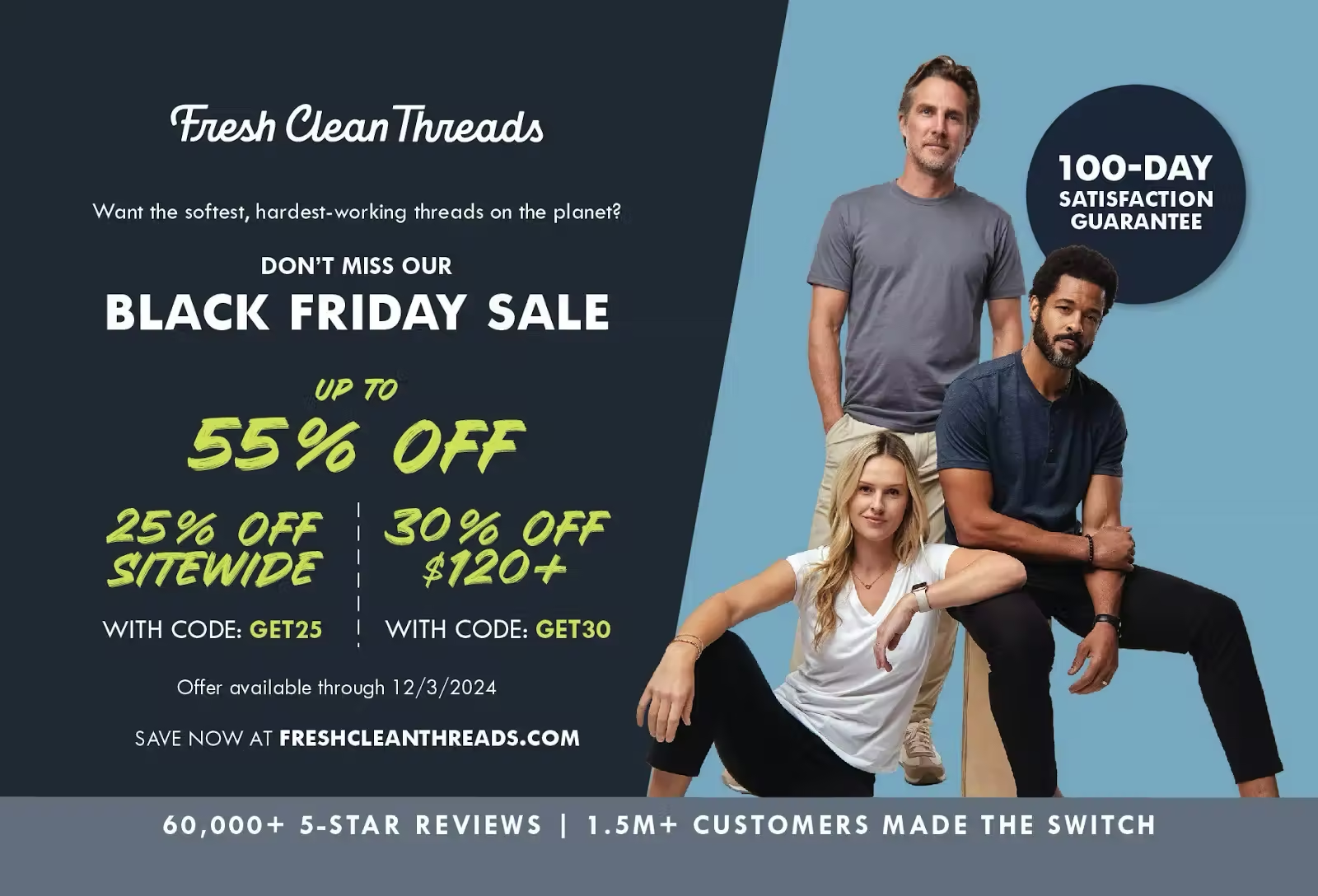
Fresh Clean Threads redefined what high-quality t-shirts could (and should) be, and now they’re redefining what direct mail can do too.
Using MailMatch™, FCT extended their Klaviyo welcome flow by adding a physical touchpoint for subscribers who progressed through the sequence but didn’t convert. Instead of letting those high-intent users get lost in inbox noise, they re-engaged them through direct mail.
They also utilized MailMatch during Black Friday/Cyber Monday, providing a welcome respite from the digital onslaught that customers face during the holiday season.
The result? A fresh, clean 6.34x incremental ROAS.
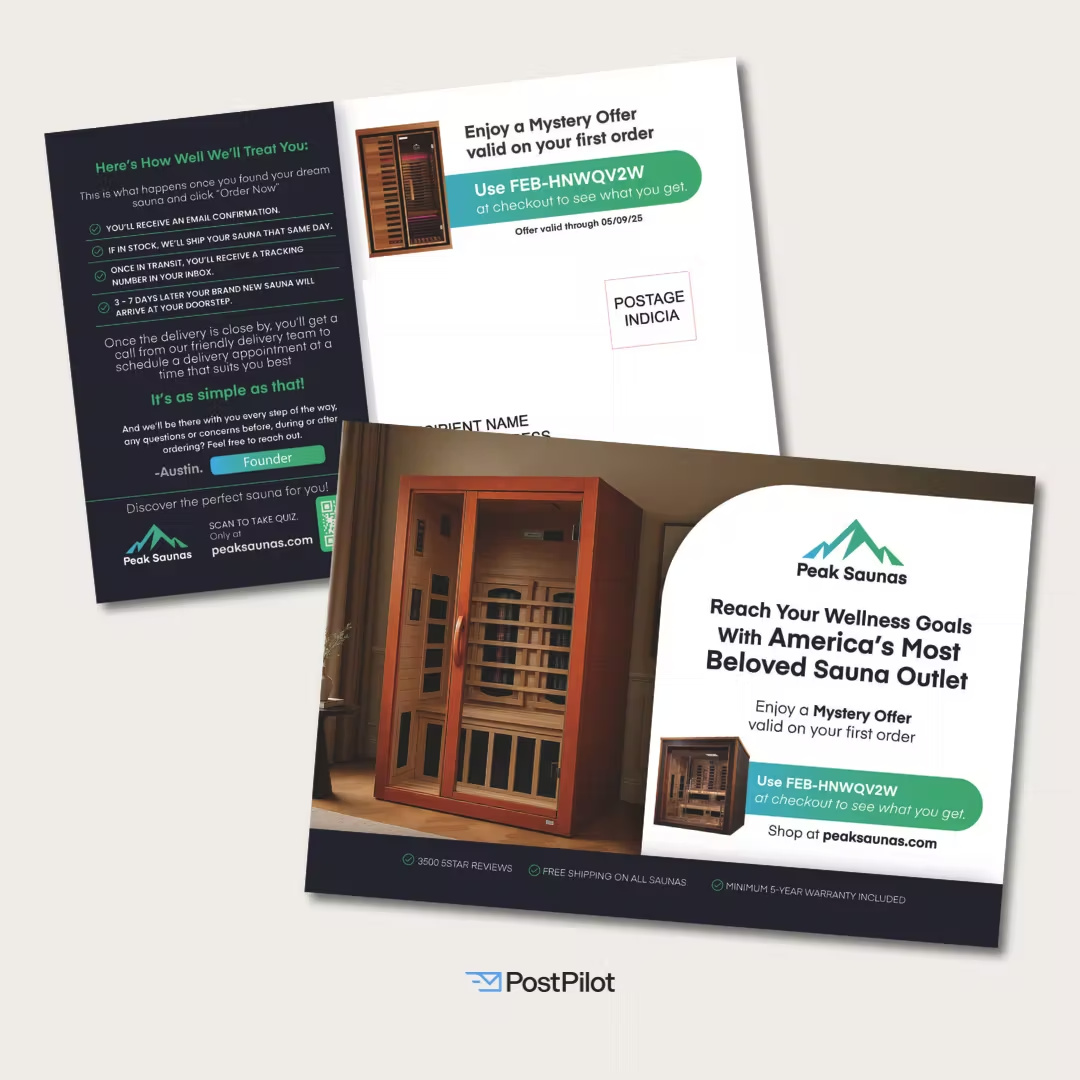
Peak Saunas sells medical-grade infrared saunas at a price point that comes in pretty hot: $5,000+ AOV. It’s no surprise that their customers want to take their time and do some in-depth research before taking the plunge.
To heat things up faster than any digital channel could, Peak Saunas used SiteMatch™ to retarget anonymous site visitors with postcards – before they even subscribed with their email.
They also layered in a mid-welcome-flow postcard using PostPilot’s native Klaviyo integration, automatically sending a postcard if a prospect didn’t convert within three days of signing up.
The results speak for themselves: SiteMatch drove an 18.08x ROAS, while MailMatch campaigns delivered 25x+ ROAS.
A little loyalty goes a long way.
Keeping your loyal customers coming back and transforming them into a referral engine remains the most cost-effective customer acquisition strategy for brands, and a strong loyalty program is great for retention too.
We’re not just throwing out buzzwords either: Antavo's 2025 Global Customer Loyalty Report found that top-performing loyalty programs now achieve 7.2x ROI. These results are driven by personalization, gamification, and experiential rewards – not discounts alone. Referral programs compound this further, converting at 3–5x the rate of paid ads, with referred customers being 37% less likely to churn.
In 2026, brands are continuing to move the needle and run loyalty and referral differently. Here’s what’s working:
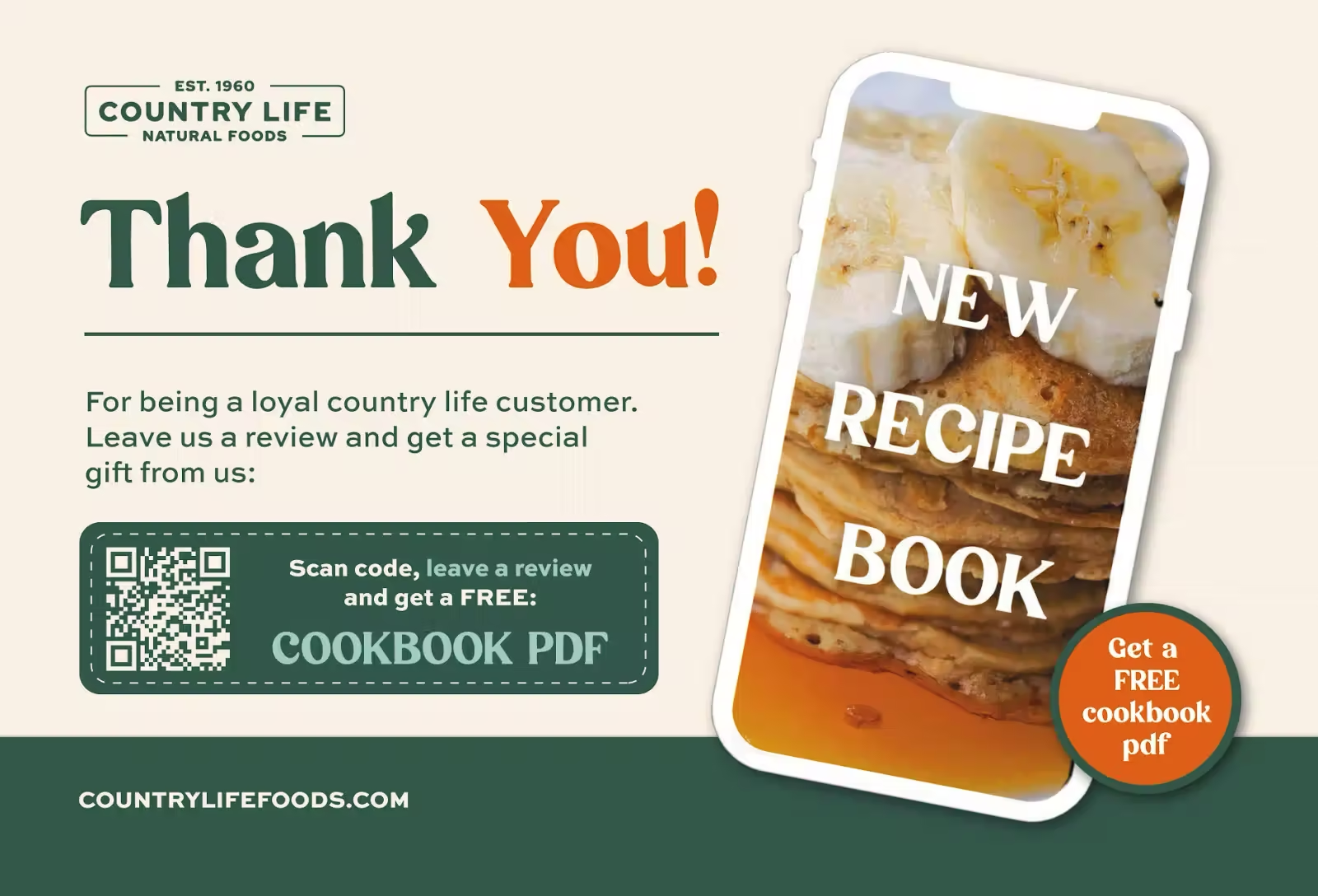
Country Life Natural Foods are, well, naturals when it comes to loyalty strategy. Working with PostPilot, they cooked up a delicious loyalty offer: a cookbook!
CLNF automatically sent postcards to high-value customers who had made three or more purchases, offering a free cookbook in exchange for a Google review.
This approach served multiple purposes: it reinforced repeat purchasing behavior, helped them drive an important metric (Google reviews), and rewarded customers with an exclusive item.
Many brands treat retention marketing as purely reactive: winback emails for lapsed customers or VIPs, abandoned cart reminders, or discounts before they churn. It’s an understandable conclusion – but it's not entirely accurate.
Surprise and delight flips this concept on its head: it’s proactive, unexpected, and can make a lasting impression. Think of it as a retention tactic before a customer ever shows signs of lapsing.
More brands are adopting this approach in 2026, and the ones doing it best are going further than you might expect:
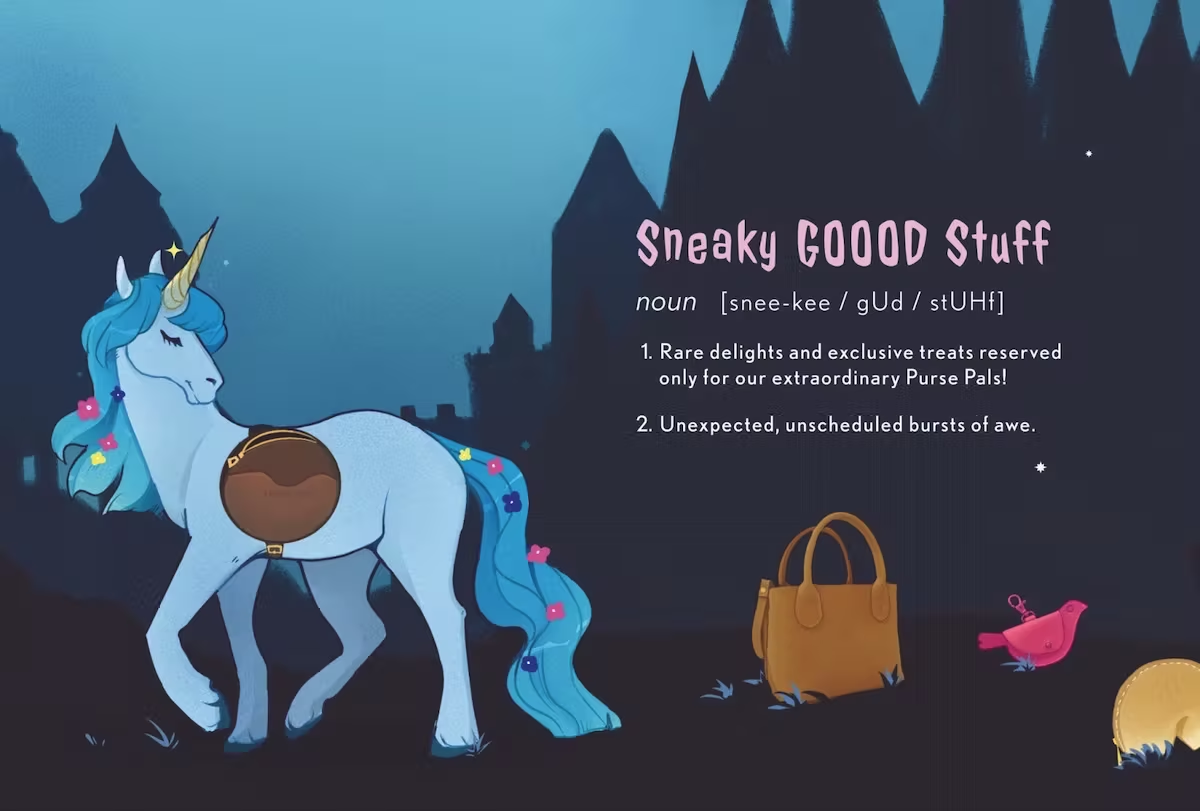
Staying on-brand, the fine folks at Portland Leather Goods are executing surprise and delight tactics in style. Their delight-driven “Unicorn Whisperer” and VIP birthday flows send customers surprise postcards with exclusive discounts and offers.
These tactics are part of a full-funnel program that has generated 8 figures in revenue, with a single birthday automation alone driving 7-figure revenue at 15x+ ROI.
Portland Leather Goods? More like Portland Leather Great (at Retention).
The channel mix has shifted because attention has shifted. Digital-only is no longer the solution.
Our inboxes are overloaded, with the average person receiving anywhere from 100 to 120 emails per day, and it’s continuing to become more expensive to compete for attention in an increasingly chaotic space.
Physical, personal, and direct marketing tactics are what stand out now.
That mailbox is starting to look a little more appealing, right?
It’s not just about conversions anymore. It’s about relationships.
The brands that figured this out early aren’t just seeing better ROAS, they’re building lasting customer relationships that no competitor ad spend can buy back.
One thing email is still great for is getting in touch with us about direct marketing. Direct your direct marketing questions our way, and let’s chat about how direct marketing can work for you.
What do telephones, TVs, cars, and sliced bread have in common? They’re all more recent inventions than direct marketing.
While the term was officially coined in 1967 by the “father of direct marketing” Lester Wunderman, direct marketing has existed in some form since 1,000 B.C. Now, we’re not sure how many of you reading this are history buffs, but that’s an extremely long time.
Yet over the last 15+ years, ecommerce brands have built their acquisition stacks almost entirely around digital, with paid social, email, and retargeting pixels becoming the norm.
Things were great… until they weren’t.
iOS 14.5 happened. Cookies died. Privacy regulations got stricter.
This all had a massive impact:
Meta CPMs hit $10.88 in Q1 2025, up 19.2% YoY
Saying things have changed in digital marketing would be an understatement, but don’t light those funeral pyres just yet. Digital isn’t dead, but it does need some help.
And who better to answer the call than our 3,000+ year-old friend, direct marketing?
It’s not a replacement.
But going back to basics with 1:1 direct marketing, this time with a modern twist, is the perfect complement to digital in your acquisition strategy.
In the spirit of topical alignment, we’ll be direct with our definition of direct marketing: the tactic of reaching specific people with specific messages to drive a measurable action.
The channel used varies, but at its core, direct marketing relies on targeting a specific customer to take action, such as clicking, purchasing, or signing up.
If this was a bit too direct for you, we’ve got you! We wrote the definitive guide on direct marketing if you want a comprehensive breakdown.
For a long time, digital was the marketing playbook. It practically wrote itself: run Meta ads, capture emails, retarget cart abandoners. Rinse, repeat, scale.
Then the foundation started to crack:
So what does all of this doom and gloom actually mean?
It means brands are paying more to reach fewer people, with far less reliability. They’re fighting for attention amidst a sea of constant digital noise: 61% of smartphone use occurs alongside the usage of another device, and the average customer receives 46 push notifications a day.
Years ago, out-of-home marketing became oversaturated. Today, the same thing is happening with digital.
Now, this doesn’t mean you should slash your digital budget and bust out the branded hot air balloons. But it does mean it’s important to start thinking outside the (in)box.
Brands that are successfully navigating direct response marketing aren’t abandoning digital, they’re complementing it. It’s the perfect first touchpoint in a deliberately sequenced stack that both brings things back to basics and moves the needle forward.
Let’s explore some brands that are actually doing this and finding success with omnichannel direct marketing in 2026.
Email, paid search, and SMS aren’t broken. They’re just not enough on their own anymore.
This article isn’t about direct marketing vs digital marketing, it’s about how they can complement each other: With the right marketing flow, they’re still powerful initial touchpoints for getting customers into your funnel.
The best brands are rethinking their “traditional” use cases and using each one differently:
Digital has shifted to being a fantastic starting point in a direct marketing flow, letting you cast a wide and targeted net. But you shouldn’t stop there.
When subscribers stop opening emails, and cart abandoners are ghosting your texts, you can then retarget them through other tactics like… (drum roll) direct mail.
And that’s where this next tactic picks up.
During the digital boom, inboxes started overflowing while actual mailboxes started drying up.
These days, receiving something physical and tangible in the mail is almost a novelty and can help you stand out from the crowd.
All of this points to the same conclusion: in 2026, direct mail is more than a nostalgia play – it’s a strategic layer in your marketing flow.
For example, you can trigger direct mail through your always-on cart abandonment flow after the final email is sent, but the conversion fails. Direct mail has also become a powerful way to adjust marketing strategy in the wake of tightening privacy laws, with 85% of marketers adjusting their strategy and reallocating budget to direct mail due to data privacy concerns.
There are 3 major direct mail formats that brands are seeing success with in 2026: postcards, handwritten notes, and Cardalogs™.
Sometimes it’s fun to get carded!
Postcards are the main element of any direct mail program and are typically sized at either 4x6 or 6x9. At PostPilot, our creative team will design your postcards for you, or you can build them from your existing assets.
Postcards are a great tool for retargeting, cart abandonment, winbacks, and seasonal campaigns – and sending them out couldn’t be easier.
Rest assured, you won’t be manually writing out addresses and heading to the post office. Through PostPilot, postcards are triggered automatically via our native Klaviyo and Shopify integrations.
When a customer hits a cart abandonment threshold, lapses past an RFM window, falls out of a welcome flow, or hits whatever other milestone you’ve deemed postcard-worthy, a postcard is sent out without any manual intervention.
In life, handwritten notes are special. In marketing, they should be too. They’re not for everyone, and that’s the point.
PostPilot’s handwritten cards are produced at scale, but look and feel genuinely personal – real pen, real ink, and a real sense of individuality. They signal effort and add a human touch that can build loyalty and strengthen brand connection.
With this in mind, you don’t want to go the way of the Beanie Baby and produce these en masse – that will lessen the impact. Instead, reserve handwritten notes for your highest-LTV customers, meaningful post-purchase moments, or re-engaging a lapsed VIP who’s ignored every email.
As much fun as flipping through a Sears catalog used to be, that format isn’t practical anymore – for customers or for brands.
Cardalogs™, PostPilot’s proprietary format, are our 2026-ified take on catalogs. They sit between a postcard and a full catalog: multi-panel, product-rich, and designed to be kept rather than tossed.
They pair naturally with SiteMatch™, allowing you to reach anonymous visitors who browsed but never converted, giving them something tangible to come back to on their own timeline.
Cardalogs are a strong solution for brands with longer consideration cycles, where purchase decisions take days or weeks and staying top-of-mind matters – think high-end home goods, premium apparel, or wellness equipment.
Fresh Clean Threads redefined what high-quality t-shirts could (and should) be, and now they’re redefining what direct mail can do too.
Using MailMatch™, FCT extended their Klaviyo welcome flow by adding a physical touchpoint for subscribers who progressed through the sequence but didn’t convert. Instead of letting those high-intent users get lost in inbox noise, they re-engaged them through direct mail.
They also utilized MailMatch during Black Friday/Cyber Monday, providing a welcome respite from the digital onslaught that customers face during the holiday season.
The result? A fresh, clean 6.34x incremental ROAS.
Peak Saunas sells medical-grade infrared saunas at a price point that comes in pretty hot: $5,000+ AOV. It’s no surprise that their customers want to take their time and do some in-depth research before taking the plunge.
To heat things up faster than any digital channel could, Peak Saunas used SiteMatch™ to retarget anonymous site visitors with postcards – before they even subscribed with their email.
They also layered in a mid-welcome-flow postcard using PostPilot’s native Klaviyo integration, automatically sending a postcard if a prospect didn’t convert within three days of signing up.
The results speak for themselves: SiteMatch drove an 18.08x ROAS, while MailMatch campaigns delivered 25x+ ROAS.
A little loyalty goes a long way.
Keeping your loyal customers coming back and transforming them into a referral engine remains the most cost-effective customer acquisition strategy for brands, and a strong loyalty program is great for retention too.
We’re not just throwing out buzzwords either: Antavo's 2025 Global Customer Loyalty Report found that top-performing loyalty programs now achieve 7.2x ROI. These results are driven by personalization, gamification, and experiential rewards – not discounts alone. Referral programs compound this further, converting at 3–5x the rate of paid ads, with referred customers being 37% less likely to churn.
In 2026, brands are continuing to move the needle and run loyalty and referral differently. Here’s what’s working:
Country Life Natural Foods are, well, naturals when it comes to loyalty strategy. Working with PostPilot, they cooked up a delicious loyalty offer: a cookbook!
CLNF automatically sent postcards to high-value customers who had made three or more purchases, offering a free cookbook in exchange for a Google review.
This approach served multiple purposes: it reinforced repeat purchasing behavior, helped them drive an important metric (Google reviews), and rewarded customers with an exclusive item.
Many brands treat retention marketing as purely reactive: winback emails for lapsed customers or VIPs, abandoned cart reminders, or discounts before they churn. It’s an understandable conclusion – but it's not entirely accurate.
Surprise and delight flips this concept on its head: it’s proactive, unexpected, and can make a lasting impression. Think of it as a retention tactic before a customer ever shows signs of lapsing.
More brands are adopting this approach in 2026, and the ones doing it best are going further than you might expect:
Staying on-brand, the fine folks at Portland Leather Goods are executing surprise and delight tactics in style. Their delight-driven “Unicorn Whisperer” and VIP birthday flows send customers surprise postcards with exclusive discounts and offers.
These tactics are part of a full-funnel program that has generated 8 figures in revenue, with a single birthday automation alone driving 7-figure revenue at 15x+ ROI.
Portland Leather Goods? More like Portland Leather Great (at Retention).
The channel mix has shifted because attention has shifted. Digital-only is no longer the solution.
Our inboxes are overloaded, with the average person receiving anywhere from 100 to 120 emails per day, and it’s continuing to become more expensive to compete for attention in an increasingly chaotic space.
Physical, personal, and direct marketing tactics are what stand out now.
That mailbox is starting to look a little more appealing, right?
It’s not just about conversions anymore. It’s about relationships.
The brands that figured this out early aren’t just seeing better ROAS, they’re building lasting customer relationships that no competitor ad spend can buy back.
One thing email is still great for is getting in touch with us about direct marketing. Direct your direct marketing questions our way, and let’s chat about how direct marketing can work for you.

Join thousands of ecommerce brands using PostPilot to acquire more customers & keep them coming back again (and again).
No contracts. No minimums.