
October 16, 2026
Ready to increase your revenue?
Join thousands of ecommerce brands using PostPilot to acquire more customers & keep them coming back again (and again).
No contracts. No minimums.


Black Friday marketing is like a digital Times Square. Everyone’s competing for attention with louder messages, brighter promos, and bigger discounts. Frankly, it’s a whole lot of noise.
But the answer often isn’t louder. Rarely is it another email, text, or another 10% off.
It’s reaching the right customer with an offer that's actually relevant to them, with a message that feels meant for them.
And that's where Black Friday direct mail comes in.
Unlike a blanket promotion, these campaigns can be built around who's receiving them, what they've purchased, and how likely they are to buy again.
Here are our favorite Black Friday direct mail campaigns Shopify brands can borrow and make their own this holiday season, including real examples from brands using PostPilot to turn customer data into profitable purchases.
Before you design a single postcard, figure out who you're sending it to.
A shopper who's been considering their first order has different motivations than a customer who already owns half your product catalog.
The best BFCM direct mail campaigns start with knowing that distinction.
Your best customers already know your brand. They've purchased before, and they've told you loud and clear they're willing to spend.
So you shouldn't have to convince them you're worth buying from; they already know that. Instead, your goal is to make them feel valued and give them a compelling reason to return right now.
Who to target: High-LTV customers, frequent repeat purchasers, and your top-spending VIP segments.
Your best customers shouldn't find out about your Black Friday promotion at the same time as everyone else. Make them feel like insiders. Give them the kind of early heads-up you'd drop in your best friends' group chat.
Example A: Pourri moved quickly, and their sales moved quicker.
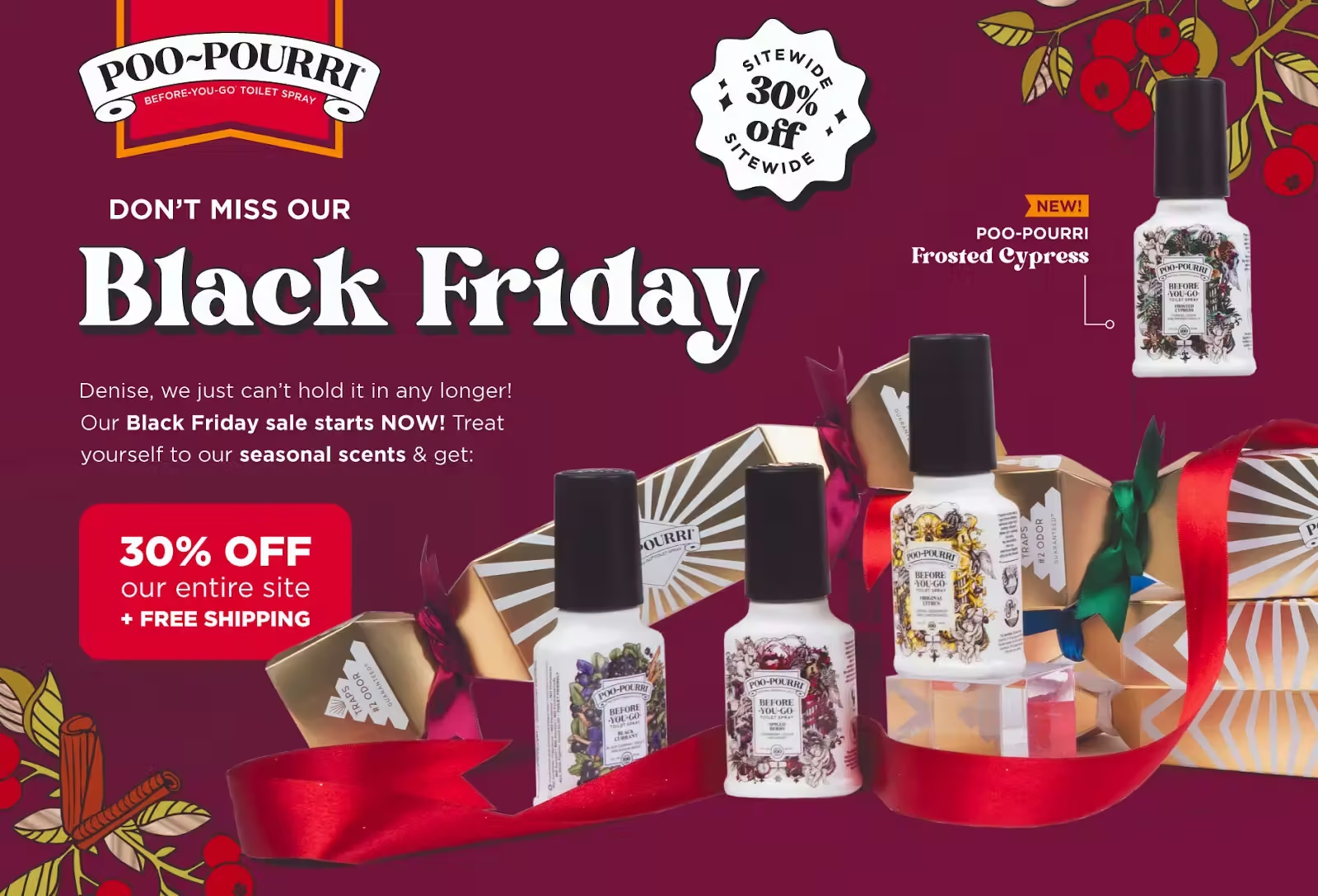
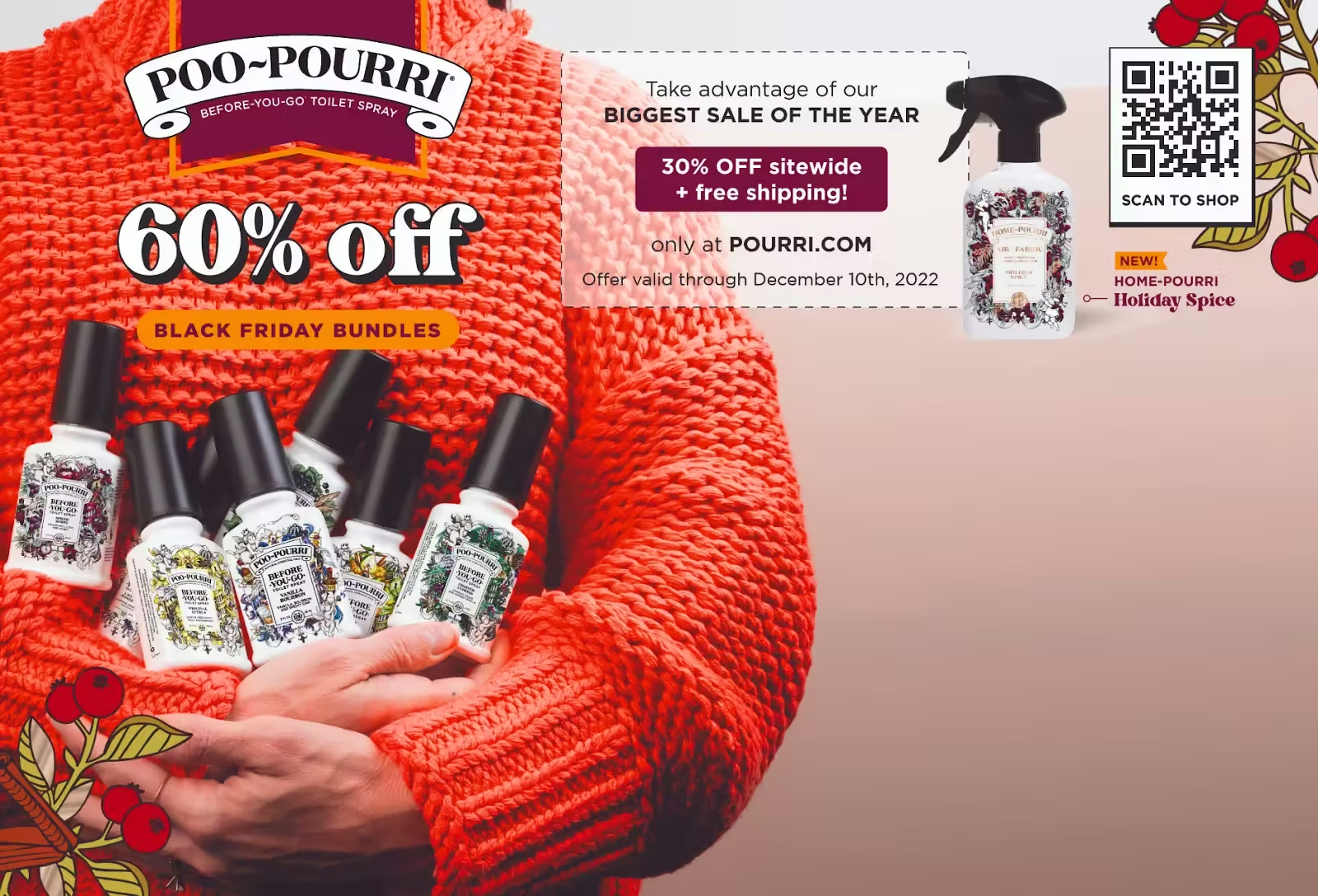
Exclusivity works best when it feels personal. Even with a tight BFCM deadline, Pourri sent personalized postcards featuring holiday bundles, sitewide savings, and a QR code for easy access to its website. The campaign drove a 10% lift in DTC revenue.
So if you're going to offer exclusivity, make it feel real. If everyone can access the same promotion five minutes later, your VIP invitation starts to feel less like a perk and more like a marketing tactic.
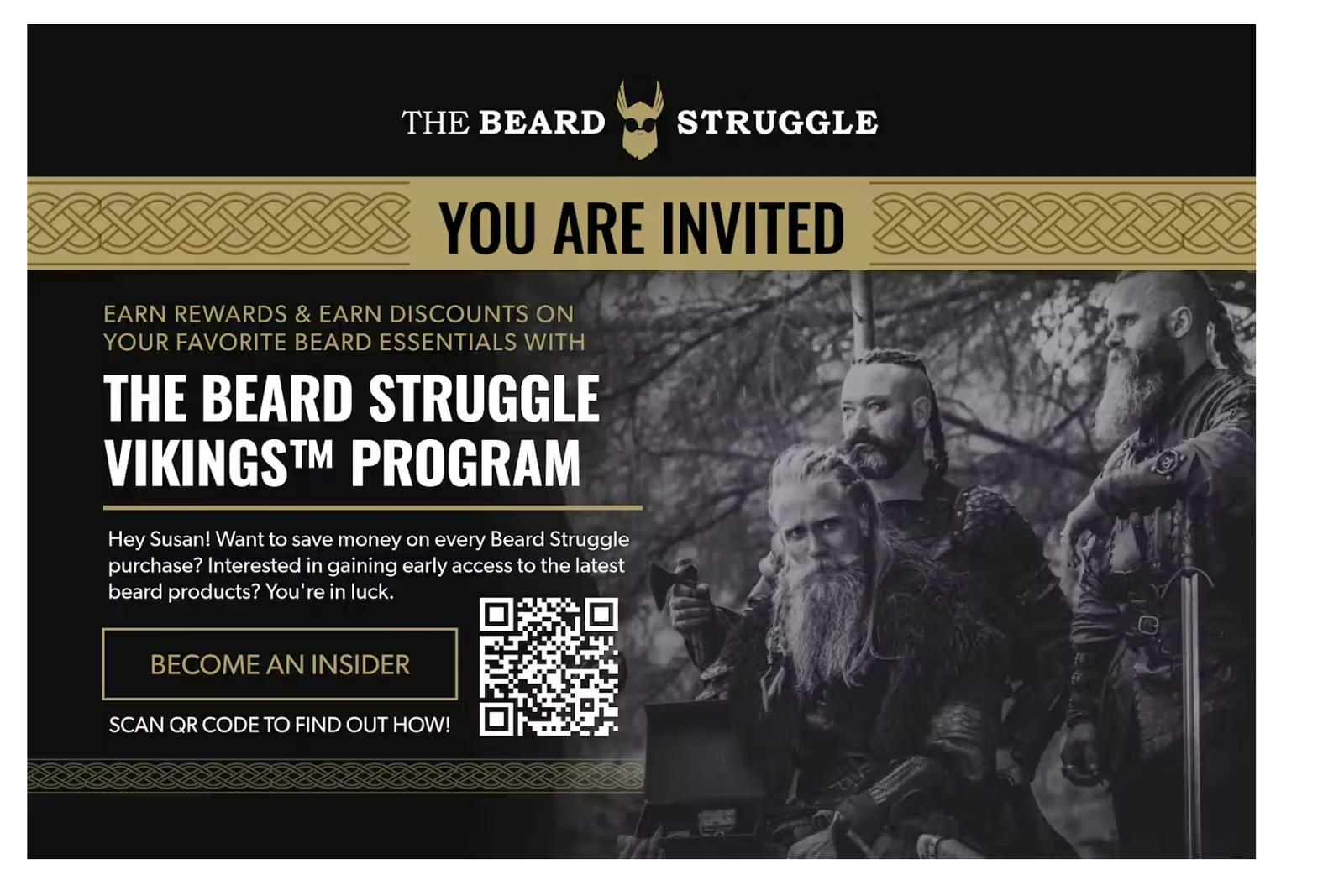
The Beard Struggle took it a step further, using direct marketing to invite VIP members to its loyalty program. They launched the Brand Vikings campaign with personal invites that feel exclusive, personal, and like a reward.
Or take J. Queen New York, for example: it's not just about knowing who you're talking to, but when, so let's bring in a queen to talk timing.
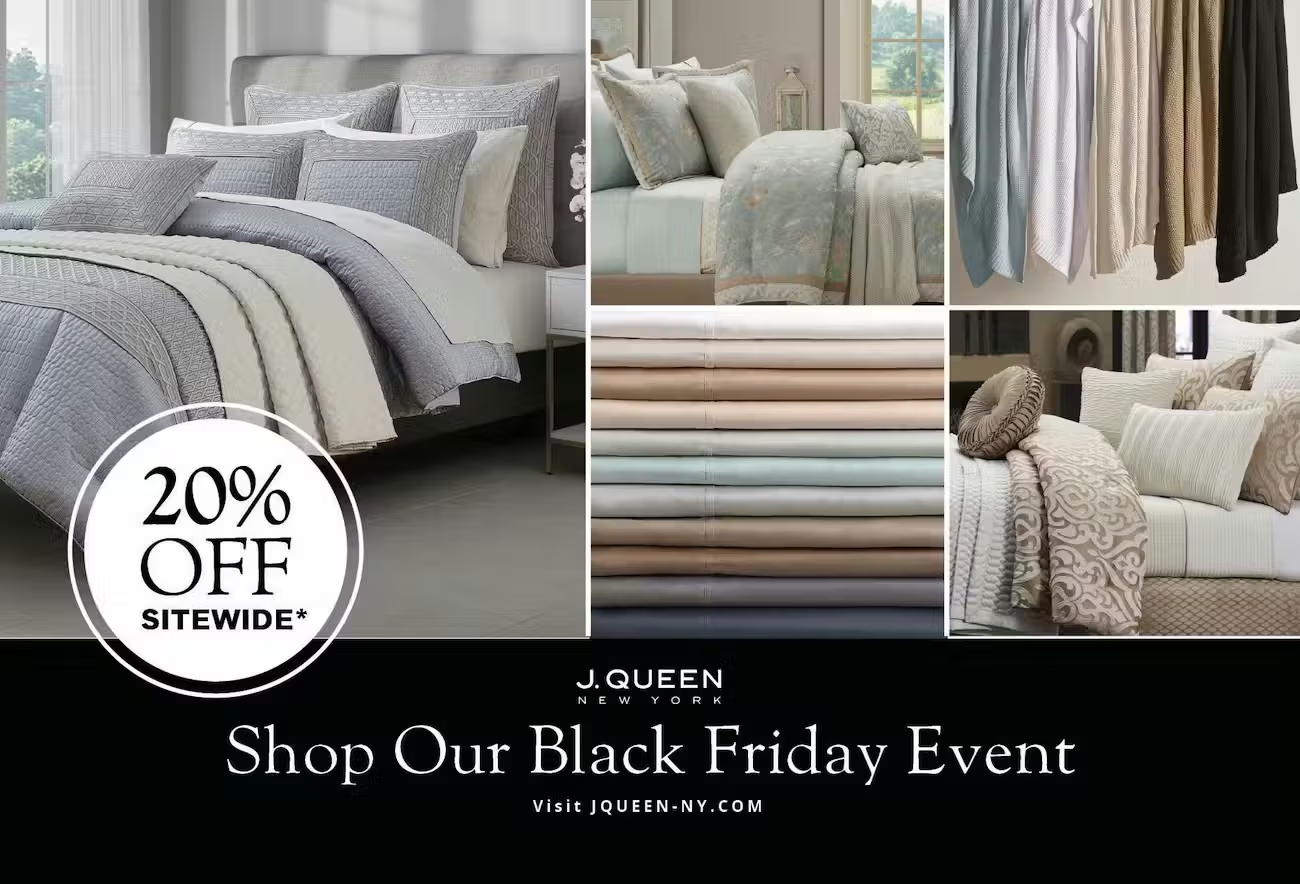
Working with PostPilot, the brand sent Christmas-themed Cardalogs to segmented customer audiences approximately six weeks before BFCM. The mailers introduced an early-access holiday shopping opportunity, with VIPs among the targeted groups.
Then, roughly two weeks before Black Friday, J. Queen followed up with postcards.
The result? 7x blended ROAS across its BFCM direct mail campaigns.
The Cardalogs alone generated returns ranging from 2.85x to over 15x ROAS, with VIPs producing the strongest results.
The lesson here isn't that every brand needs to send two mailers.
It's that J. Queen treated different customers differently, then used performance data to identify which segments deserved more investment.
Customers chose you last year, right? This year, you need to show them you remember, and give them a reason to choose you again.
Some of the most interesting Black Friday opportunities are sitting inside your existing customer database. These are people who already know your brand. They've purchased before. Some might have even been great customers.
They just haven't come back.
Instead of spending your entire BFCM budget acquiring new shoppers, consider what it would take to bring these customers back.
And don’t be afraid to test. Try incentives such as gifts with purchase or targeted discounts, with enough potential contribution to justify the mailing cost.
Use direct mail to reach eligible previous customers who are no longer responsive to email or SMS. Basically, the idea here is to extend your brand's presence where consumers can see it.
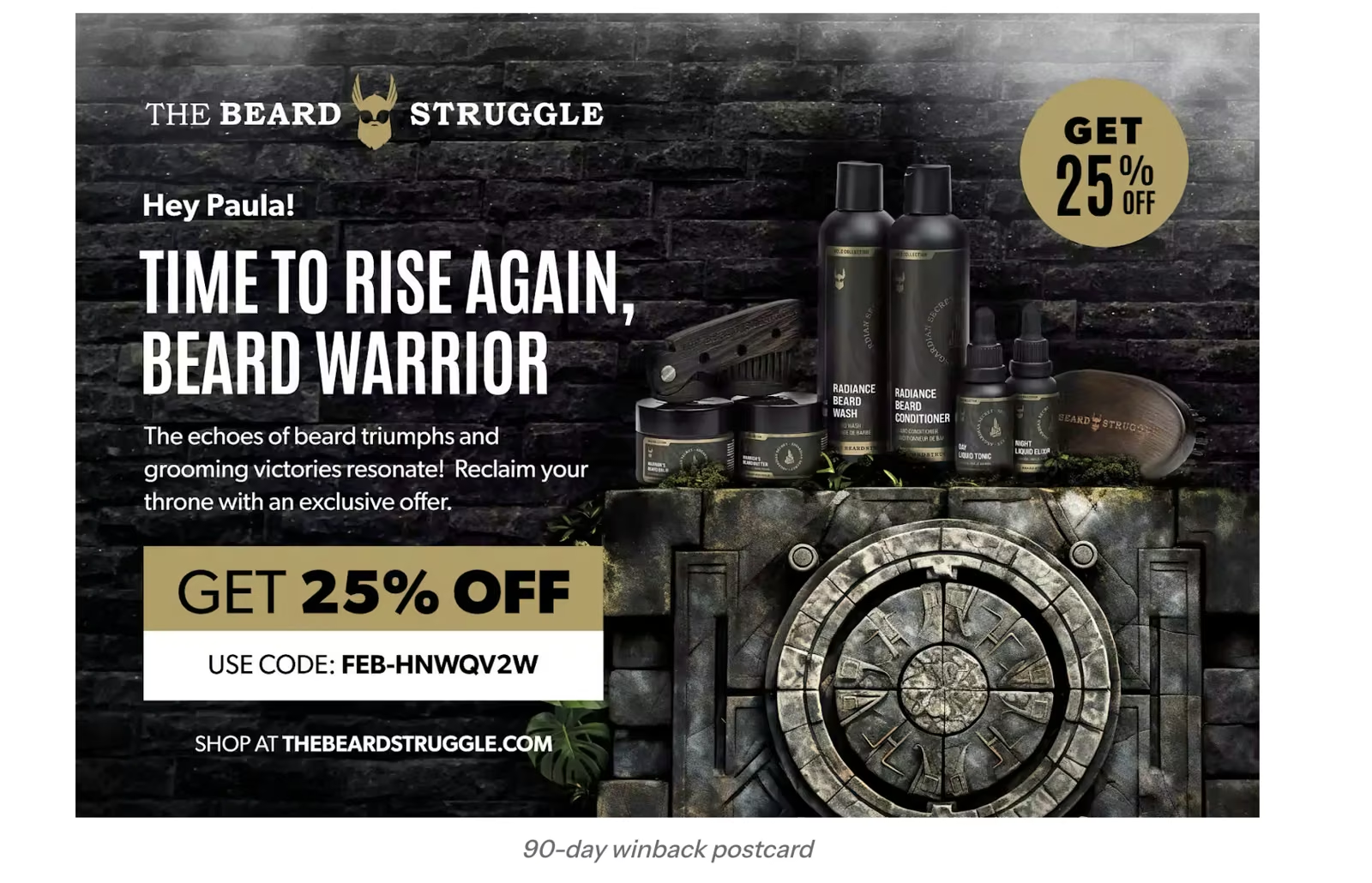
The Beard Struggle knew who to win back, and it paid off. The brand sent BFCM winback postcards to different customer segments, including email and SMS subscribers and those who'd unsubscribed. With tailored messaging, they reported winback ROI ranging from 6.7x to over 10x.
Just because a customer has gone quiet online doesn't mean they're out of reach. Sometimes, you just need to show up somewhere else. Like their mailbox.
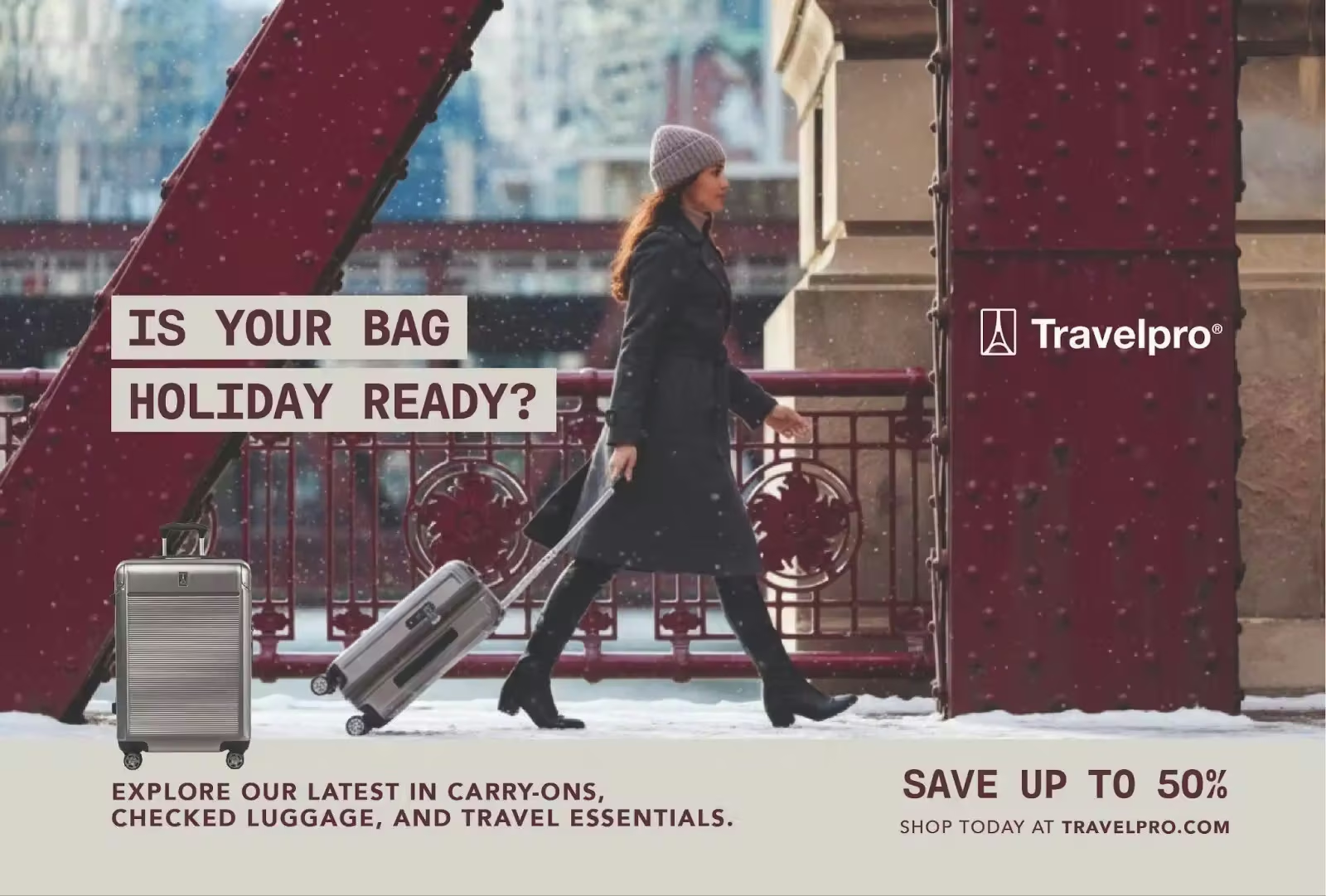
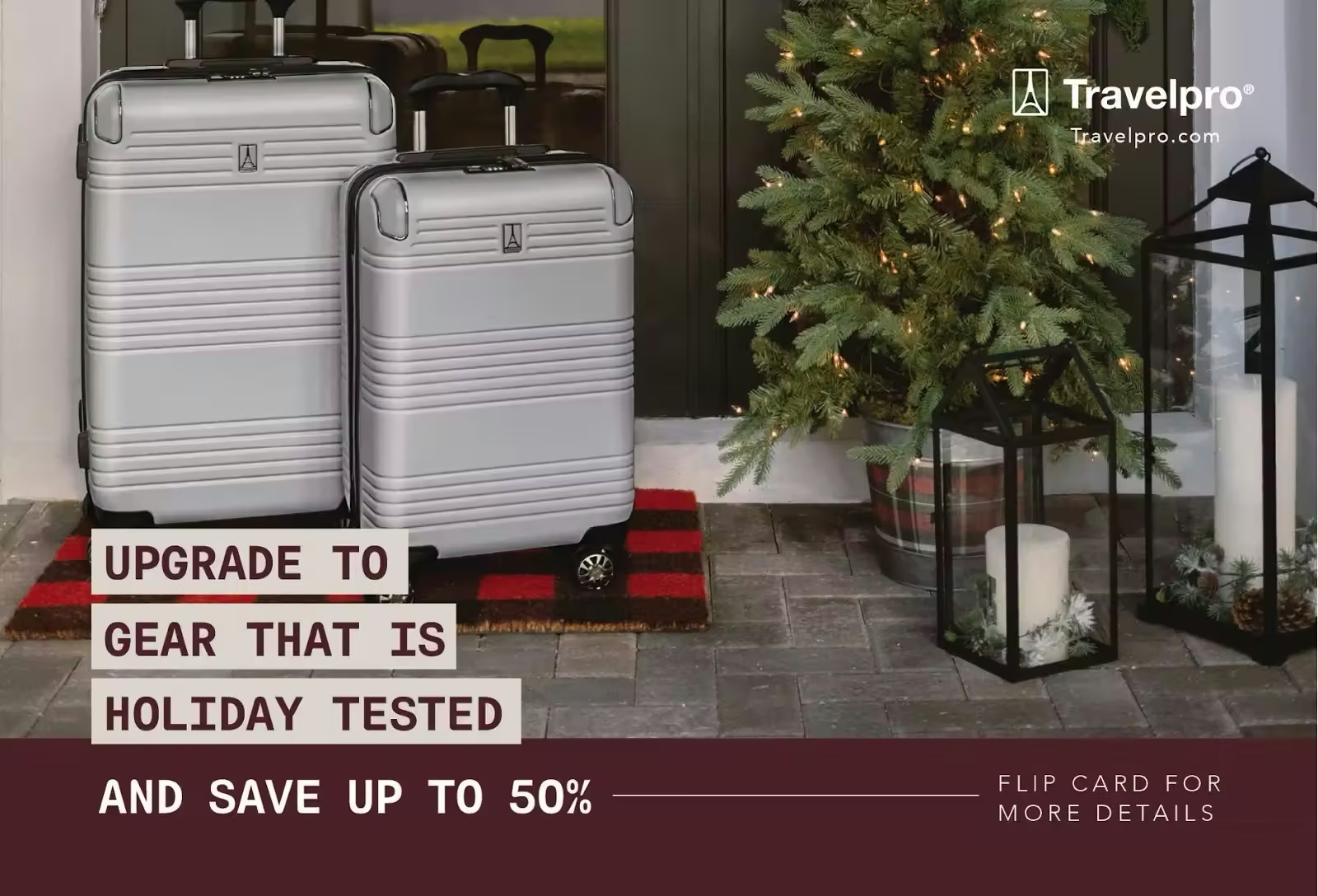
Another example is Travelpro, which wanted to cut through the noise, so they took it offline.
They know their customers lean toward higher consideration purchases. So they went right to them with a physical offer. Their BFCM campaigns targeting previously unreachable customers delivered reported returns exceeding 20x in some segments.
Not everyone on your Black Friday direct mail list needs to be an existing customer.
In fact, some of your biggest opportunities may come from people who've already shown interest in your products but haven't quite made the leap.
The key is distinguishing between someone who's ready for a gentle nudge and someone who barely knows your brand exists.
A few campaigns you can try?
Use MailMatch™ to target qualified subscribers who haven't purchased, then introduce them to your hero product with a compelling first-time offer.
For example, use this to reach shoppers who abandoned checkout. Send a postcard featuring the product category they considered, a little social proof, and a relevant incentive.
And don't wait until BFCM is in full swing to introduce your brand to new shoppers. As we already mentioned, start before the noise so you sound familiar.
Use acquisition mailings to showcase hero products, customer reviews, or starter bundles early enough for prospects to discover what you offer before the holiday chaos.
Made In gives you a perfect example of how to tie bundles and postcards.
Customers love getting more for their money, as long as the offer makes sense. Bundles and gifts with purchase can boost perceived value and order size without relying on deeper sitewide discounts.
Made In put this into practice with a cookware bundle offering 25% off plus a free Dutch oven. Tap into the girl math. A Dutch Oven is usually a few hundred dollars, but if you buy the bundle, which is a bit more expensive than what you were planning to buy originally, the free item means you're technically saving.
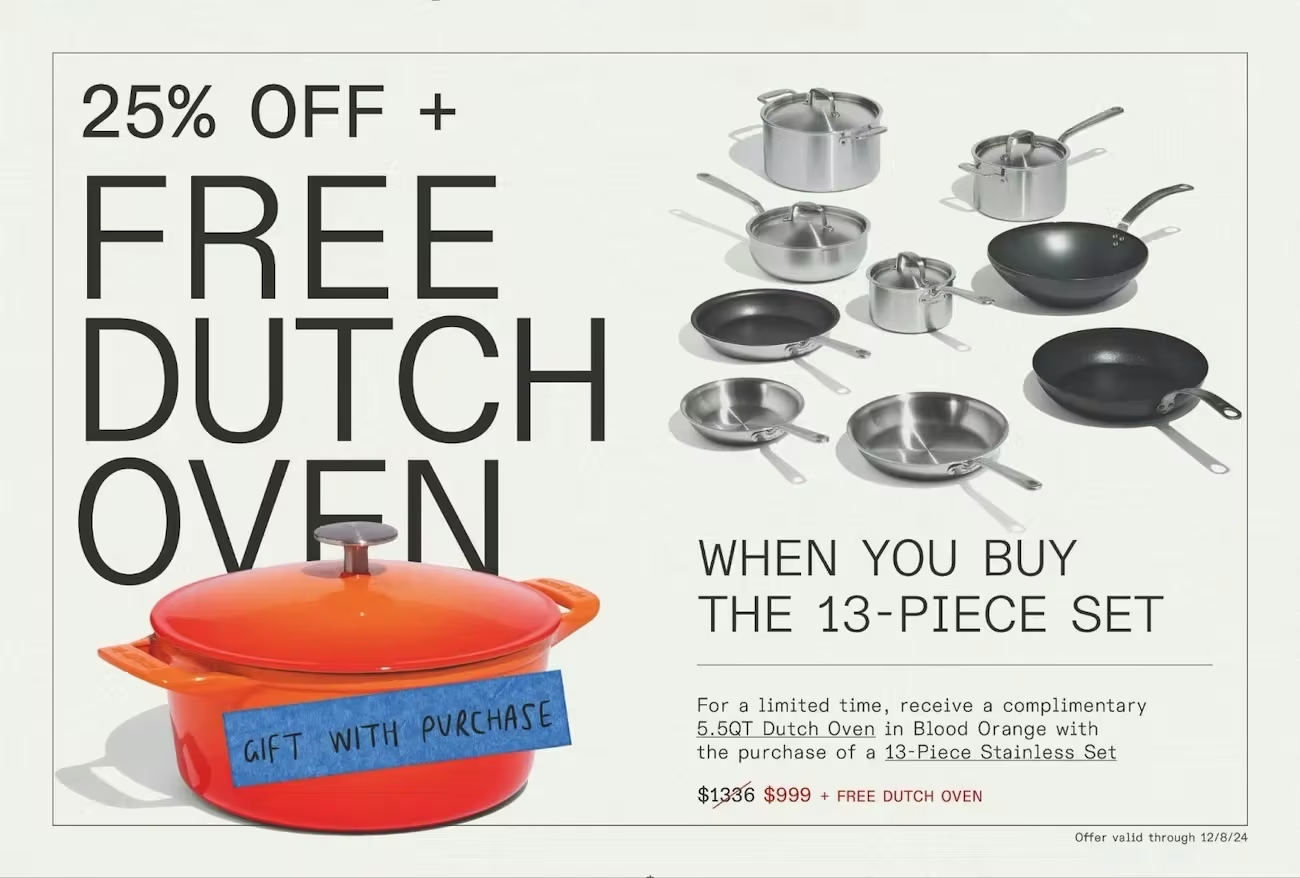
That extra free piece of cookware gives shoppers another reason to spend more, without simply slashing prices further. The BFCM campaign generated 4.39x holdout-tested incremental ROAS.
There's an assumption that Black Friday success comes down to who can offer the biggest discount.
But a 40% discount isn't automatically better than 20% off. Especially if you're sacrificing most of your profit to make the sale happen.
As PostPilot co-founders Drew Sanocki and Michael Epstein explain in their conversation about alternatives to discounting, brands have several other ways to create compelling offers.
Here are four worth testing in your Black Friday postcard marketing campaigns.
1. Exclusive product launches. Give customers something new to get excited about, whether it's a limited-edition product, an early-access collection, or the return of a bestseller. Exclusivity can create urgency without requiring a discount.
2. Gifts with purchase. Add something customers perceive as valuable but that costs your business less than an equivalent discount. Made In's cookware bundle and free Dutch oven offer is a good example of how to combine savings with additional product value.
3. Store credit. Instead of taking $20 off today's order, offer $20 toward a future purchase. This creates an incentive to return, particularly when you set appropriate redemption conditions and a minimum purchase threshold.
4. Bundles based on purchasing behavior. Use your Shopify data to understand which products people naturally buy together, then turn those combinations into attractive holiday offers.
Of course, traditional discounts can still work. The point is to be intentional about when you use them.
Don’t sleep on tired and true. Tiered savings such as 25% off sitewide, 30% off $125+, and 35% off $200+ always encourage consumers to take that next step up to feel like they saved more.
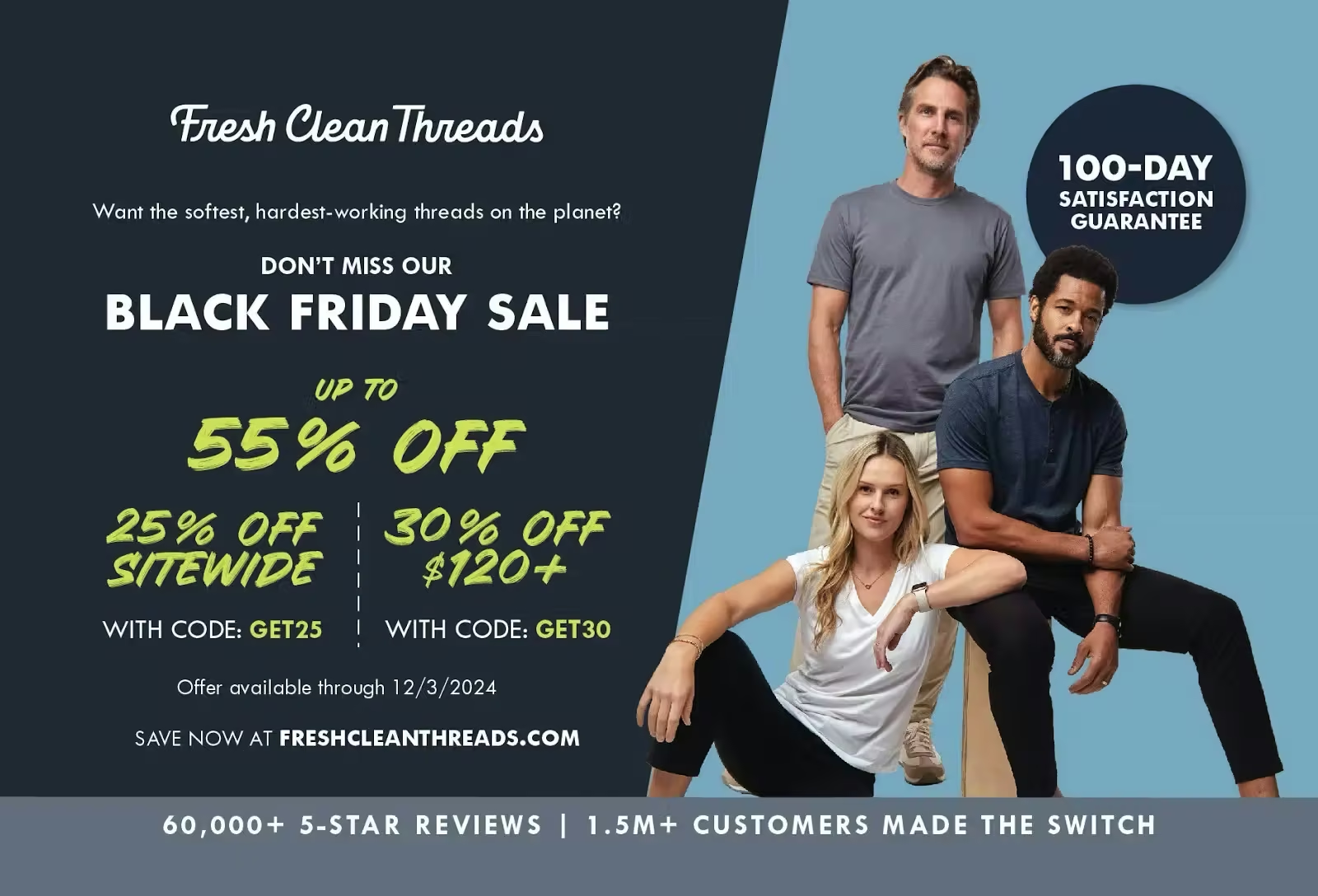
This also means larger baskets and larger AOV, which is always a good metric to follow.
What to borrow: If increasing AOV is a priority, consider spending thresholds instead of a single sitewide discount. Measure whether they actually increase incremental profit, not just order size.
Through a gift-focused Cardalog, Petite Keep gave customers a tangible way to reconnect with the brand.
The brand went beyond the usual postcard, using a tri-fold Cardalog to create a physical experience customers could open, explore, and interact with. The campaign reportedly drove holiday returns exceeding 15x ROAS.
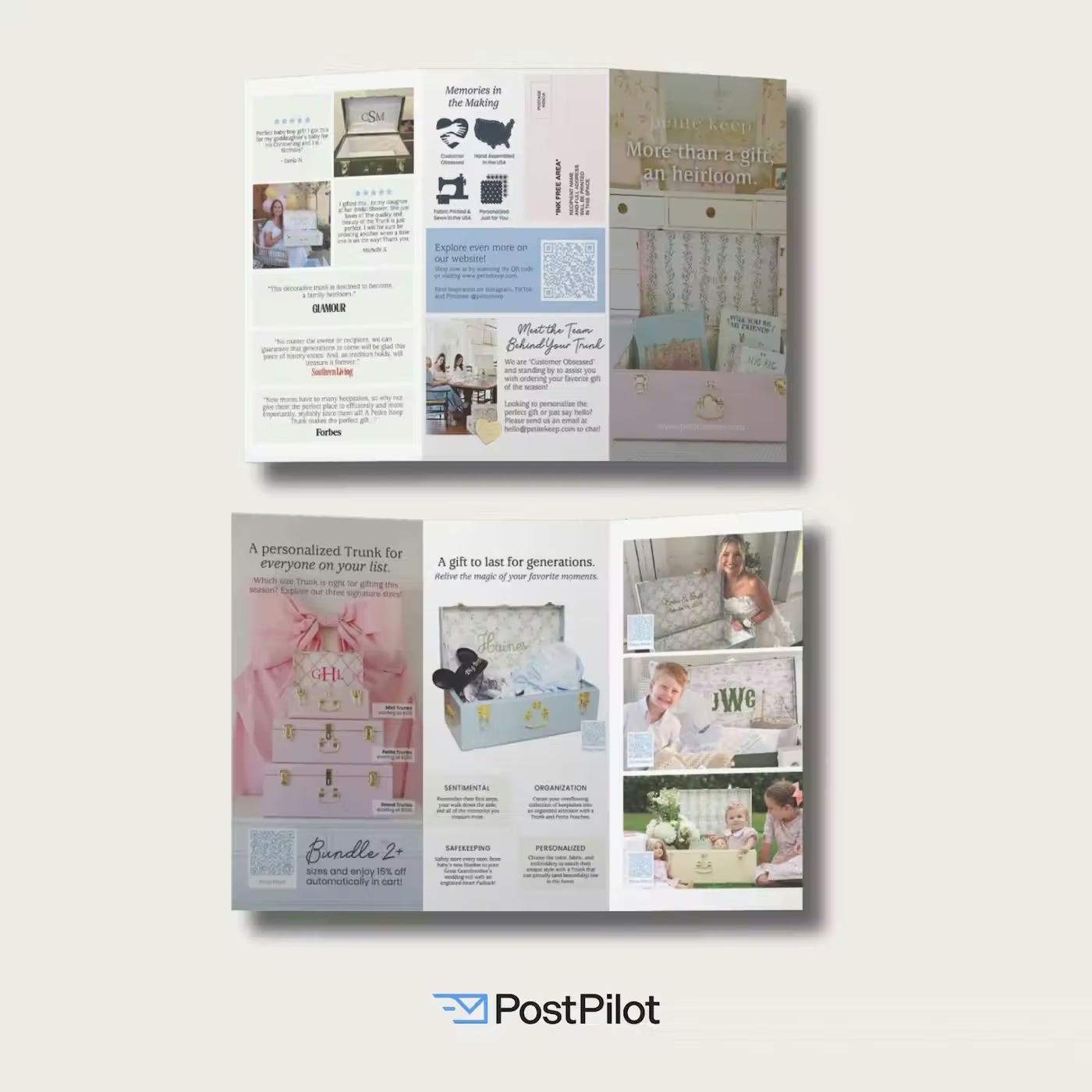
What to borrow: If your products have strong gifting potential, make the recipient and occasion the focus of your campaign. Sometimes, showing someone the perfect gift is more persuasive than offering another percentage off.
Wine by Lamborghini offered a straightforward 20% Black Friday exclusive to one-time and repeat purchasers, keeping the messaging product-led and to the point. The 20% was not offered anywhere else. That's how simple it was.
Not everything needs to be fancy or loud. Sometimes simple and exclusive works wonders. It's about knowing your product, how to package the offer (and the postcard), and exactly who you're talking to.
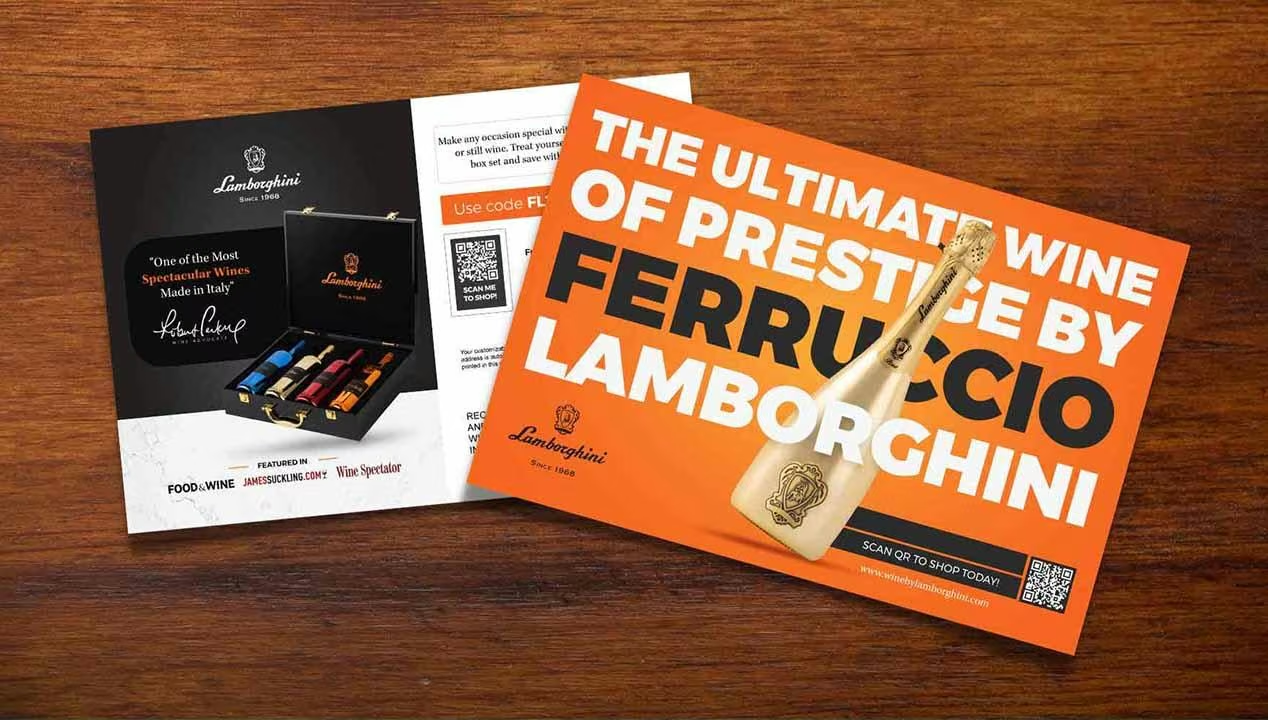
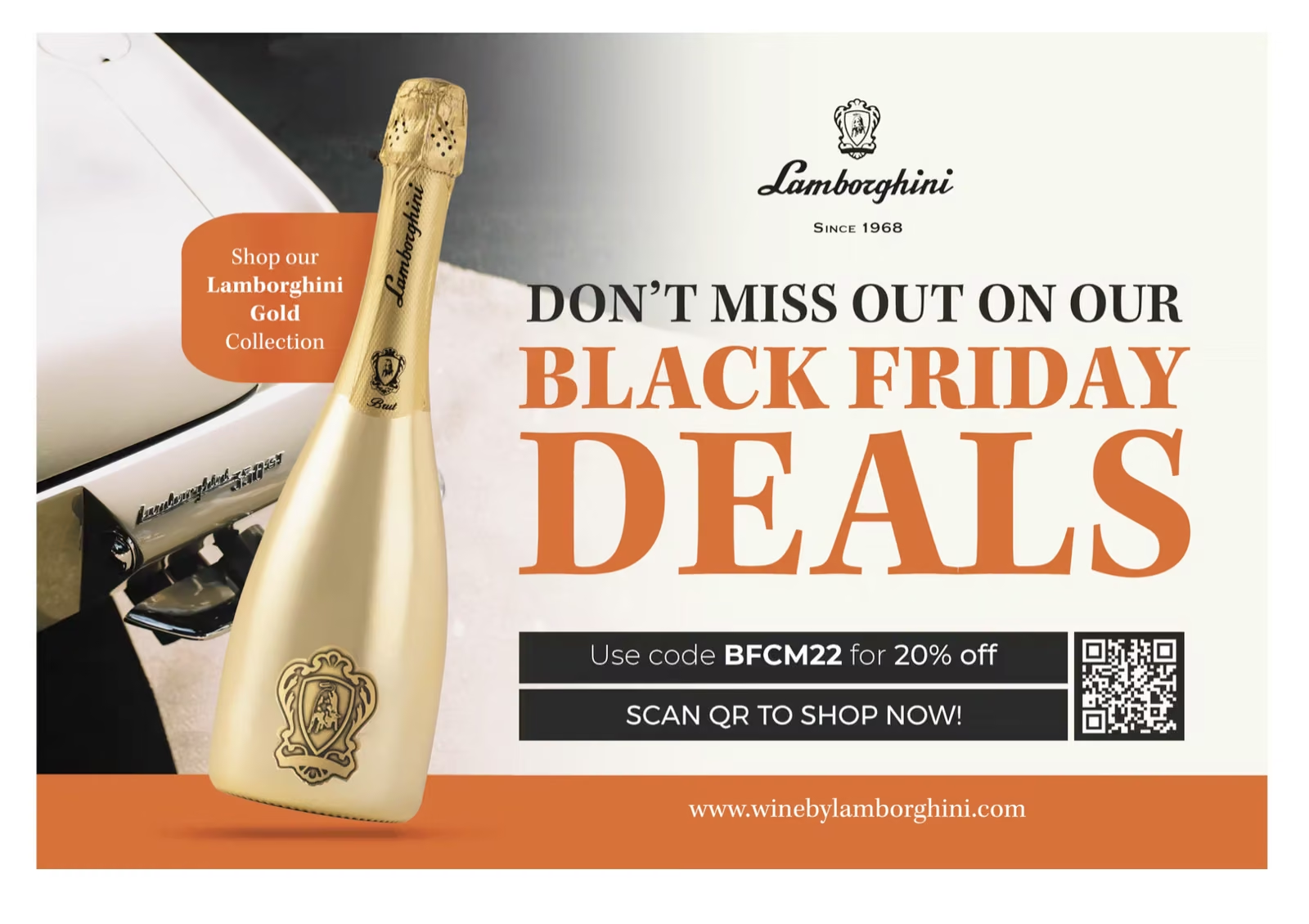
What to borrow: Your direct mail strategy doesn't need 12 different discount codes. Sometimes, the smartest segmentation happens behind the scenes, even when the offer remains consistent.
Timing can make or break a BFCM direct mail campaign.
A great offer isn't useful if it arrives after the promotion ends. But sending every campaign too early can mean customers forget about your sale before it begins.
The better approach is to plan your holiday direct mail around the audience and the job each postcard needs to accomplish.
Use these as planning windows, not guaranteed postal delivery estimates. Before launching, confirm current printing, production, and mailing cutoffs with PostPilot. Allow time for approvals, address processing, postal delivery, and unexpected delays.
For limited-time promotions, build a delivery buffer into your campaign plan. You want customers receiving a relevant offer while they can still use it.
It's tempting to approach Black Friday with the same playbook every year.
Increase the discount. Send more emails. Run more ads. Hope the extra volume makes up for the margin you're giving away.
But more marketing isn't necessarily better marketing.
The brands getting meaningful results from direct mail aren't just sending postcards to everyone in their database.
They're figuring out which customers are worth reaching, what those customers are likely to buy, and which offers can motivate profitable incremental purchases.
For some brands, that means giving VIPs first access to a new collection. For others, it's winning back customers who have stopped engaging digitally or helping first-time buyers discover their next favorite product.
You don't need all campaign types to make Black Friday direct mail work. You need the right ones for your customers.
Want to put these strategies to work?
Explore PostPilot's BFCM direct mail solutions and build campaigns designed to drive more profitable holiday purchases.
Black Friday marketing is like a digital Times Square. Everyone’s competing for attention with louder messages, brighter promos, and bigger discounts. Frankly, it’s a whole lot of noise.
But the answer often isn’t louder. Rarely is it another email, text, or another 10% off.
It’s reaching the right customer with an offer that's actually relevant to them, with a message that feels meant for them.
And that's where Black Friday direct mail comes in.
Unlike a blanket promotion, these campaigns can be built around who's receiving them, what they've purchased, and how likely they are to buy again.
Here are our favorite Black Friday direct mail campaigns Shopify brands can borrow and make their own this holiday season, including real examples from brands using PostPilot to turn customer data into profitable purchases.
Before you design a single postcard, figure out who you're sending it to.
A shopper who's been considering their first order has different motivations than a customer who already owns half your product catalog.
The best BFCM direct mail campaigns start with knowing that distinction.
Your best customers already know your brand. They've purchased before, and they've told you loud and clear they're willing to spend.
So you shouldn't have to convince them you're worth buying from; they already know that. Instead, your goal is to make them feel valued and give them a compelling reason to return right now.
Who to target: High-LTV customers, frequent repeat purchasers, and your top-spending VIP segments.
Your best customers shouldn't find out about your Black Friday promotion at the same time as everyone else. Make them feel like insiders. Give them the kind of early heads-up you'd drop in your best friends' group chat.
Example A: Pourri moved quickly, and their sales moved quicker.
Exclusivity works best when it feels personal. Even with a tight BFCM deadline, Pourri sent personalized postcards featuring holiday bundles, sitewide savings, and a QR code for easy access to its website. The campaign drove a 10% lift in DTC revenue.
So if you're going to offer exclusivity, make it feel real. If everyone can access the same promotion five minutes later, your VIP invitation starts to feel less like a perk and more like a marketing tactic.
The Beard Struggle took it a step further, using direct marketing to invite VIP members to its loyalty program. They launched the Brand Vikings campaign with personal invites that feel exclusive, personal, and like a reward.
Or take J. Queen New York, for example: it's not just about knowing who you're talking to, but when, so let's bring in a queen to talk timing.
Working with PostPilot, the brand sent Christmas-themed Cardalogs to segmented customer audiences approximately six weeks before BFCM. The mailers introduced an early-access holiday shopping opportunity, with VIPs among the targeted groups.
Then, roughly two weeks before Black Friday, J. Queen followed up with postcards.
The result? 7x blended ROAS across its BFCM direct mail campaigns.
The Cardalogs alone generated returns ranging from 2.85x to over 15x ROAS, with VIPs producing the strongest results.
The lesson here isn't that every brand needs to send two mailers.
It's that J. Queen treated different customers differently, then used performance data to identify which segments deserved more investment.
Customers chose you last year, right? This year, you need to show them you remember, and give them a reason to choose you again.
Some of the most interesting Black Friday opportunities are sitting inside your existing customer database. These are people who already know your brand. They've purchased before. Some might have even been great customers.
They just haven't come back.
Instead of spending your entire BFCM budget acquiring new shoppers, consider what it would take to bring these customers back.
And don’t be afraid to test. Try incentives such as gifts with purchase or targeted discounts, with enough potential contribution to justify the mailing cost.
Use direct mail to reach eligible previous customers who are no longer responsive to email or SMS. Basically, the idea here is to extend your brand's presence where consumers can see it.
The Beard Struggle knew who to win back, and it paid off. The brand sent BFCM winback postcards to different customer segments, including email and SMS subscribers and those who'd unsubscribed. With tailored messaging, they reported winback ROI ranging from 6.7x to over 10x.
Just because a customer has gone quiet online doesn't mean they're out of reach. Sometimes, you just need to show up somewhere else. Like their mailbox.
Another example is Travelpro, which wanted to cut through the noise, so they took it offline.
They know their customers lean toward higher consideration purchases. So they went right to them with a physical offer. Their BFCM campaigns targeting previously unreachable customers delivered reported returns exceeding 20x in some segments.
Not everyone on your Black Friday direct mail list needs to be an existing customer.
In fact, some of your biggest opportunities may come from people who've already shown interest in your products but haven't quite made the leap.
The key is distinguishing between someone who's ready for a gentle nudge and someone who barely knows your brand exists.
A few campaigns you can try?
Use MailMatch™ to target qualified subscribers who haven't purchased, then introduce them to your hero product with a compelling first-time offer.
For example, use this to reach shoppers who abandoned checkout. Send a postcard featuring the product category they considered, a little social proof, and a relevant incentive.
And don't wait until BFCM is in full swing to introduce your brand to new shoppers. As we already mentioned, start before the noise so you sound familiar.
Use acquisition mailings to showcase hero products, customer reviews, or starter bundles early enough for prospects to discover what you offer before the holiday chaos.
Made In gives you a perfect example of how to tie bundles and postcards.
Customers love getting more for their money, as long as the offer makes sense. Bundles and gifts with purchase can boost perceived value and order size without relying on deeper sitewide discounts.
Made In put this into practice with a cookware bundle offering 25% off plus a free Dutch oven. Tap into the girl math. A Dutch Oven is usually a few hundred dollars, but if you buy the bundle, which is a bit more expensive than what you were planning to buy originally, the free item means you're technically saving.
That extra free piece of cookware gives shoppers another reason to spend more, without simply slashing prices further. The BFCM campaign generated 4.39x holdout-tested incremental ROAS.
There's an assumption that Black Friday success comes down to who can offer the biggest discount.
But a 40% discount isn't automatically better than 20% off. Especially if you're sacrificing most of your profit to make the sale happen.
As PostPilot co-founders Drew Sanocki and Michael Epstein explain in their conversation about alternatives to discounting, brands have several other ways to create compelling offers.
Here are four worth testing in your Black Friday postcard marketing campaigns.
1. Exclusive product launches. Give customers something new to get excited about, whether it's a limited-edition product, an early-access collection, or the return of a bestseller. Exclusivity can create urgency without requiring a discount.
2. Gifts with purchase. Add something customers perceive as valuable but that costs your business less than an equivalent discount. Made In's cookware bundle and free Dutch oven offer is a good example of how to combine savings with additional product value.
3. Store credit. Instead of taking $20 off today's order, offer $20 toward a future purchase. This creates an incentive to return, particularly when you set appropriate redemption conditions and a minimum purchase threshold.
4. Bundles based on purchasing behavior. Use your Shopify data to understand which products people naturally buy together, then turn those combinations into attractive holiday offers.
Of course, traditional discounts can still work. The point is to be intentional about when you use them.
Don’t sleep on tired and true. Tiered savings such as 25% off sitewide, 30% off $125+, and 35% off $200+ always encourage consumers to take that next step up to feel like they saved more.
This also means larger baskets and larger AOV, which is always a good metric to follow.
What to borrow: If increasing AOV is a priority, consider spending thresholds instead of a single sitewide discount. Measure whether they actually increase incremental profit, not just order size.
Through a gift-focused Cardalog, Petite Keep gave customers a tangible way to reconnect with the brand.
The brand went beyond the usual postcard, using a tri-fold Cardalog to create a physical experience customers could open, explore, and interact with. The campaign reportedly drove holiday returns exceeding 15x ROAS.
What to borrow: If your products have strong gifting potential, make the recipient and occasion the focus of your campaign. Sometimes, showing someone the perfect gift is more persuasive than offering another percentage off.
Wine by Lamborghini offered a straightforward 20% Black Friday exclusive to one-time and repeat purchasers, keeping the messaging product-led and to the point. The 20% was not offered anywhere else. That's how simple it was.
Not everything needs to be fancy or loud. Sometimes simple and exclusive works wonders. It's about knowing your product, how to package the offer (and the postcard), and exactly who you're talking to.
What to borrow: Your direct mail strategy doesn't need 12 different discount codes. Sometimes, the smartest segmentation happens behind the scenes, even when the offer remains consistent.
Timing can make or break a BFCM direct mail campaign.
A great offer isn't useful if it arrives after the promotion ends. But sending every campaign too early can mean customers forget about your sale before it begins.
The better approach is to plan your holiday direct mail around the audience and the job each postcard needs to accomplish.
Use these as planning windows, not guaranteed postal delivery estimates. Before launching, confirm current printing, production, and mailing cutoffs with PostPilot. Allow time for approvals, address processing, postal delivery, and unexpected delays.
For limited-time promotions, build a delivery buffer into your campaign plan. You want customers receiving a relevant offer while they can still use it.
It's tempting to approach Black Friday with the same playbook every year.
Increase the discount. Send more emails. Run more ads. Hope the extra volume makes up for the margin you're giving away.
But more marketing isn't necessarily better marketing.
The brands getting meaningful results from direct mail aren't just sending postcards to everyone in their database.
They're figuring out which customers are worth reaching, what those customers are likely to buy, and which offers can motivate profitable incremental purchases.
For some brands, that means giving VIPs first access to a new collection. For others, it's winning back customers who have stopped engaging digitally or helping first-time buyers discover their next favorite product.
You don't need all campaign types to make Black Friday direct mail work. You need the right ones for your customers.
Want to put these strategies to work?
Explore PostPilot's BFCM direct mail solutions and build campaigns designed to drive more profitable holiday purchases.

Join thousands of ecommerce brands using PostPilot to acquire more customers & keep them coming back again (and again).
No contracts. No minimums.