
September 11, 2026
Ready to increase your revenue?
Join thousands of ecommerce brands using PostPilot to acquire more customers & keep them coming back again (and again).
No contracts. No minimums.


Let us know if this sounds like you…
Your brand is healthy. The product is strong. Email is built out. Paid is running. SMS is… present.
And yet performance starts to feel like it’s happening to you instead of because of you.
CPMs creep up. Attribution gets fuzzier. Inbox placement gets stingier. Your best customers still buy, but it takes more touches to get them there.
Yikes.
Do you know what brands in this same position do? They start to consider new channels and creative ways to get in front of their buyers.
So let us introduce (or re-introduce if you were a child of the 90s or earlier) the catalog.
It’s not because anyone wants to cosplay as a legacy retailer, but because catalogs are one of the few marketing assets that still do three things at once:
Not to mention, most retailers see a significant sales lift by adding a print catalog to their lifecycle marketing while still generating a positive ROI after costs.
So yes, catalogs work.
If you’ve ever tried to run a catalog program, you also know the dirty truth:
Catalogs can be operationally brutal…
But they don’t have to be. We’ll show you how.
This piece is about both sides of the reality:
Catalogs didn’t come back because people suddenly stopped liking their phones.
However, digital has become a high-noise, low-attention environment. Catalogs are the opposite.
You can’t optimize your way out of an environment that’s designed to interrupt.
Catalogs show up in a setting where the competition is dramatically lower: someone’s kitchen counter, coffee table, or entryway stack.
And since there’s no missing cookies or a separate promotions tab in someone’s personal mailbox, catalogs don’t get swiped away. People don’t just “receive” them, they immediately interact with them.
A lot of marketers still think about catalogs like a separate channel that has to “prove itself” against email, paid, or SMS.
That’s the wrong comparison.
Catalogs are best when they act like a force multiplier, especially on top of lifecycle campaigns and retargeting.
They make your products easier to remember. Plain and simple.
Most ecommerce experiences are built to reduce friction, not create desire. The site is predictable. The product page is functional. The “discovery experience” is… a grid.
Catalogs bring back the editorial layer—the thing physical retail used to do for free:
That’s why catalogs work especially well for brands with:
One of the biggest myths in ecommerce is that print is “brand” and digital is “performance.”
Print drives online action all the time because most people still buy online even when print triggered the interest. modern catalogs are built with digital handoffs baked in.
Every serious catalog today should include clear bridges to your online store: QR codes that lead to curated “shop the spread” landing pages, short URLs that are easy to type, and page-specific tracking so you know exactly which themes and products drive visits.
You can even start the bridge before the catalog hits the mailbox. With USPS Informed Delivery, your catalog cover can appear in subscribers’ inboxes with a clickable link, driving online traffic the same day the physical piece arrives.
When those paths are intentional, the catalog stops being an offline artifact. It becomes a demand engine that lives in someone’s home and converts on your site.
If you want catalogs to work, you can’t treat them like a one-off “brand moment.”
You need a system.
A catalog program has five real pillars:
Let’s walk through each one in a way you can actually use.
The fastest way to waste money on catalogs is to mail the same thing to everyone because it’s easier.
Catalogs get profitable when you treat the audience like distinct intent buckets.
A practical way to build this is a three-tier model:
These are your customers with a pattern:
They’re already sold on you. The catalog’s job is to increase frequency, basket size, and cross-category adoption.
What to send them: A fuller catalog with deeper assortment, editorial story, and “this is what’s new” energy.
These folks don’t need your whole world. They need a reason to come back now.
What to send them: A smaller, tighter catalog or mini-catalog that feels curated—best sellers, seasonal drop, new arrivals, a few bundles, a clear CTA.
Prospects do not want to be handed 64 pages from a brand they’ve never bought from. That’s more confusing than helpful.
What to send them: A version that introduces you cleanly:
This segmentation directly affects conversion because it respects what each group needs to believe next.
Think of a catalog as guided browsing. If your catalog is just page after page of items, you’re printing a website nobody asked for.
A high-performing catalog usually has a rhythm. Think in sections:
Your first pages should answer:
This can be:
Instead of “Women’s / Men’s / Accessories,” consider structured edits that feel like a shopper’s mental model:
This is how you move someone from “interesting” to “I can see myself buying.”
Every spread should do at least one of these:
If a spread doesn’t have a job, it’s filler. Filler is expensive.
This is where catalogs win or lose. If you inspire someone and then make it annoying to buy, you’ve created desire without resolution.
A QR code that dumps someone onto your homepage is a waste of ink. Every QR should land on one of these:
Make the handoff feel seamless. The shopper should think, “Oh, there it is.” Not, “Now I have to hunt.”
Not everyone scans. Some people type. Short URLs also make attribution cleaner:
It’s the KISS tale as old as time (keep it simple, stupid).
Catalog-driven traffic is different from cold paid traffic. They’ve already seen the brand. They’ve already browsed the products. They’re coming in warmer.
So your landing pages should:
Treat it like a continuation of the browsing experience, not a restart.
Catalog measurement gets weird when teams expect it to behave like Meta.
It won’t.
Catalog attribution is rarely single-touch. It’s often:
So you need layered measurement that captures the halo effect.
This is your early pulse.
Match orders placed after the mailing window to your mailed list.
This won’t prove incrementality on its own, but it gives you directional confidence and helps you understand which segments are “responders.”
The cleanest way to prove lift is to hold out a small portion of your audience and compare outcomes.
If you’re serious about scaling catalogs, holdouts aren’t optional. They’re how you defend budget and make smarter decisions.
And if you’re running catalogs alongside postcards, holdouts become even more important because coordinated direct mail programs can have compounding effects that don’t show up in last-click logic.
There’s a version of catalog marketing that looks romantic from the outside.
Beautiful layouts. Thick paper. Editorial spreads. A big seasonal drop.
… And then there’s the operational reality.
Catalogs are supply chain projects. They involve paper sourcing, print specs, postal regulations, data hygiene, list management, proofing cycles, segmentation logic, landing page coordination, inventory timing, and performance tracking.
The mistake a lot of growing brands make is assuming they can “figure it out internally” the same way they built email or paid social.
An expert partner doesn’t just help you design something pretty. They help you:
If catalogs are going to become part of your growth engine, the next question isn’t “Can we design one?”
It’s “What kind of system and expertise do we need to run this properly?”
That’s where software starts to matter.
“Catalog marketing software” is a fuzzy phrase in ecommerce. A lot of tools can help you print something.
That’s not the bar.
The bar is: can you run catalogs repeatedly without your team melting down?
Here’s what actually matters when you’re looking for a direct mail partner.
If you can’t ship catalogs faster than your merchandising calendar changes, you’re going to lose to reality.
Modern catalog software should compress the timeline enough that you can:
Traditional catalogs often come with massive minimum order quantities because setup is expensive.
That’s one of the biggest reasons catalogs feel like a “big brand only” channel. Software should make it possible to:
This is where catalogs evolve from “brand moment” to performance marketing. If you can’t run different versions for:
…you’re leaving money on the table.
Every handoff introduces delay.
When creative and printing are stitched together across vendors, every update becomes a project.
When they’re integrated, iteration becomes normal.
Getting results weeks later in spreadsheets is not a measurement strategy.
It’s historical documentation. Modern catalog software should give you campaign performance in a live dashboard so you can:
PostPilot’s pitch is straightforward: make catalogs operable for modern ecommerce teams. Thankfully, there are a few ways to go about it.
PostPilot catalog marketing software can help you launch in 4–6 weeks (not months), with lower minimums and real-time results tracking.
That means catalogs can start behaving like a channel you can improve—because you can run cycles, learn, and iterate.
When you can launch faster, you can mail closer to the moment — aligned with inventory, new collections, and seasonal demand. When minimums are lower, you can test segments instead of blasting everyone.
And we’ve seen what that operational shift looks like in practice.
Before coming to Postpilot, their catalog process ran through a chain of manual list pulls, agency coordination, data house purchases, printer timelines, and long production windows.
The entire workflow stretched 5–6 months from idea to mailbox.
After moving their catalog operations into PostPilot, that timeline dropped to around five weeks.

Prospecting lists were built quickly using lookalike modeling. Printing and mailing were handled in-house. And instead of treating catalogs as a rare seasonal event, they were able to scale them as part of a broader full-funnel strategy that spans acquisition, retargeting, and retention.
Not every brand needs a traditional bound catalog to get the upsides of catalog browsing.
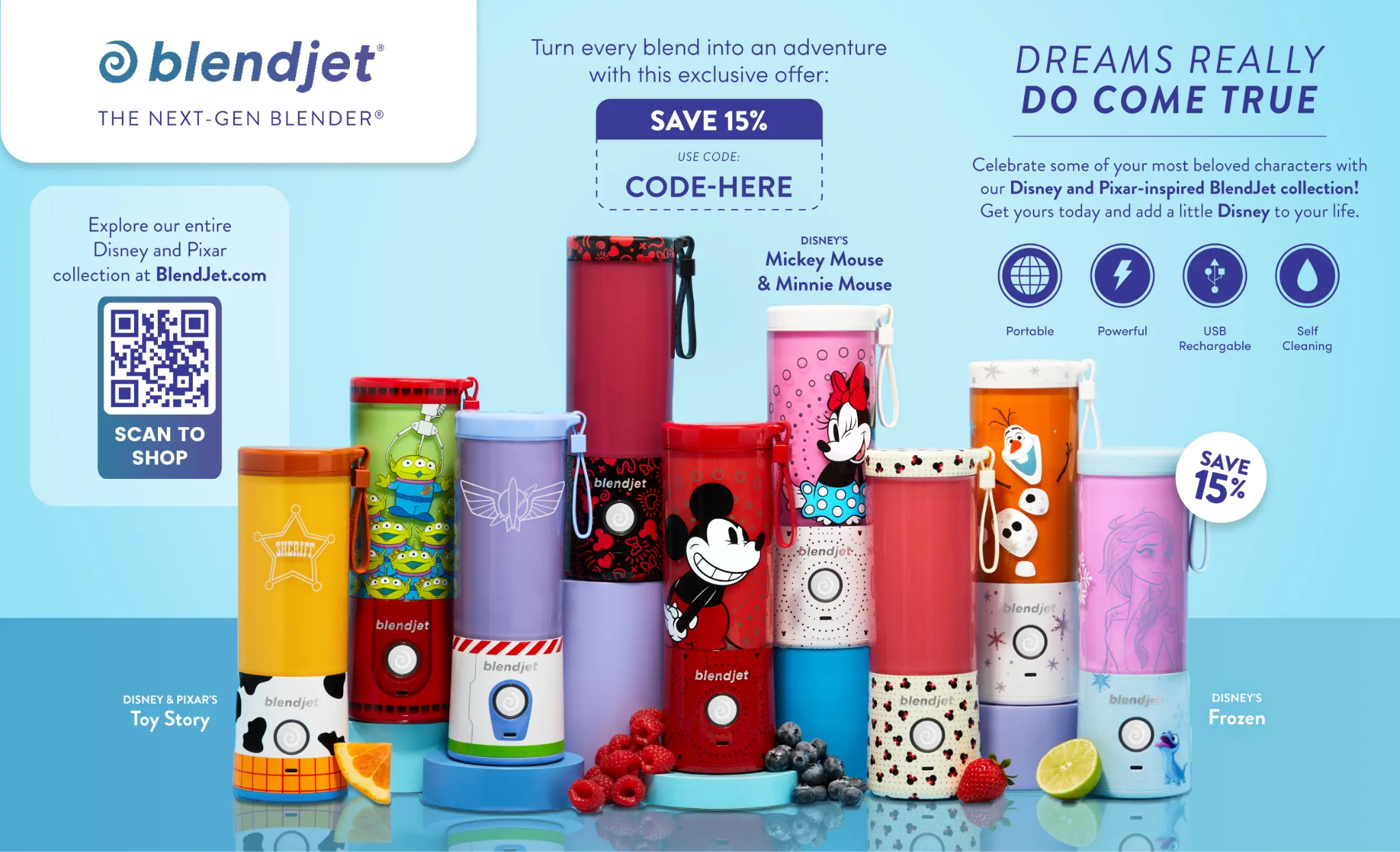
That’s where PostPilot’s Cardalogs come in: a trifold format designed to deliver more real estate without the operational weight of a full catalog.
These are a trifold-style direct mail product measuring 10.5" x 17.25" with six panels. The turnaround is even faster than that of traditional catalogs, so it could be a great first step for brands looking to test the channel.
Here’s a beautiful example from Blendjet:
Catalogs are having a moment for a reason. They create attention. They restore browsing. They make products feel more vivid. And they push people online with intent.
But catalogs only become a real growth lever when the process is built for speed, segmentation, and measurement—not vendor wrangling and six-month timelines.
That’s what modern catalog marketing software is really solving.
PostPilot lets you integrate direct mail into your reactivation engine, sync with Shopify and Klaviyo, target high-value segments, and trigger direct mail at the right moment.
Learn more by booking a demo with our team here.
Let us know if this sounds like you…
Your brand is healthy. The product is strong. Email is built out. Paid is running. SMS is… present.
And yet performance starts to feel like it’s happening to you instead of because of you.
CPMs creep up. Attribution gets fuzzier. Inbox placement gets stingier. Your best customers still buy, but it takes more touches to get them there.
Yikes.
Do you know what brands in this same position do? They start to consider new channels and creative ways to get in front of their buyers.
So let us introduce (or re-introduce if you were a child of the 90s or earlier) the catalog.
It’s not because anyone wants to cosplay as a legacy retailer, but because catalogs are one of the few marketing assets that still do three things at once:
Not to mention, most retailers see a significant sales lift by adding a print catalog to their lifecycle marketing while still generating a positive ROI after costs.
So yes, catalogs work.
If you’ve ever tried to run a catalog program, you also know the dirty truth:
Catalogs can be operationally brutal…
But they don’t have to be. We’ll show you how.
This piece is about both sides of the reality:
Catalogs didn’t come back because people suddenly stopped liking their phones.
However, digital has become a high-noise, low-attention environment. Catalogs are the opposite.
You can’t optimize your way out of an environment that’s designed to interrupt.
Catalogs show up in a setting where the competition is dramatically lower: someone’s kitchen counter, coffee table, or entryway stack.
And since there’s no missing cookies or a separate promotions tab in someone’s personal mailbox, catalogs don’t get swiped away. People don’t just “receive” them, they immediately interact with them.
A lot of marketers still think about catalogs like a separate channel that has to “prove itself” against email, paid, or SMS.
That’s the wrong comparison.
Catalogs are best when they act like a force multiplier, especially on top of lifecycle campaigns and retargeting.
They make your products easier to remember. Plain and simple.
Most ecommerce experiences are built to reduce friction, not create desire. The site is predictable. The product page is functional. The “discovery experience” is… a grid.
Catalogs bring back the editorial layer—the thing physical retail used to do for free:
That’s why catalogs work especially well for brands with:
One of the biggest myths in ecommerce is that print is “brand” and digital is “performance.”
Print drives online action all the time because most people still buy online even when print triggered the interest. modern catalogs are built with digital handoffs baked in.
Every serious catalog today should include clear bridges to your online store: QR codes that lead to curated “shop the spread” landing pages, short URLs that are easy to type, and page-specific tracking so you know exactly which themes and products drive visits.
You can even start the bridge before the catalog hits the mailbox. With USPS Informed Delivery, your catalog cover can appear in subscribers’ inboxes with a clickable link, driving online traffic the same day the physical piece arrives.
When those paths are intentional, the catalog stops being an offline artifact. It becomes a demand engine that lives in someone’s home and converts on your site.
If you want catalogs to work, you can’t treat them like a one-off “brand moment.”
You need a system.
A catalog program has five real pillars:
Let’s walk through each one in a way you can actually use.
The fastest way to waste money on catalogs is to mail the same thing to everyone because it’s easier.
Catalogs get profitable when you treat the audience like distinct intent buckets.
A practical way to build this is a three-tier model:
These are your customers with a pattern:
They’re already sold on you. The catalog’s job is to increase frequency, basket size, and cross-category adoption.
What to send them: A fuller catalog with deeper assortment, editorial story, and “this is what’s new” energy.
These folks don’t need your whole world. They need a reason to come back now.
What to send them: A smaller, tighter catalog or mini-catalog that feels curated—best sellers, seasonal drop, new arrivals, a few bundles, a clear CTA.
Prospects do not want to be handed 64 pages from a brand they’ve never bought from. That’s more confusing than helpful.
What to send them: A version that introduces you cleanly:
This segmentation directly affects conversion because it respects what each group needs to believe next.
Think of a catalog as guided browsing. If your catalog is just page after page of items, you’re printing a website nobody asked for.
A high-performing catalog usually has a rhythm. Think in sections:
Your first pages should answer:
This can be:
Instead of “Women’s / Men’s / Accessories,” consider structured edits that feel like a shopper’s mental model:
This is how you move someone from “interesting” to “I can see myself buying.”
Every spread should do at least one of these:
If a spread doesn’t have a job, it’s filler. Filler is expensive.
This is where catalogs win or lose. If you inspire someone and then make it annoying to buy, you’ve created desire without resolution.
A QR code that dumps someone onto your homepage is a waste of ink. Every QR should land on one of these:
Make the handoff feel seamless. The shopper should think, “Oh, there it is.” Not, “Now I have to hunt.”
Not everyone scans. Some people type. Short URLs also make attribution cleaner:
It’s the KISS tale as old as time (keep it simple, stupid).
Catalog-driven traffic is different from cold paid traffic. They’ve already seen the brand. They’ve already browsed the products. They’re coming in warmer.
So your landing pages should:
Treat it like a continuation of the browsing experience, not a restart.
Catalog measurement gets weird when teams expect it to behave like Meta.
It won’t.
Catalog attribution is rarely single-touch. It’s often:
So you need layered measurement that captures the halo effect.
This is your early pulse.
Match orders placed after the mailing window to your mailed list.
This won’t prove incrementality on its own, but it gives you directional confidence and helps you understand which segments are “responders.”
The cleanest way to prove lift is to hold out a small portion of your audience and compare outcomes.
If you’re serious about scaling catalogs, holdouts aren’t optional. They’re how you defend budget and make smarter decisions.
And if you’re running catalogs alongside postcards, holdouts become even more important because coordinated direct mail programs can have compounding effects that don’t show up in last-click logic.
There’s a version of catalog marketing that looks romantic from the outside.
Beautiful layouts. Thick paper. Editorial spreads. A big seasonal drop.
… And then there’s the operational reality.
Catalogs are supply chain projects. They involve paper sourcing, print specs, postal regulations, data hygiene, list management, proofing cycles, segmentation logic, landing page coordination, inventory timing, and performance tracking.
The mistake a lot of growing brands make is assuming they can “figure it out internally” the same way they built email or paid social.
An expert partner doesn’t just help you design something pretty. They help you:
If catalogs are going to become part of your growth engine, the next question isn’t “Can we design one?”
It’s “What kind of system and expertise do we need to run this properly?”
That’s where software starts to matter.
“Catalog marketing software” is a fuzzy phrase in ecommerce. A lot of tools can help you print something.
That’s not the bar.
The bar is: can you run catalogs repeatedly without your team melting down?
Here’s what actually matters when you’re looking for a direct mail partner.
If you can’t ship catalogs faster than your merchandising calendar changes, you’re going to lose to reality.
Modern catalog software should compress the timeline enough that you can:
Traditional catalogs often come with massive minimum order quantities because setup is expensive.
That’s one of the biggest reasons catalogs feel like a “big brand only” channel. Software should make it possible to:
This is where catalogs evolve from “brand moment” to performance marketing. If you can’t run different versions for:
…you’re leaving money on the table.
Every handoff introduces delay.
When creative and printing are stitched together across vendors, every update becomes a project.
When they’re integrated, iteration becomes normal.
Getting results weeks later in spreadsheets is not a measurement strategy.
It’s historical documentation. Modern catalog software should give you campaign performance in a live dashboard so you can:
PostPilot’s pitch is straightforward: make catalogs operable for modern ecommerce teams. Thankfully, there are a few ways to go about it.
PostPilot catalog marketing software can help you launch in 4–6 weeks (not months), with lower minimums and real-time results tracking.
That means catalogs can start behaving like a channel you can improve—because you can run cycles, learn, and iterate.
When you can launch faster, you can mail closer to the moment — aligned with inventory, new collections, and seasonal demand. When minimums are lower, you can test segments instead of blasting everyone.
And we’ve seen what that operational shift looks like in practice.
Before coming to Postpilot, their catalog process ran through a chain of manual list pulls, agency coordination, data house purchases, printer timelines, and long production windows.
The entire workflow stretched 5–6 months from idea to mailbox.
After moving their catalog operations into PostPilot, that timeline dropped to around five weeks.
Prospecting lists were built quickly using lookalike modeling. Printing and mailing were handled in-house. And instead of treating catalogs as a rare seasonal event, they were able to scale them as part of a broader full-funnel strategy that spans acquisition, retargeting, and retention.
Not every brand needs a traditional bound catalog to get the upsides of catalog browsing.
That’s where PostPilot’s Cardalogs come in: a trifold format designed to deliver more real estate without the operational weight of a full catalog.
These are a trifold-style direct mail product measuring 10.5" x 17.25" with six panels. The turnaround is even faster than that of traditional catalogs, so it could be a great first step for brands looking to test the channel.
Here’s a beautiful example from Blendjet:
Catalogs are having a moment for a reason. They create attention. They restore browsing. They make products feel more vivid. And they push people online with intent.
But catalogs only become a real growth lever when the process is built for speed, segmentation, and measurement—not vendor wrangling and six-month timelines.
That’s what modern catalog marketing software is really solving.
PostPilot lets you integrate direct mail into your reactivation engine, sync with Shopify and Klaviyo, target high-value segments, and trigger direct mail at the right moment.
Learn more by booking a demo with our team here.

Join thousands of ecommerce brands using PostPilot to acquire more customers & keep them coming back again (and again).
No contracts. No minimums.