

Stop Bleeding Cash on Acquisition: 4 Direct Mail Tactics for Post-Purchase Retention
Your best customer list lives in your Shopify order history, and you're probably sending it exactly zero postcards.
Meanwhile, Meta Ads Manager gets the budget, the dashboard, and the Monday meeting.
Every person in that order history already trusted you with a card number and a shipping address.
And most of them will never buy again (with a standard set of marketing tactics, anyway).
That's the customer retention gap, and it's the easiest growth problem to fix for DTC brands.
This is where we can say that direct mail can help with that. (Because it can. A lot).
Below are four direct mail tactics that turn first-time buyers into repeat customers, all built on data you already own.
Why Acquisition-Only Brands Keep Bleeding Cash
Paid acquisition gets more expensive every year.
Repeat purchase rate, meanwhile, sits flat at most DTC brands.
That second order is the most important moment in the customer lifecycle, because it's the strongest predictor of lifetime value.
It's also the most underfunded metric in ecommerce.
Direct mail fills this gap, and does so successfully... very successfully.
For a simple reason: mailboxes are far less crowded than inboxes.
According to the USPS 2025 Household Mail Survey, the average person sees more digital ads in one day than direct mail ads in an entire year, so a card from a brand someone just bought from has room to land. (We go deeper on the LTV side in our guide to boosting Shopify retention and LTV.)
Tactic 1: The Automated Post-Purchase Postcard
Start here. Set a postcard to fire a fixed number of days after a customer's first order, timed so it arrives shortly after the product does. They've unboxed it, they've used it, and now a card shows up with a reason to come back.
The copy has one job: get the second order. Pair the thank-you with a next step: a complementary category, a reorder reminder, or a time-bound offer on a single-use coupon code.
This is a set-once, runs-forever automation. You build the trigger and the creative one time, and every new first-time buyer gets the card without anyone pulling a list.
Automation also outperforms. In our 2026 BFCM Benchmark Report, automated programs drove 1.5x to 1.7x the incremental performance of one-off sends. And they kept working after the holiday rush: once BFCM ended, revenue from one-off mail fell about 84%, while automated programs held on to roughly half of theirs.
BTW... Our automated customer retention playbook walks through the build.

Tactic 2: Segment by First-Purchase Category
Batch-and-blast retention mail treats every buyer as the same buyer. A skincare brand's first-time serum buyer and first-time cleanser buyer are on different paths: one probably needs a moisturizer to round out the routine, the other might be ready to try the serum.
Your order data knows which path each person is on. Use the first-purchase category to route buyers to different card designs, one design per category segment, each with its own creative and its own next-product offer.
Most brands skip this because it sounds like a big setup project. It's one rule: if the first order contains category A, send design A.
Results
Segmenting pays off well beyond product category, too.
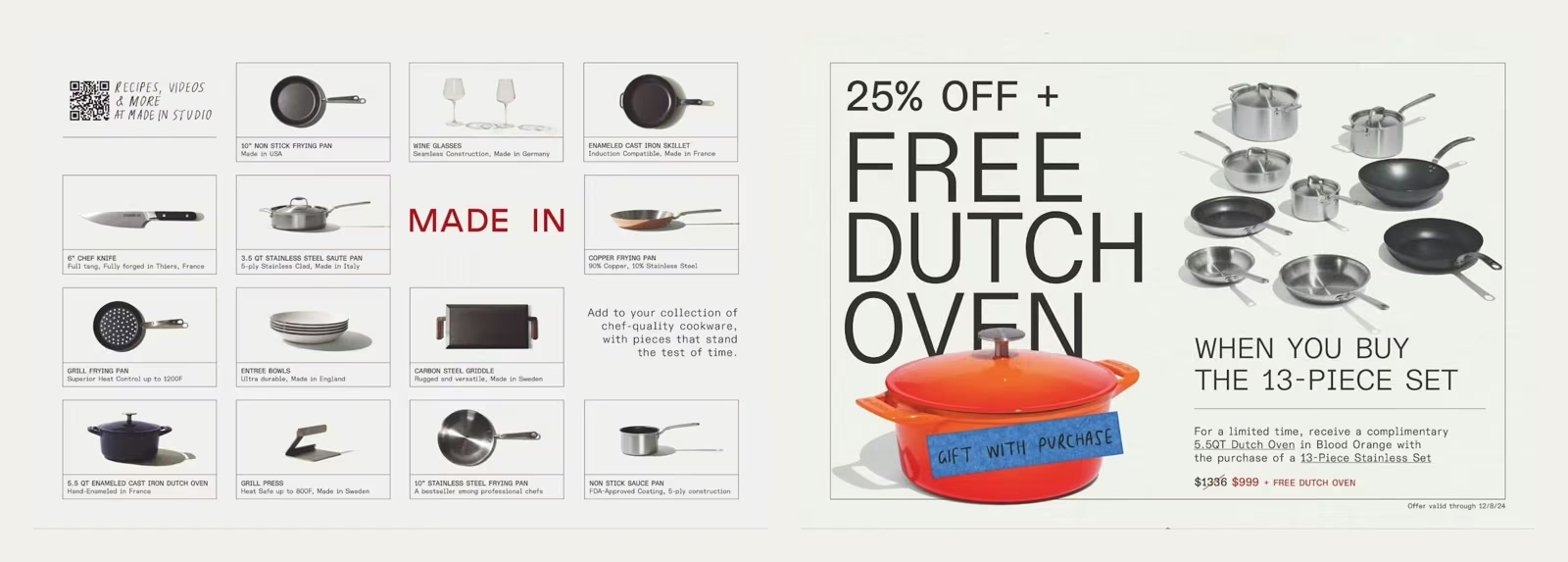
When Red Land Cotton split its BFCM winbacks into 10 segments by recency, frequency and spend, every segment returned at least 9.8x ROAS.
Tactic 3: Use First-Party Data to Reach Customers Before They Lapse
Every product has a natural repurchase window. Your order data (or a time-between-orders report) shows the typical gap between first and second order for each product type.
Schedule a card to land as each customer approaches that window. At that point you're still keeping a customer, which is a lot easier than chasing one who left six months ago. And a postcard does something email can't: it sits on the kitchen counter for days, where the whole household sees it.
The data behind this is the same first-party data you hand your ad platforms to build lookalike audiences. Point it at the buyers you already have, too. Set it up as an automated campaign that fires when a customer enters the "approaching repurchase window" segment, and it runs every day without anyone touching it. More on building these in our post on first-party data retargeting campaigns.
Results
Caddis (the anti anti-aging eyewear brand) runs a second-purchase postcard that fires when a customer has bought once and hasn't come back within a set window. It runs at up to 5.92x iROAS, holdout-tested.
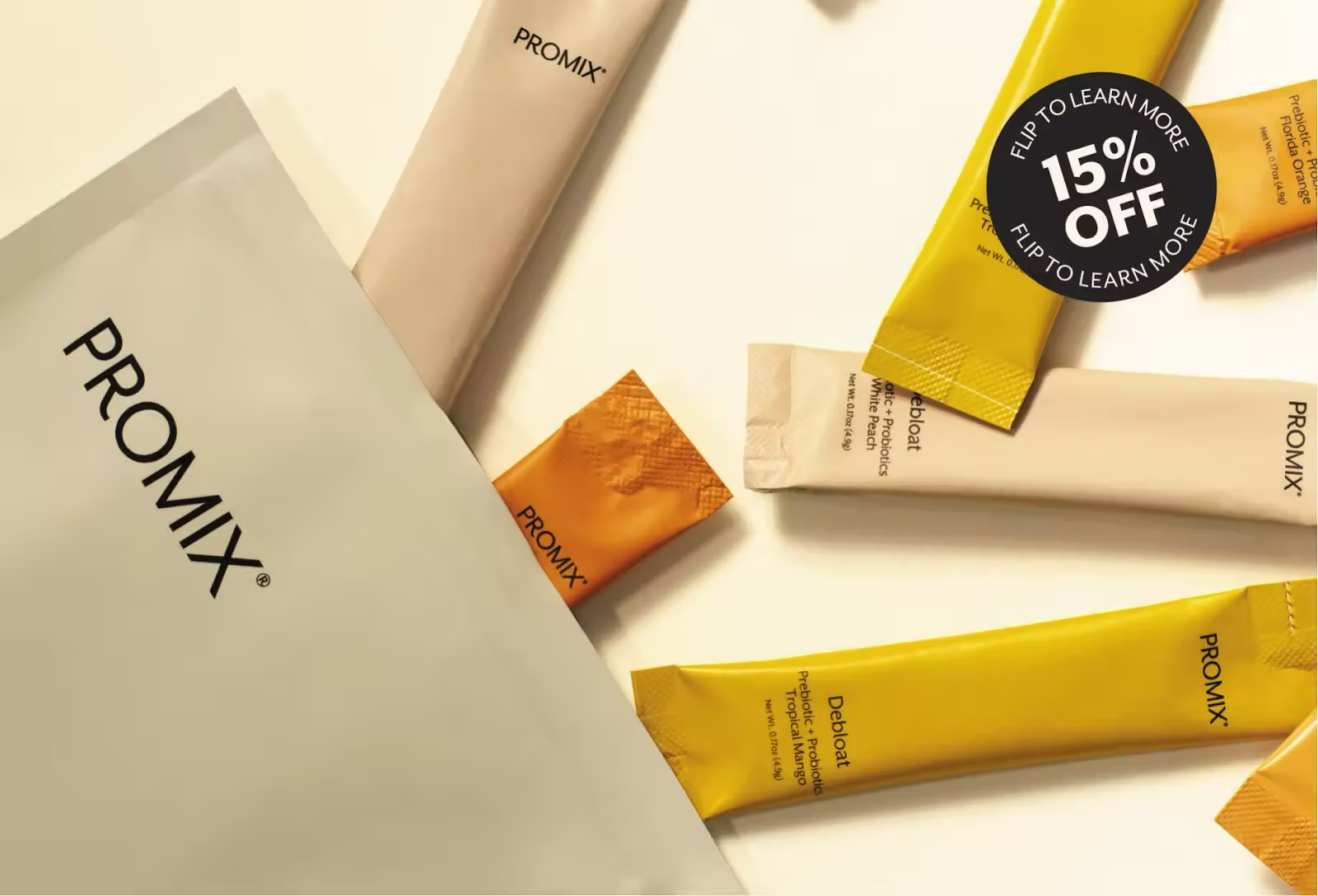
Promix Nutrition pushed further, sending cards to one-time buyers who had unsubscribed from email 30 to 60 days earlier. Once someone unsubscribes, email can't reach them at all. Promix reactivated that group at 20x+ ROAS.
Tactic 4: Pair Direct Mail With Your Email Flows
The usual pushback: "We already have post-purchase emails." Good. Keep them. Direct mail is the channel that reaches people after the inbox flows get ignored, and it does its best work layered on top of what you've built.
A simple post-purchase sequence looks like this:
- Day 1: email (order confirmation plus how to get the most out of the product)
- Day 10: postcard (second-order nudge with a single-use code)
- Day 20: SMS (reminder before the code expires)
Each touch lands somewhere different, so each one gets a fresh look.
If you run Klaviyo, the cards can fire off the same triggers as your existing flows, and PostPilot events show up on Klaviyo customer profiles, so your retention team sees the whole sequence in one place.
Our guide to pairing direct mail with email covers sequencing in more detail.

Results
Red Land Cotton layers mail and email the same way before the first order, too. On its welcome program, an automated postcard fires one week after signup, once the email series has wrapped, and returns 9x ROAS.
How PostPilot Automates This So It's Never a Manual Project
None of these tactics should eat your Mondays. We built PostPilot as direct mail automation software that runs on your Shopify and Klaviyo data, so each play above is a rule you set once:
- AcquisitionAI finds new customers modeled on your best existing ones, so the buyers you pay to acquire are the ones most likely to come back.
- MailMatch™ brings abandoned carts into the same automation. It identifies physical addresses based only on email information, so a shopper who left a cart before giving you an address can still get a card. (More on that in our guide to abandoned cart recovery via direct mail.)
- Automated and triggered campaigns handle the retention side: post-purchase cards, category segments, and repurchase-window sends fire on segment entry or customer behavior, with no manual list pulls.
You can run a holdout on any campaign to see the incremental lift: a random slice of the audience gets no card, and the gap in purchases between the two groups is what the mail drove. In our 2026 BFCM Benchmark Report, customers who received mail spent 14.5% more than identical customers in randomized no-mail holdouts.
For plan details, see PostPilot pricing. For proof from brands running these programs today, browse our PostPilot case studies.
Your customer retention program is already sitting in your order history. Book a demo and we'll map your first retention trigger with you.
Customer Retention FAQs
Are package inserts or direct mail better for customer acquisition?
They do different jobs. An insert in your own box reaches someone who just bought, which makes it a retention tool. For acquisition, direct mail lets you choose who gets the piece (such as lookalike audiences modeled on your best customers) and measure the lift with a holdout.
How do ecommerce brands use direct mail to drive repeat purchases?
The core plays are a post-purchase postcard timed to product arrival, category-specific follow-ups based on the first order, and repurchase-window sends before a customer lapses. Each runs as an automation alongside your email and SMS flows.
How do brands automate direct mail around digital customer signals?
Connect your direct mail platform to Shopify and your ESP, then let events (a first order, a cart left behind, a customer entering a lapse segment) trigger a card automatically. That puts mail into the same lifecycle stages as your email flows, with no manual list pulls.
How do retailers use direct mail for winback?
They send cards to lapsed buyers at addresses they already have, usually split by how recently and how often each customer bought. Made In runs its winbacks on PostPilot at 10x+ iROAS, holdout-tested.
Your best customer list lives in your Shopify order history, and you're probably sending it exactly zero postcards.
Meanwhile, Meta Ads Manager gets the budget, the dashboard, and the Monday meeting.
Every person in that order history already trusted you with a card number and a shipping address.
And most of them will never buy again (with a standard set of marketing tactics, anyway).
That's the customer retention gap, and it's the easiest growth problem to fix for DTC brands.
This is where we can say that direct mail can help with that. (Because it can. A lot).
Below are four direct mail tactics that turn first-time buyers into repeat customers, all built on data you already own.
Why Acquisition-Only Brands Keep Bleeding Cash
Paid acquisition gets more expensive every year.
Repeat purchase rate, meanwhile, sits flat at most DTC brands.
That second order is the most important moment in the customer lifecycle, because it's the strongest predictor of lifetime value.
It's also the most underfunded metric in ecommerce.
Direct mail fills this gap, and does so successfully... very successfully.
For a simple reason: mailboxes are far less crowded than inboxes.
According to the USPS 2025 Household Mail Survey, the average person sees more digital ads in one day than direct mail ads in an entire year, so a card from a brand someone just bought from has room to land. (We go deeper on the LTV side in our guide to boosting Shopify retention and LTV.)
Tactic 1: The Automated Post-Purchase Postcard
Start here. Set a postcard to fire a fixed number of days after a customer's first order, timed so it arrives shortly after the product does. They've unboxed it, they've used it, and now a card shows up with a reason to come back.
The copy has one job: get the second order. Pair the thank-you with a next step: a complementary category, a reorder reminder, or a time-bound offer on a single-use coupon code.
This is a set-once, runs-forever automation. You build the trigger and the creative one time, and every new first-time buyer gets the card without anyone pulling a list.
Automation also outperforms. In our 2026 BFCM Benchmark Report, automated programs drove 1.5x to 1.7x the incremental performance of one-off sends. And they kept working after the holiday rush: once BFCM ended, revenue from one-off mail fell about 84%, while automated programs held on to roughly half of theirs.
BTW... Our automated customer retention playbook walks through the build.
Tactic 2: Segment by First-Purchase Category
Batch-and-blast retention mail treats every buyer as the same buyer. A skincare brand's first-time serum buyer and first-time cleanser buyer are on different paths: one probably needs a moisturizer to round out the routine, the other might be ready to try the serum.
Your order data knows which path each person is on. Use the first-purchase category to route buyers to different card designs, one design per category segment, each with its own creative and its own next-product offer.
Most brands skip this because it sounds like a big setup project. It's one rule: if the first order contains category A, send design A.
Results
Segmenting pays off well beyond product category, too.
When Red Land Cotton split its BFCM winbacks into 10 segments by recency, frequency and spend, every segment returned at least 9.8x ROAS.
Tactic 3: Use First-Party Data to Reach Customers Before They Lapse
Every product has a natural repurchase window. Your order data (or a time-between-orders report) shows the typical gap between first and second order for each product type.
Schedule a card to land as each customer approaches that window. At that point you're still keeping a customer, which is a lot easier than chasing one who left six months ago. And a postcard does something email can't: it sits on the kitchen counter for days, where the whole household sees it.
The data behind this is the same first-party data you hand your ad platforms to build lookalike audiences. Point it at the buyers you already have, too. Set it up as an automated campaign that fires when a customer enters the "approaching repurchase window" segment, and it runs every day without anyone touching it. More on building these in our post on first-party data retargeting campaigns.
Results
Caddis (the anti anti-aging eyewear brand) runs a second-purchase postcard that fires when a customer has bought once and hasn't come back within a set window. It runs at up to 5.92x iROAS, holdout-tested.
Promix Nutrition pushed further, sending cards to one-time buyers who had unsubscribed from email 30 to 60 days earlier. Once someone unsubscribes, email can't reach them at all. Promix reactivated that group at 20x+ ROAS.
Tactic 4: Pair Direct Mail With Your Email Flows
The usual pushback: "We already have post-purchase emails." Good. Keep them. Direct mail is the channel that reaches people after the inbox flows get ignored, and it does its best work layered on top of what you've built.
A simple post-purchase sequence looks like this:
- Day 1: email (order confirmation plus how to get the most out of the product)
- Day 10: postcard (second-order nudge with a single-use code)
- Day 20: SMS (reminder before the code expires)
Each touch lands somewhere different, so each one gets a fresh look.
If you run Klaviyo, the cards can fire off the same triggers as your existing flows, and PostPilot events show up on Klaviyo customer profiles, so your retention team sees the whole sequence in one place.
Our guide to pairing direct mail with email covers sequencing in more detail.
Results
Red Land Cotton layers mail and email the same way before the first order, too. On its welcome program, an automated postcard fires one week after signup, once the email series has wrapped, and returns 9x ROAS.
How PostPilot Automates This So It's Never a Manual Project
None of these tactics should eat your Mondays. We built PostPilot as direct mail automation software that runs on your Shopify and Klaviyo data, so each play above is a rule you set once:
- AcquisitionAI finds new customers modeled on your best existing ones, so the buyers you pay to acquire are the ones most likely to come back.
- MailMatch™ brings abandoned carts into the same automation. It identifies physical addresses based only on email information, so a shopper who left a cart before giving you an address can still get a card. (More on that in our guide to abandoned cart recovery via direct mail.)
- Automated and triggered campaigns handle the retention side: post-purchase cards, category segments, and repurchase-window sends fire on segment entry or customer behavior, with no manual list pulls.
You can run a holdout on any campaign to see the incremental lift: a random slice of the audience gets no card, and the gap in purchases between the two groups is what the mail drove. In our 2026 BFCM Benchmark Report, customers who received mail spent 14.5% more than identical customers in randomized no-mail holdouts.
For plan details, see PostPilot pricing. For proof from brands running these programs today, browse our PostPilot case studies.
Your customer retention program is already sitting in your order history. Book a demo and we'll map your first retention trigger with you.
Customer Retention FAQs
Are package inserts or direct mail better for customer acquisition?
They do different jobs. An insert in your own box reaches someone who just bought, which makes it a retention tool. For acquisition, direct mail lets you choose who gets the piece (such as lookalike audiences modeled on your best customers) and measure the lift with a holdout.
How do ecommerce brands use direct mail to drive repeat purchases?
The core plays are a post-purchase postcard timed to product arrival, category-specific follow-ups based on the first order, and repurchase-window sends before a customer lapses. Each runs as an automation alongside your email and SMS flows.
How do brands automate direct mail around digital customer signals?
Connect your direct mail platform to Shopify and your ESP, then let events (a first order, a cart left behind, a customer entering a lapse segment) trigger a card automatically. That puts mail into the same lifecycle stages as your email flows, with no manual list pulls.
How do retailers use direct mail for winback?
They send cards to lapsed buyers at addresses they already have, usually split by how recently and how often each customer bought. Made In runs its winbacks on PostPilot at 10x+ iROAS, holdout-tested.