
October 16, 2026
Ready to increase your revenue?
Join thousands of ecommerce brands using PostPilot to acquire more customers & keep them coming back again (and again).
No contracts. No minimums.


The traditional definition of behavioral marketing is typically along these lines:
“A strategy that targets consumers based on their specific actions, such as browsing history, purchase patterns, and website engagement.”
To be honest… That definition misses a lot. Somewhere along the way, “behavioral marketing” became synonymous with retargeting.
Sure, technically someone clicking a button is “behavior,” but strategically, that’s a bit shallow.
Because behavior isn’t just what someone does. It’s why they do it. It’s about matching the shopper's emotional state to their actions.
The brands that see performance compound aren’t necessarily louder or more aggressive.
They’re better at matching emotional pressure with the right message, in the right channel, at the right moment.
That traditional buyer’s journey you learned about in school?
Gone. Moot. Better yet, throw it in your mental trashbin.

The fault in how we used to look at the buyer’s journey from 20 years ago is it’s far too linear. It assumes people go from unengaged to deciding to buyer in one simple sweep.
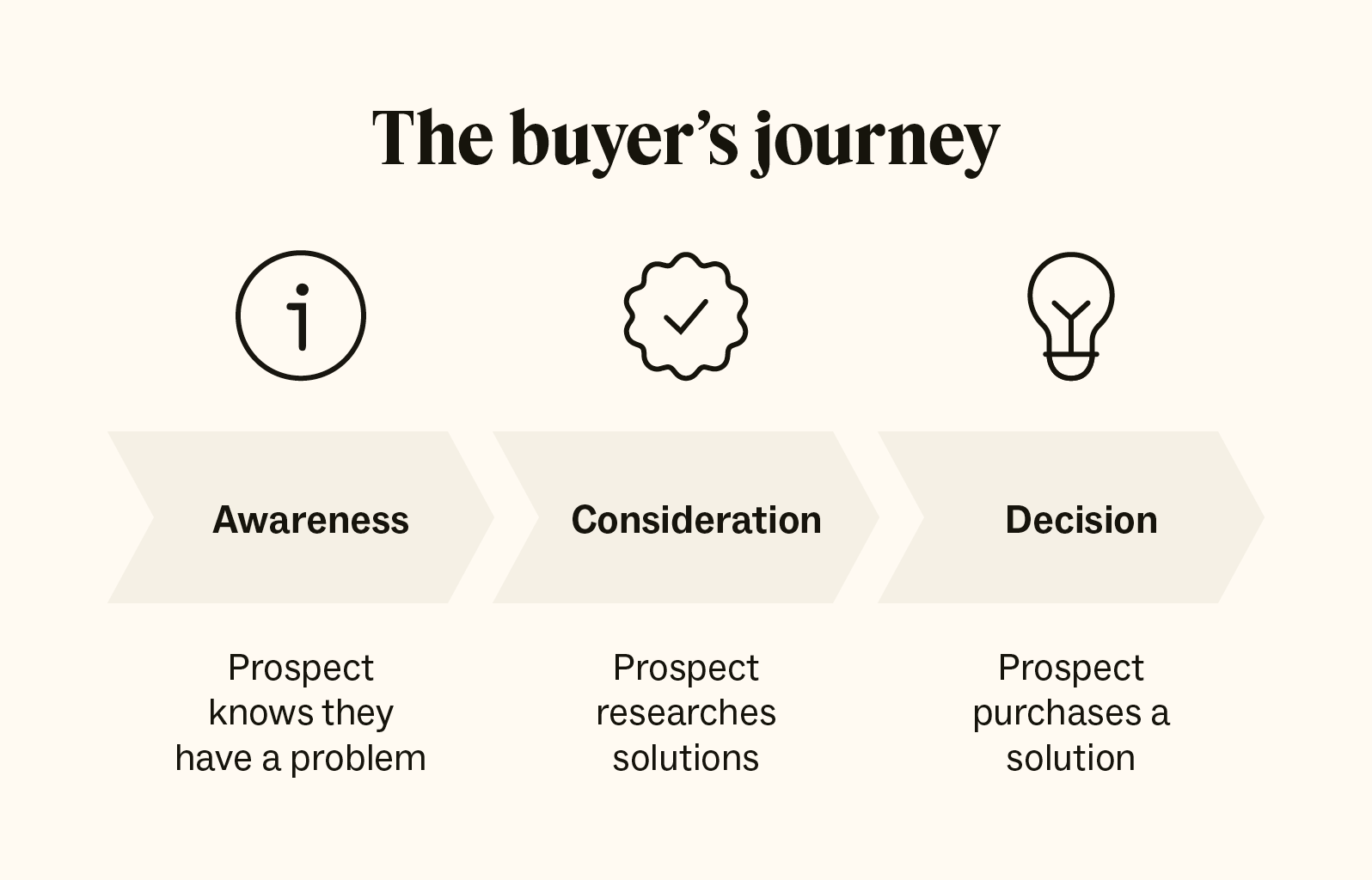
Because of that, marketing teams will invest in Klaviyo flows but ignore what support tickets are revealing. They’ll run quizzes but never use that data in acquisition. They’ll retarget aggressively without understanding why people hesitated in the first place.
But customers don’t experience your brand in silos. They move fluidly between:
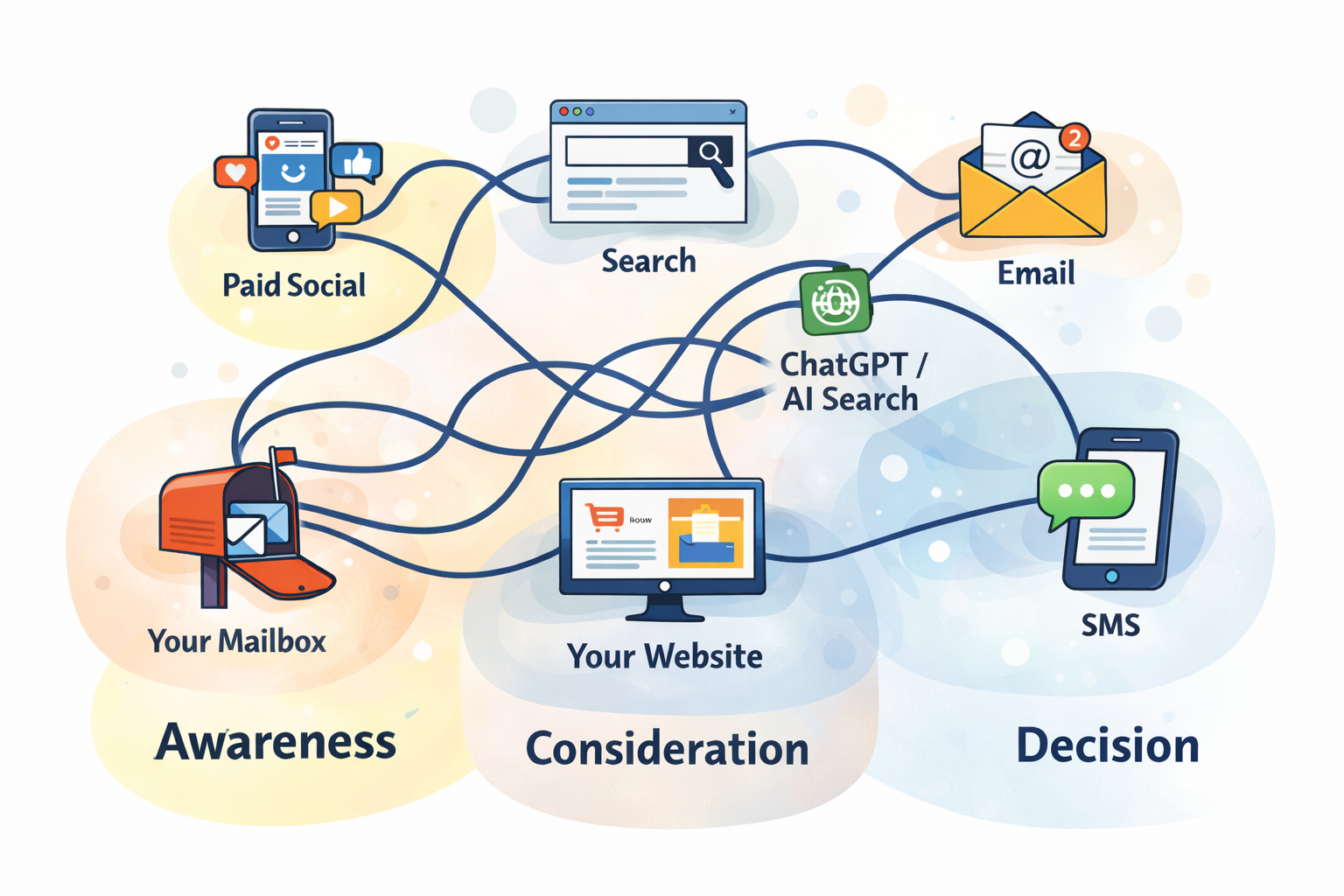
One minute, they may be ready to buy, and the next they’re distracted and suddenly texting a friend back, forgetting to place their order.
And then they don’t remember to finish their order until one of your ads pops up on their late-night TikTok scroll.
If your behavioral strategy only activates in one channel, it fractures.
Before you launch a campaign, you need to answer one question: What decision is this person being asked to make, and what emotional state are they in when they make it?
Someone can view a product five times, open three emails, click two ads… And still not be emotionally ready to buy.
Behavioral marketing breaks down when we confuse activity with motivation. Because behavior is layered. What looks like “high intent” on a dashboard may actually be hesitation, comparison shopping, or quiet anxiety about making the wrong choice.
If you want to apply emotion first, here’s how to make it practical.
Cold, warm, and returning traffic reflect different emotional jobs.
At this stage, shoppers are scanning for safety and credibility signals:
They aren’t looking for bold identity positioning or aggressive urgency. They’re looking to reduce risk.
Tactically, that means your acquisition ads, landing pages, and first-touch emails should over-index on proof and clarity. Reviews should be visible without effort. Guarantees should be explicit. Claims should be simple. If bounce rates are high with new visitors, it can signal a trust gap, not a creative gap.
Now the internal question shifts from “Is this safe?” to “Is this right for me?”
This is where decision support becomes more important than persuasion. Shoppers want reassurance that they’re choosing correctly, not just that they’re choosing something functional.
In practice, this is where behavioral segmentation becomes powerful. Someone who spent time on comparison pages needs different messaging than someone who completed a quiz.
Identity reinforcement, “people like you” testimonials, durability claims, and side-by-side breakdowns all reduce the fear of choosing wrong. If warm audiences stall, it’s often because they lack confidence, not because they need a bigger discount.
The belief barrier is already cleared. The friction now is effort.
These shoppers are wondering about things like… Do I have to re-enter my information? Is this faster than trying something new? Does this brand recognize me?
Here, personalization and operational ease matter more than persuasion. Reorder buttons, pre-filled carts, loyalty reinforcement, and relevant product recommendations reduce resistance in a way urgency never will.
When brands send the same message to all three groups, performance plateaus. Not because the tactic is wrong, but because it’s misaligned with the emotional state of the person receiving it. Segmentation, at its core, is emotional alignment.
Testing typically starts at the surface: swap the headline, tweak the button copy, move social proof higher on the page. But without a clear hypothesis about what the shopper is trying to resolve emotionally, those tests become structured guessing.
A more useful starting point is this: What perceived risk is the customer managing in this moment?
Are they worried about wasting money? Committing too quickly? Choosing incorrectly? Looking foolish? Missing out?
Once you identify the risk, the test becomes sharper.
You’re no longer testing words; you’re testing perceived commitment. You’re no longer rearranging layouts randomly; you’re guiding attention to reduce uncertainty. You’re not injecting urgency everywhere; you’re deciding whether the shopper needs reassurance or momentum.
The visual change on the page might be small — a softer CTA, a clearer guarantee, stronger testimonial placement — but the variable being tested is psychological.
That’s what allows learnings to compound instead of resetting every quarter.
There’s an uncomfortable truth most dashboards won’t show you: how someone feels. They only tell you what someone did.
If you want emotional insight, you have to collect it intentionally.
The goal isn’t to accumulate more data. It’s to identify where emotional pressure is stacking up, and whether your messaging is relieving it or amplifying it.
When you build that understanding into your acquisition, lifecycle, personalization, and testing efforts, behavioral marketing stops being reactive.
You’re no longer chasing isolated clicks or optimizing pages in isolation. You’re designing a system that connects emotional state to message, channel, and timing.
THAT should be the definition of behavioral marketing.
If behavioral marketing is about aligning with emotional state, then your software stack needs to do more than track clicks.
It needs to help you connect four layers:
Most tools only capture the last one. The brands that see performance compound build a stack that connects all four.
Below is a breakdown of ecommerce tools that support a full behavioral strategy.
These tools help you understand how customers feel, not just what they click.
Category: Post-purchase, NPS, and email surveys
Best for: Brands that want to understand acquisition drivers and emotional triggers behind conversion
Key Features:
Why It Matters Behaviorally:
Post-purchase surveys capture sentiment at the exact moment emotional pressure resolves. Instead of guessing what worked, brands see whether conversion was driven by trust, price sensitivity, influencer validation, urgency, or brand alignment.
This is where intent (I decided to buy) meets emotion (here’s why I finally felt ready).
Category: Quizzes and zero-party data collection
Best for: Brands that sell SKUs requiring guidance, identity alignment, or personalization
Key Features:
Why It Matters Behaviorally:
Quizzes surface identity signals before purchase. They reveal how shoppers self-identify, what tradeoffs they prioritize, and where they lack confidence.
Instead of reacting to behavior after the fact, brands can segment based on emotional positioning before conversion.
Category: Heatmaps and onsite behavioral analytics
Best for: Brands optimizing onsite friction and hesitation
Key Features:
Why It Matters Behaviorally:
Heatmaps and session recordings show where friction quietly builds. Where are users hovering? Where are they abandoning? What sections are ignored?
This connects action (drop-off) to inferred emotional state (confusion, hesitation, overwhelm).
These tools turn emotional insight into triggered communication.
Category: Email and SMS automation
Best for: Ecommerce lifecycle marketing
Key Features:
Why It Matters Behaviorally:
Klaviyo captures behavioral intent signals in real time. But the advantage isn’t just the triggers alone, it’s how brands frame messaging differently based on the emotional stage.
Browse abandonment for a first-time visitor should feel like reassurance. For a loyal customer, it might feel like momentum.
Intent + emotional alignment = higher conversion lift.
Category: Ecommerce helpdesk
Best for: Brands integrating support and marketing data
Key Features:
Why It Matters Behaviorally:
Support tickets are real-time emotional data. Repeated questions about sizing, returns, or shipping reveal friction points. Feeding that back into lifecycle messaging reduces hesitation before it becomes abandonment.
Sentiment becomes action.
Category: Customer Data Platform
Best for: Brands centralizing cross-channel data
Key Features:
Why It Matters Behaviorally:
Without unified data, emotional patterns disappear across channels. CDPs help connect browsing behavior, email engagement, purchase history, and support interactions into a single behavioral profile.
This is where intent becomes longitudinal, not isolated.
These tools shape the decision environment itself.
Category: Ecommerce personalization engine
Best for: Brands optimizing AOV and contextual product recommendations
Key Features:
Why It Matters Behaviorally:
Rebuy adapts recommendations based on cart behavior, purchase history, and browsing signals. A first-time buyer might need curated guidance. A returning customer might respond better to replenishment or premium add-ons.
Personalization works when it matches emotional confidence level.
Category: A/B testing & experimentation
Best for: Brands running structured behavioral experiments
Key Features:
Why It Matters Behaviorally:
Testing platforms are only as powerful as the hypotheses behind them. Behavior-science–led experiments test perceived risk, commitment level, attention salience, and emotional framing.
Action becomes insight.
Digital behavioral marketing is largely reactive:
Direct mail allows brands to act predictively, using modeled behavioral data instead of waiting for declared intent.
Category: Direct mail automation for ecommerce
Best for: Brands scaling acquisition, retention, and winback via predictive direct mail
Key Features:
Why It Matters Behaviorally:
PostPilot connects modeled intent (who statistically resembles your best buyers) with verified household-level delivery.
In a privacy-constrained ecosystem, where cookies disappear and platform algorithms shift, direct mail provides permanence, precision, and predictive reach.
Intent + emotion + action, but delivered physically.
Mizzen+Main, the fast-growing menswear brand, came to PostPilot to integrate direct mail into their existing stack, which included Shopify, Klaviyo, and customer intelligence platform OuterSignal.
Instead of manually exporting lists, coordinating printers, and waiting months for performance reports, PostPilot made direct mail behave like their other lifecycle channels:

One OuterSignal-powered executive segment became Mizzen+Main’s highest-performing direct mail campaign ever, generating 20x+ ROAS. Automated winbacks drove 8x+ ROAS. Catalog campaigns targeting unsubscribed customers consistently hit 6–8x ROAS.
Again…
All automated.
That’s what happens when behavioral segmentation, predictive targeting, lifecycle triggers, and performance tracking all live inside one system.
At its core, behavioral marketing comes down to one thing: reaching the right person, at the right moment, with the right message.
And we get it, it sounds complex because it seems like there are a lot of moving parts. There are, but that’s why the systems you use are well integrated.
Instead of manually exporting lists, modeling audiences, coordinating creative, managing print vendors, and tracking performance separately, PostPilot brings predictive targeting, lifecycle triggers, and ecommerce integrations into a single system.
It allows you to:
Because behavioral marketing only works when intent, sentiment, emotion, and action are aligned across the entire customer journey.
Book a call with an expert on our team here if you want to learn more.
The traditional definition of behavioral marketing is typically along these lines:
“A strategy that targets consumers based on their specific actions, such as browsing history, purchase patterns, and website engagement.”
To be honest… That definition misses a lot. Somewhere along the way, “behavioral marketing” became synonymous with retargeting.
Sure, technically someone clicking a button is “behavior,” but strategically, that’s a bit shallow.
Because behavior isn’t just what someone does. It’s why they do it. It’s about matching the shopper's emotional state to their actions.
The brands that see performance compound aren’t necessarily louder or more aggressive.
They’re better at matching emotional pressure with the right message, in the right channel, at the right moment.
That traditional buyer’s journey you learned about in school?
Gone. Moot. Better yet, throw it in your mental trashbin.
The fault in how we used to look at the buyer’s journey from 20 years ago is it’s far too linear. It assumes people go from unengaged to deciding to buyer in one simple sweep.
Because of that, marketing teams will invest in Klaviyo flows but ignore what support tickets are revealing. They’ll run quizzes but never use that data in acquisition. They’ll retarget aggressively without understanding why people hesitated in the first place.
But customers don’t experience your brand in silos. They move fluidly between:
One minute, they may be ready to buy, and the next they’re distracted and suddenly texting a friend back, forgetting to place their order.
And then they don’t remember to finish their order until one of your ads pops up on their late-night TikTok scroll.
If your behavioral strategy only activates in one channel, it fractures.
Before you launch a campaign, you need to answer one question: What decision is this person being asked to make, and what emotional state are they in when they make it?
Someone can view a product five times, open three emails, click two ads… And still not be emotionally ready to buy.
Behavioral marketing breaks down when we confuse activity with motivation. Because behavior is layered. What looks like “high intent” on a dashboard may actually be hesitation, comparison shopping, or quiet anxiety about making the wrong choice.
If you want to apply emotion first, here’s how to make it practical.
Cold, warm, and returning traffic reflect different emotional jobs.
At this stage, shoppers are scanning for safety and credibility signals:
They aren’t looking for bold identity positioning or aggressive urgency. They’re looking to reduce risk.
Tactically, that means your acquisition ads, landing pages, and first-touch emails should over-index on proof and clarity. Reviews should be visible without effort. Guarantees should be explicit. Claims should be simple. If bounce rates are high with new visitors, it can signal a trust gap, not a creative gap.
Now the internal question shifts from “Is this safe?” to “Is this right for me?”
This is where decision support becomes more important than persuasion. Shoppers want reassurance that they’re choosing correctly, not just that they’re choosing something functional.
In practice, this is where behavioral segmentation becomes powerful. Someone who spent time on comparison pages needs different messaging than someone who completed a quiz.
Identity reinforcement, “people like you” testimonials, durability claims, and side-by-side breakdowns all reduce the fear of choosing wrong. If warm audiences stall, it’s often because they lack confidence, not because they need a bigger discount.
The belief barrier is already cleared. The friction now is effort.
These shoppers are wondering about things like… Do I have to re-enter my information? Is this faster than trying something new? Does this brand recognize me?
Here, personalization and operational ease matter more than persuasion. Reorder buttons, pre-filled carts, loyalty reinforcement, and relevant product recommendations reduce resistance in a way urgency never will.
When brands send the same message to all three groups, performance plateaus. Not because the tactic is wrong, but because it’s misaligned with the emotional state of the person receiving it. Segmentation, at its core, is emotional alignment.
Testing typically starts at the surface: swap the headline, tweak the button copy, move social proof higher on the page. But without a clear hypothesis about what the shopper is trying to resolve emotionally, those tests become structured guessing.
A more useful starting point is this: What perceived risk is the customer managing in this moment?
Are they worried about wasting money? Committing too quickly? Choosing incorrectly? Looking foolish? Missing out?
Once you identify the risk, the test becomes sharper.
You’re no longer testing words; you’re testing perceived commitment. You’re no longer rearranging layouts randomly; you’re guiding attention to reduce uncertainty. You’re not injecting urgency everywhere; you’re deciding whether the shopper needs reassurance or momentum.
The visual change on the page might be small — a softer CTA, a clearer guarantee, stronger testimonial placement — but the variable being tested is psychological.
That’s what allows learnings to compound instead of resetting every quarter.
There’s an uncomfortable truth most dashboards won’t show you: how someone feels. They only tell you what someone did.
If you want emotional insight, you have to collect it intentionally.
The goal isn’t to accumulate more data. It’s to identify where emotional pressure is stacking up, and whether your messaging is relieving it or amplifying it.
When you build that understanding into your acquisition, lifecycle, personalization, and testing efforts, behavioral marketing stops being reactive.
You’re no longer chasing isolated clicks or optimizing pages in isolation. You’re designing a system that connects emotional state to message, channel, and timing.
THAT should be the definition of behavioral marketing.
If behavioral marketing is about aligning with emotional state, then your software stack needs to do more than track clicks.
It needs to help you connect four layers:
Most tools only capture the last one. The brands that see performance compound build a stack that connects all four.
Below is a breakdown of ecommerce tools that support a full behavioral strategy.
These tools help you understand how customers feel, not just what they click.
Category: Post-purchase, NPS, and email surveys
Best for: Brands that want to understand acquisition drivers and emotional triggers behind conversion
Key Features:
Why It Matters Behaviorally:
Post-purchase surveys capture sentiment at the exact moment emotional pressure resolves. Instead of guessing what worked, brands see whether conversion was driven by trust, price sensitivity, influencer validation, urgency, or brand alignment.
This is where intent (I decided to buy) meets emotion (here’s why I finally felt ready).
Category: Quizzes and zero-party data collection
Best for: Brands that sell SKUs requiring guidance, identity alignment, or personalization
Key Features:
Why It Matters Behaviorally:
Quizzes surface identity signals before purchase. They reveal how shoppers self-identify, what tradeoffs they prioritize, and where they lack confidence.
Instead of reacting to behavior after the fact, brands can segment based on emotional positioning before conversion.
Category: Heatmaps and onsite behavioral analytics
Best for: Brands optimizing onsite friction and hesitation
Key Features:
Why It Matters Behaviorally:
Heatmaps and session recordings show where friction quietly builds. Where are users hovering? Where are they abandoning? What sections are ignored?
This connects action (drop-off) to inferred emotional state (confusion, hesitation, overwhelm).
These tools turn emotional insight into triggered communication.
Category: Email and SMS automation
Best for: Ecommerce lifecycle marketing
Key Features:
Why It Matters Behaviorally:
Klaviyo captures behavioral intent signals in real time. But the advantage isn’t just the triggers alone, it’s how brands frame messaging differently based on the emotional stage.
Browse abandonment for a first-time visitor should feel like reassurance. For a loyal customer, it might feel like momentum.
Intent + emotional alignment = higher conversion lift.
Category: Ecommerce helpdesk
Best for: Brands integrating support and marketing data
Key Features:
Why It Matters Behaviorally:
Support tickets are real-time emotional data. Repeated questions about sizing, returns, or shipping reveal friction points. Feeding that back into lifecycle messaging reduces hesitation before it becomes abandonment.
Sentiment becomes action.
Category: Customer Data Platform
Best for: Brands centralizing cross-channel data
Key Features:
Why It Matters Behaviorally:
Without unified data, emotional patterns disappear across channels. CDPs help connect browsing behavior, email engagement, purchase history, and support interactions into a single behavioral profile.
This is where intent becomes longitudinal, not isolated.
These tools shape the decision environment itself.
Category: Ecommerce personalization engine
Best for: Brands optimizing AOV and contextual product recommendations
Key Features:
Why It Matters Behaviorally:
Rebuy adapts recommendations based on cart behavior, purchase history, and browsing signals. A first-time buyer might need curated guidance. A returning customer might respond better to replenishment or premium add-ons.
Personalization works when it matches emotional confidence level.
Category: A/B testing & experimentation
Best for: Brands running structured behavioral experiments
Key Features:
Why It Matters Behaviorally:
Testing platforms are only as powerful as the hypotheses behind them. Behavior-science–led experiments test perceived risk, commitment level, attention salience, and emotional framing.
Action becomes insight.
Digital behavioral marketing is largely reactive:
Direct mail allows brands to act predictively, using modeled behavioral data instead of waiting for declared intent.
Category: Direct mail automation for ecommerce
Best for: Brands scaling acquisition, retention, and winback via predictive direct mail
Key Features:
Why It Matters Behaviorally:
PostPilot connects modeled intent (who statistically resembles your best buyers) with verified household-level delivery.
In a privacy-constrained ecosystem, where cookies disappear and platform algorithms shift, direct mail provides permanence, precision, and predictive reach.
Intent + emotion + action, but delivered physically.
Mizzen+Main, the fast-growing menswear brand, came to PostPilot to integrate direct mail into their existing stack, which included Shopify, Klaviyo, and customer intelligence platform OuterSignal.
Instead of manually exporting lists, coordinating printers, and waiting months for performance reports, PostPilot made direct mail behave like their other lifecycle channels:
One OuterSignal-powered executive segment became Mizzen+Main’s highest-performing direct mail campaign ever, generating 20x+ ROAS. Automated winbacks drove 8x+ ROAS. Catalog campaigns targeting unsubscribed customers consistently hit 6–8x ROAS.
Again…
All automated.
That’s what happens when behavioral segmentation, predictive targeting, lifecycle triggers, and performance tracking all live inside one system.
At its core, behavioral marketing comes down to one thing: reaching the right person, at the right moment, with the right message.
And we get it, it sounds complex because it seems like there are a lot of moving parts. There are, but that’s why the systems you use are well integrated.
Instead of manually exporting lists, modeling audiences, coordinating creative, managing print vendors, and tracking performance separately, PostPilot brings predictive targeting, lifecycle triggers, and ecommerce integrations into a single system.
It allows you to:
Because behavioral marketing only works when intent, sentiment, emotion, and action are aligned across the entire customer journey.
Book a call with an expert on our team here if you want to learn more.

Join thousands of ecommerce brands using PostPilot to acquire more customers & keep them coming back again (and again).
No contracts. No minimums.