
September 11, 2026
Ready to increase your revenue?
Join thousands of ecommerce brands using PostPilot to acquire more customers & keep them coming back again (and again).
No contracts. No minimums.


There’s a moment every brand hits. Revenue dips and repeat purchase softens. When it happens, there’s always someone on the team who says, “Let’s just run a winback campaign.”
It’s a great idea… But usually what follows is a 3-part email campaign that features:
This isn’t the best way to approach customer reactivation.
Why? Not only does steep discounting devalue your brand, but it also doesn’t address the root cause of why someone left in the first place.
The best winbacks remind, reframe, then re-invite.
Let’s break down what that looks like in the wild.
Only 44% of marketers use lifecycle emails. And of that group, only 24% send re-engagement emails.
That means the majority of brands aren’t systematically trying to win customers back. Not because they don’t care about churn, but because they treat it reactively instead of systematically.
Reactivation, at its core, is any effort to regain a lost user or customer. That could be:
They’re people who’ve already shown intent. They’ve interacted with your brand in some meaningful way. That prior engagement makes them fundamentally different from net-new prospects.
And the truth? It’s almost always more efficient to re-engage someone who already knows you than to convince someone entirely new.
Reactivation doesn’t have to live inside one channel, either. It can show up through email, push notifications, in-app messaging, paid ads, and/or direct mail.
The question isn’t whether customers will churn.
Because they will.
The question is whether you have a system designed to bring them back. Here’s a customer reactivation strategy to get you started:
Before building flows or dashboards, start with customer insight.
Reactivation should be informed by real churn reasons, not assumptions. That insight can come from:
Did customers leave because the product didn’t meet expectations? Because pricing felt high? Because onboarding was confusing? Because a competitor offered better flexibility?
Segmenting customers by churn reason allows you to tailor messaging and incentives. If churn is seasonal, your messaging should reframe usage.
If dissatisfaction drove churn, improvement messaging may outperform discounting.
It’s tempting to try to fix everything at once. A better approach is to focus on the segments most likely to generate incremental ROI.
That often includes:
You don’t need a perfect system to start.
An 80% solution launched quickly and refined over time will outperform a flawless strategy that never ships.
Before you attempt to reactivate anyone, make sure your data is reliable.
That includes:
If you can’t clearly identify who is inactive and why, you risk sending irrelevant messaging that accelerates disengagement.
Reactivation can happen across multiple channels: Email, SMS, Direct mail—there isn’t just one answer.
The most common mistake many brands make is relying exclusively on one.
Email is powerful, but suppressed customers are unreachable. Paid ads can scale, but without segmentation they become expensive reminders. Direct mail, while often underused, can reach high-value customers who have disengaged digitally.
Channel selection should align with customer value, churn reason, and timing.
Timing influences performance more than most creative tweaks.
For example, launching a VIP reactivation campaign just before peak season can:
A strong rule of thumb is to leverage RFM segmentation. Even in the AI era, RFM remains an incredibly powerful segmentation strategy that can inform when you can time your winbacks.
Effective reactivation answers the implicit question: “Why now?”
Reactivation creative isn’t the same as acquisition creative.
Acquisition convinces someone to try you. Reactivation reminds someone why they liked you, or gives them a reason to reconsider.
Before writing a single headline, anchor your creative in the churn reason. Every message should answer one of these questions:
If your creative doesn’t answer at least one of those, it’s probably just a discount in disguise.
A reactivation campaign isn’t “done” when it launches. It’s done when it’s either performing… or you’ve learned enough to change it.
The cleanest way to manage this is to treat reactivation like a portfolio:
Your goal is to build a feedback loop that gets tighter every cycle.
The brands that get the most out of reactivation don’t treat it like a seasonal initiative or a manual scramble.
They build it into their lifecycle so it runs consistently, improves over time, and doesn’t rely on someone remembering to “do winbacks.”
That looks like a few key shifts:
That’s when reactivation stops being a rescue mission and becomes part of a healthier lifecycle engine.
The strongest campaigns increase interaction, reinforce belonging, and re-establish momentum.
Below are several strategies that do exactly that.
No matter how robust your email program is, some customers will disengage. Once they’re suppressed, email is no longer an option.
This is where direct mail becomes strategically valuable.
One effective approach is identifying suppressed customers with two or more lifetime purchases and sending them a personalized postcard.
Why this works:
Grande Cosmetics is a strong example of this strategy in action. Facing declining paid performance and crowded inboxes, the beauty brand used postcards to reach VIP customers right when they were due for a refill of their $68 lash serum.
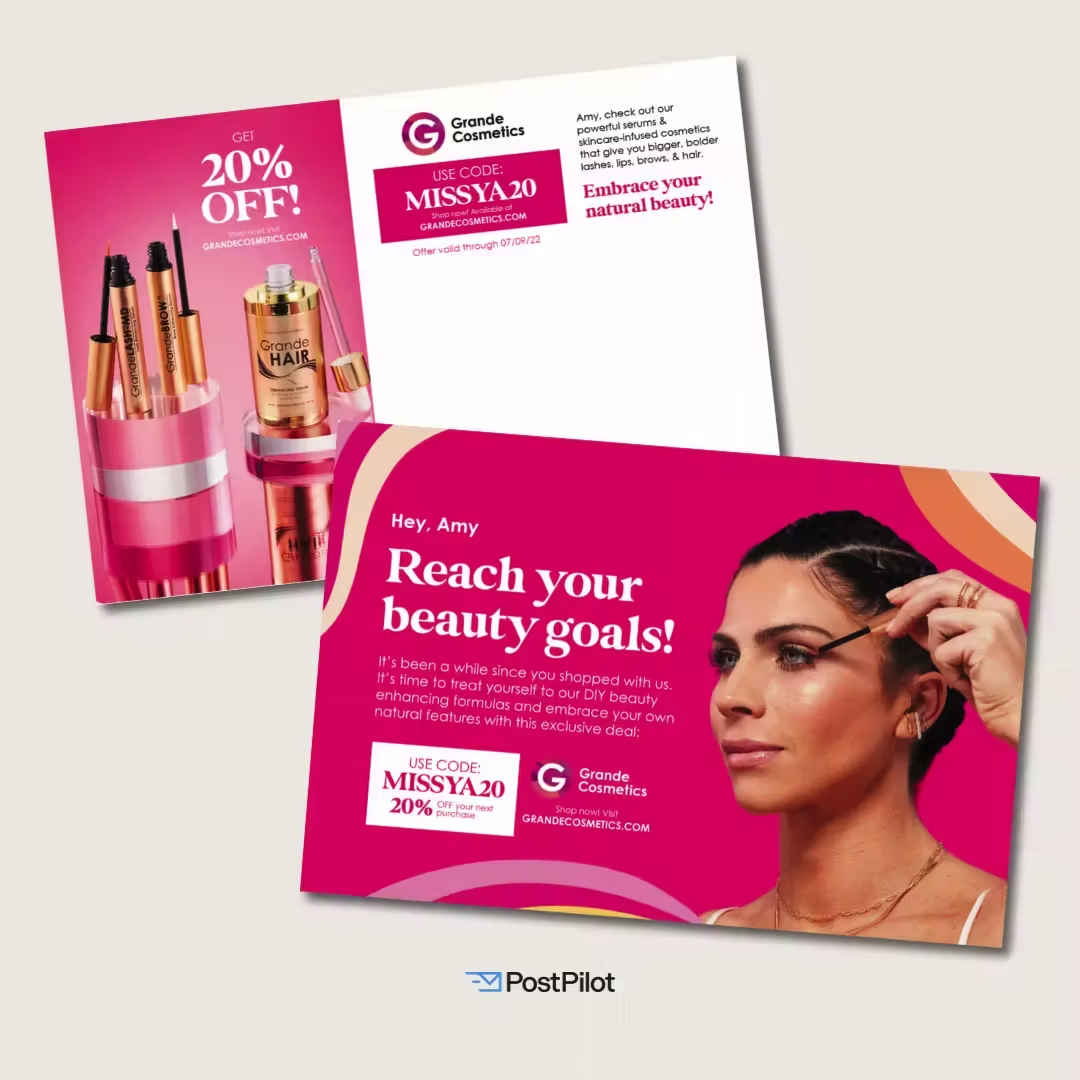
By segmenting customers who hadn’t purchased in three months and delivering a bold, on-brand 20% offer via direct mail, they generated $276,600 from a single VIP campaign and $96,000 across their initial winback sends from coupon codes alone.
Direct mail can also be layered into abandonment flows. For example:
This sequencing balances recency with channel diversification, protecting margins while recovering revenue.
Generic winback ads underperform because they ignore context.
Segmenting audiences based on churn reason allows you to seriously tailor your messaging. If someone left because product selection felt limited, showcase what’s new. If pricing drove churn, highlight value bundles or shipping incentives.
For example, ads that say, “It’s been awhile… there’s a lot to catch up on,” assume familiarity and shared history. That subtle shift positions the brand as continuing a relationship rather than starting a new one.
Contextual relevance increases re-engagement.
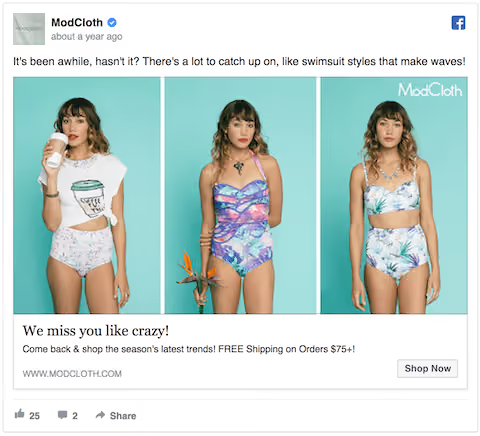
If customers churned due to product dissatisfaction, improvement messaging can outperform discounting.
Instead of pushing a generic promotion, the brand highlights what’s changed — new products, improved formulations, expanded wellness content, and easier subscription management.
Here’s an example that Postpilot put together for Laird Superfood. This was sent as a postcard via direct mail to re-engage shoppers.
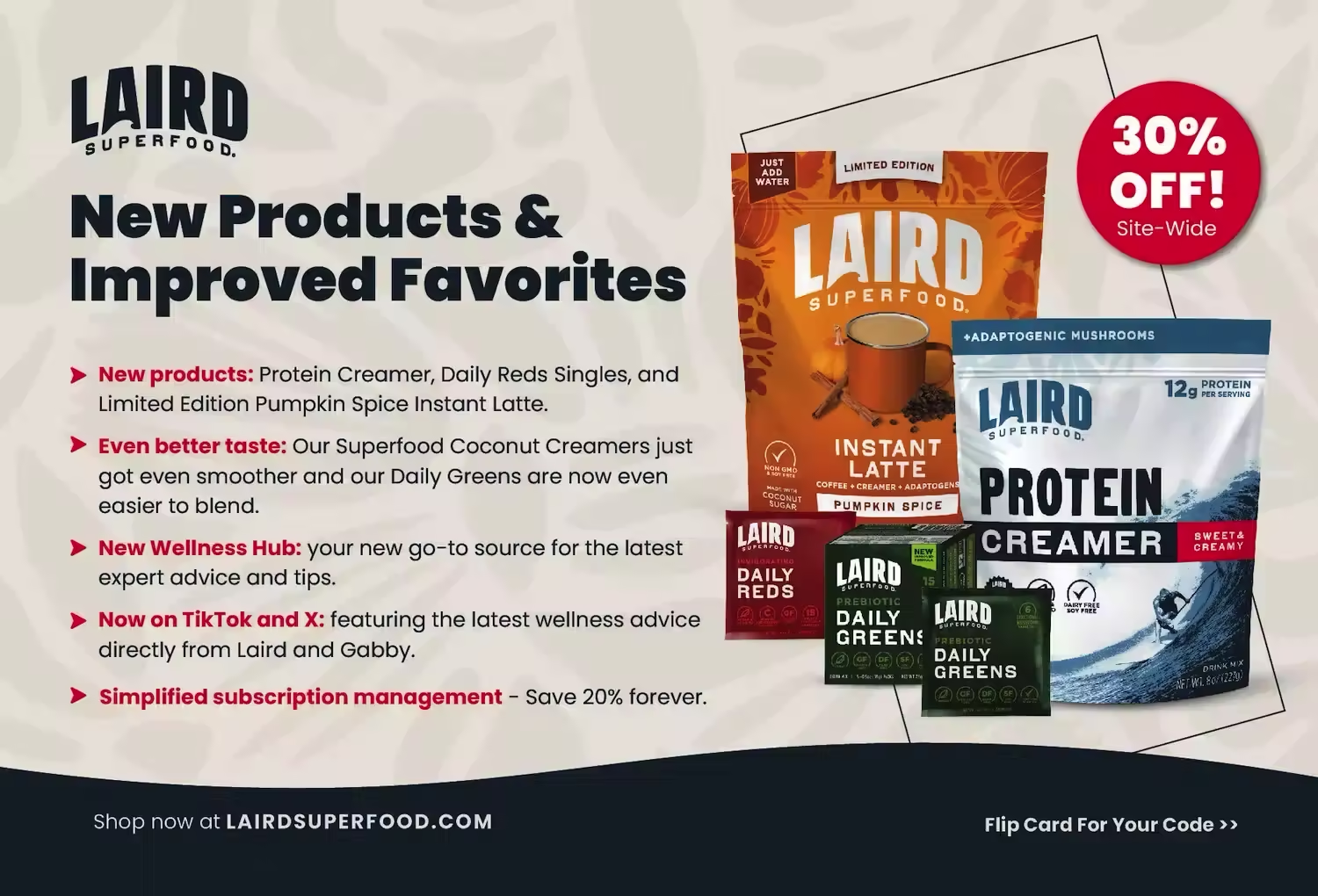
That messaging works particularly well for customers who may have churned due to dissatisfaction. It signals responsiveness. It suggests that feedback was heard. It reframes the brand as dynamic rather than static.
If a customer left because a product didn’t quite deliver, a discount won’t solve that.
Demonstrated improvement might.
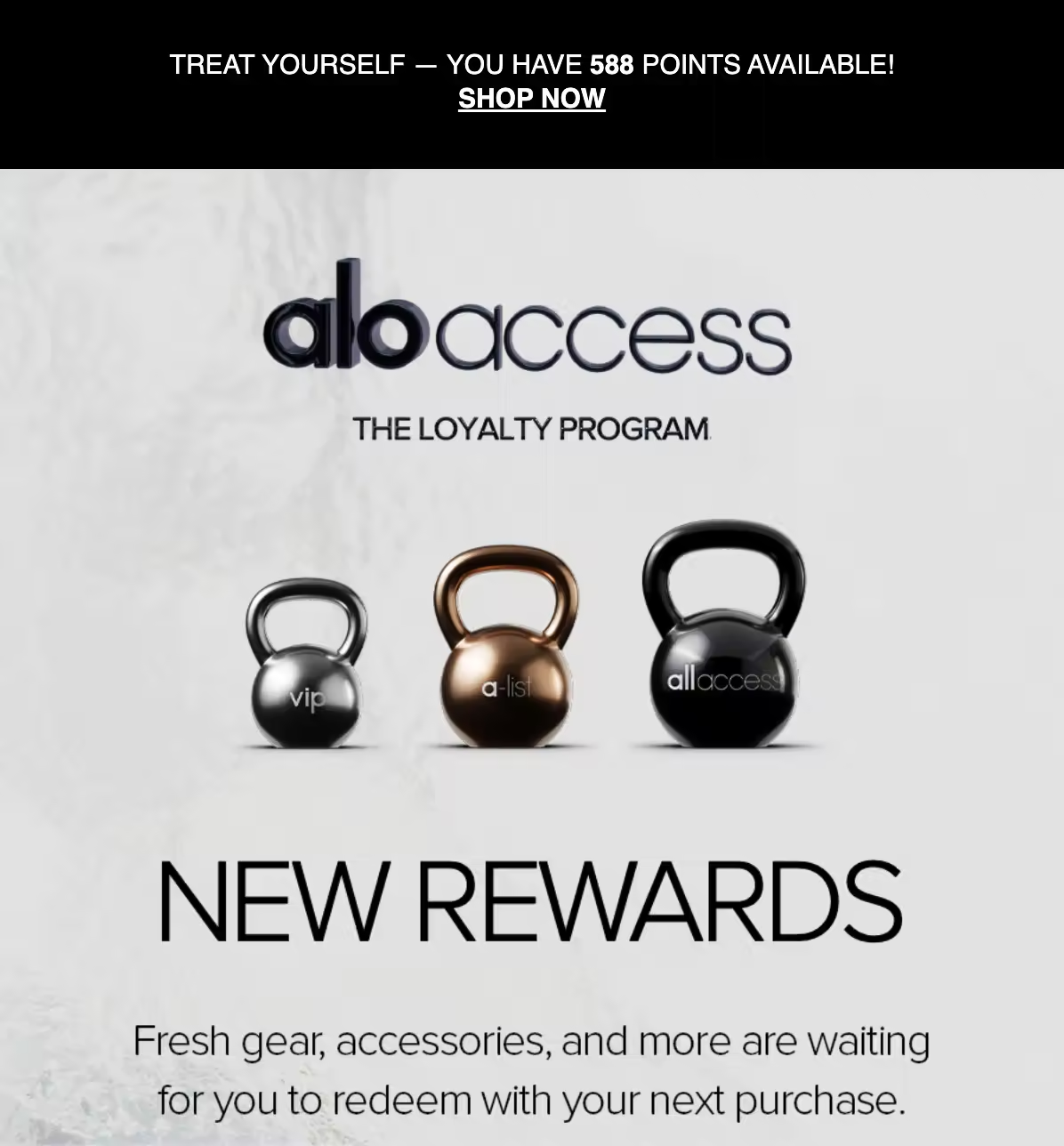
Reminding customers that they already have points available is one of the most margin-protective reactivation tactics. Instead of incentivizing with new discounts, you leverage the value customers have already accumulated.
Messaging like “You have 588 points available” reframes the interaction from spending to redeeming.
It activates earned value psychology and taps into loss aversion at the same time: you have something of value and you don’t want to lose it.
Alo sends these campaigns via email. In the email, they also highlight recent product drops, giving customers a reason to browse and consider using their loyalty points.
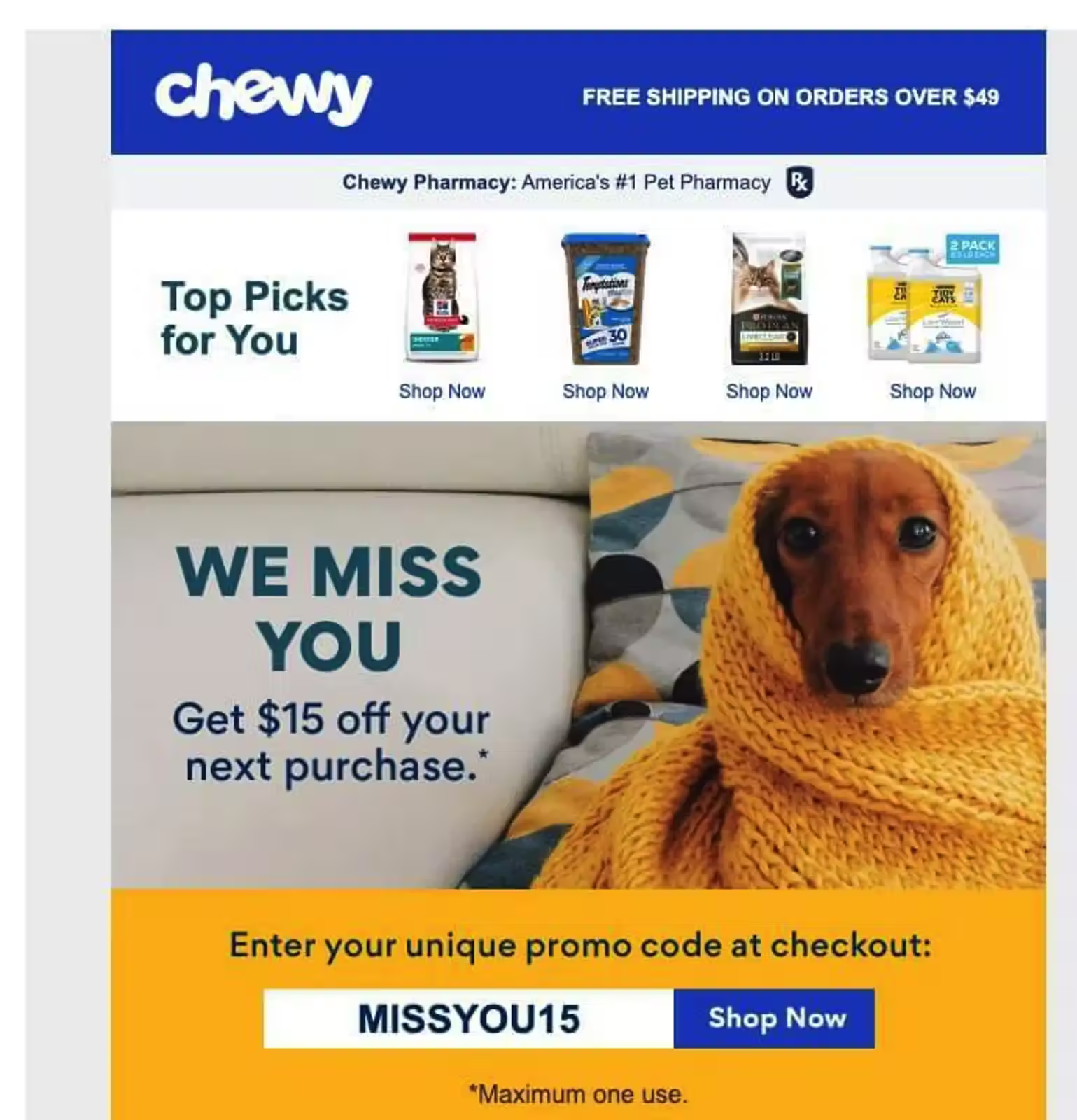
Chewy’s re-engagement email is a reminder that simple creative still works.
The headline is straightforward. The tone is warm. The products featured are personalized. There’s an incentive, but it doesn’t overpower the message.
What makes this effective is balance. It doesn’t guilt the customer. It doesn’t escalate immediately to “Last chance.” It creates an easy re-entry point.
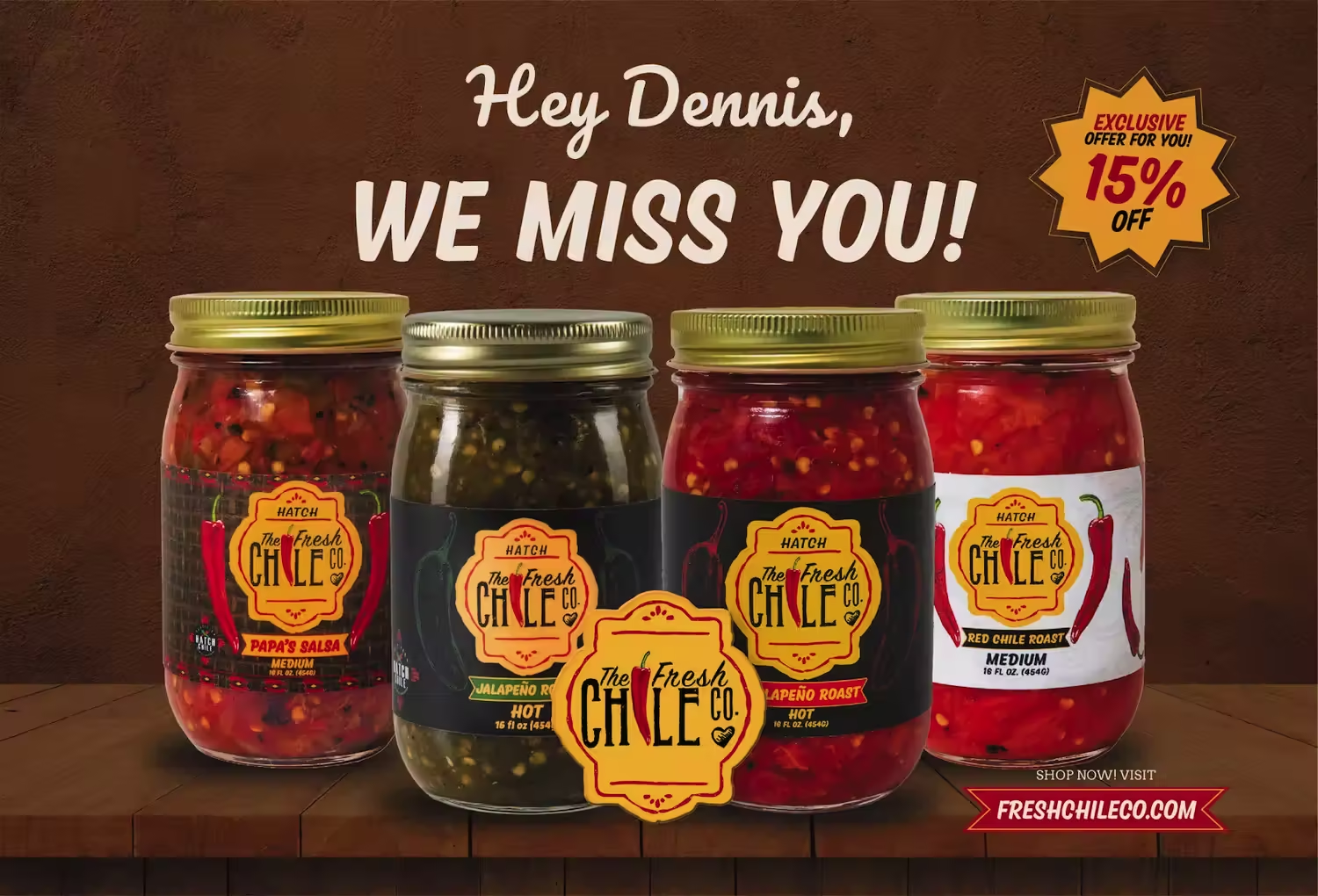
This same concept translates well into direct mail, which you can see below with Fresh Chili Co. When a reactivation message is physically personalized and arrives in someone’s mailbox, it feels deliberate in a way that automated digital messages sometimes don’t.
The creative isn’t flashy. It’s thoughtful. And that’s often enough.
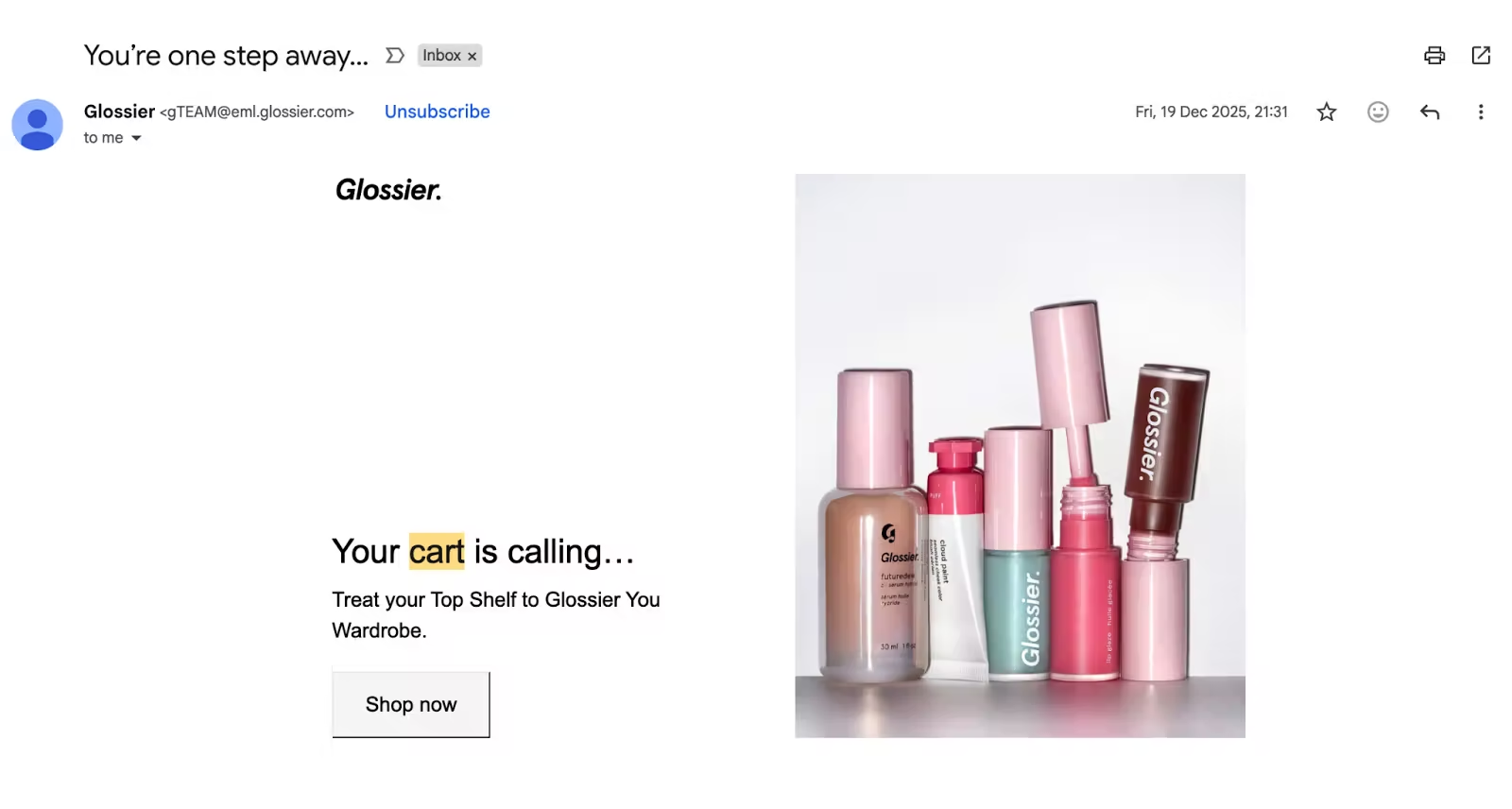
Glossier’s “Your cart is calling…” approach works because it maintains brand voice while gently nudging intent.
It’s a good reminder that cart abandonment isn’t necessarily rejection. It’s often distraction. So you don’t always need to tap into heavy urgency or aggressive discounting.
The best recovery sequences treat it that way. They reinforce interest before escalating incentives, and for higher-value carts, some brands layer in direct mail as a secondary reminder when digital touches go unanswered.
The key is sequencing. Recency first. Escalation only when necessary.
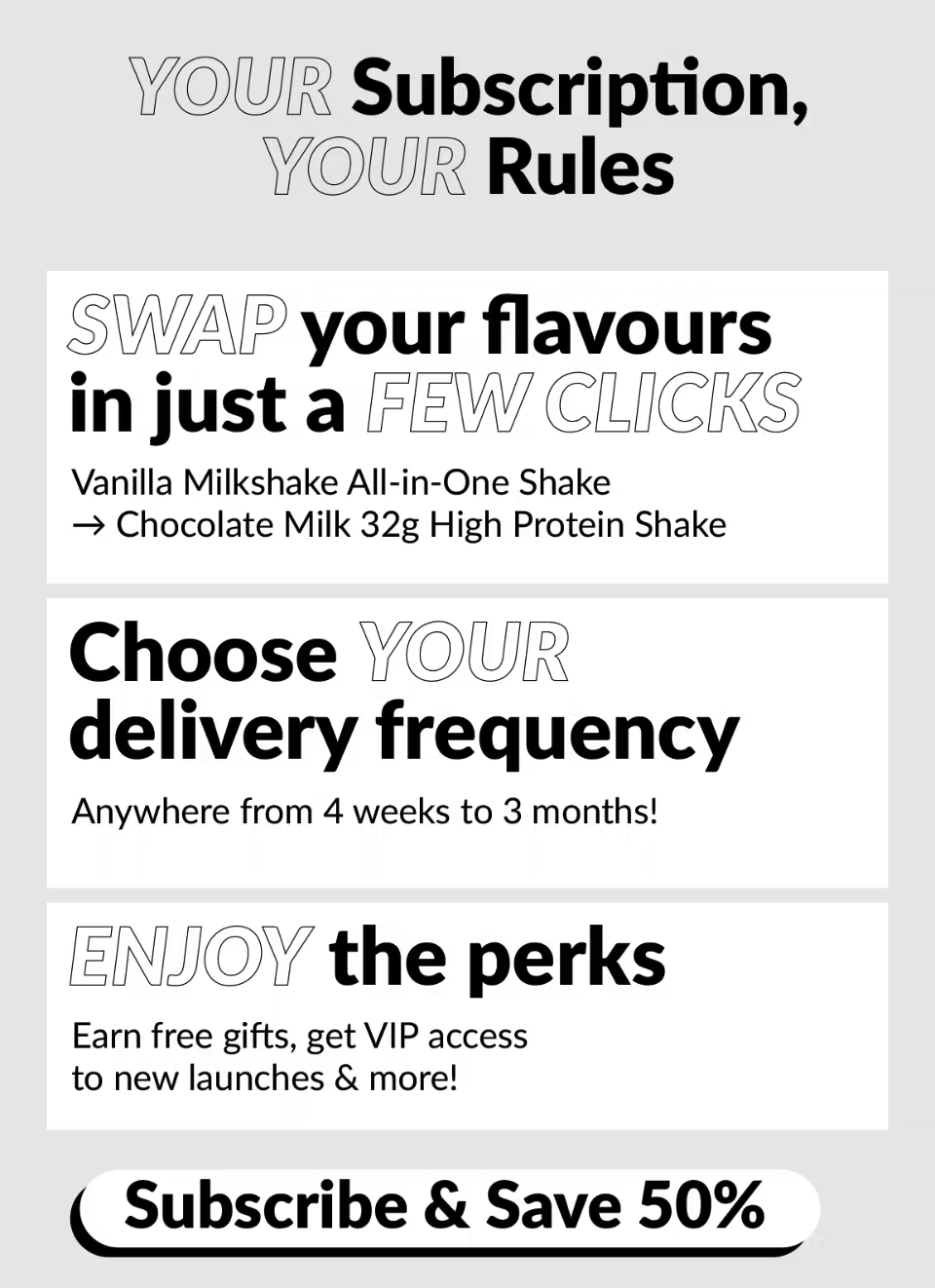
The Good Protein example highlights a common churn driver: friction.
The email doesn’t open with “You have a subscription.” It leads with a compelling, flavor-specific discount for customers who try something new for the first time. That incentive grabs attention immediately and gives customers a reason to re-engage.
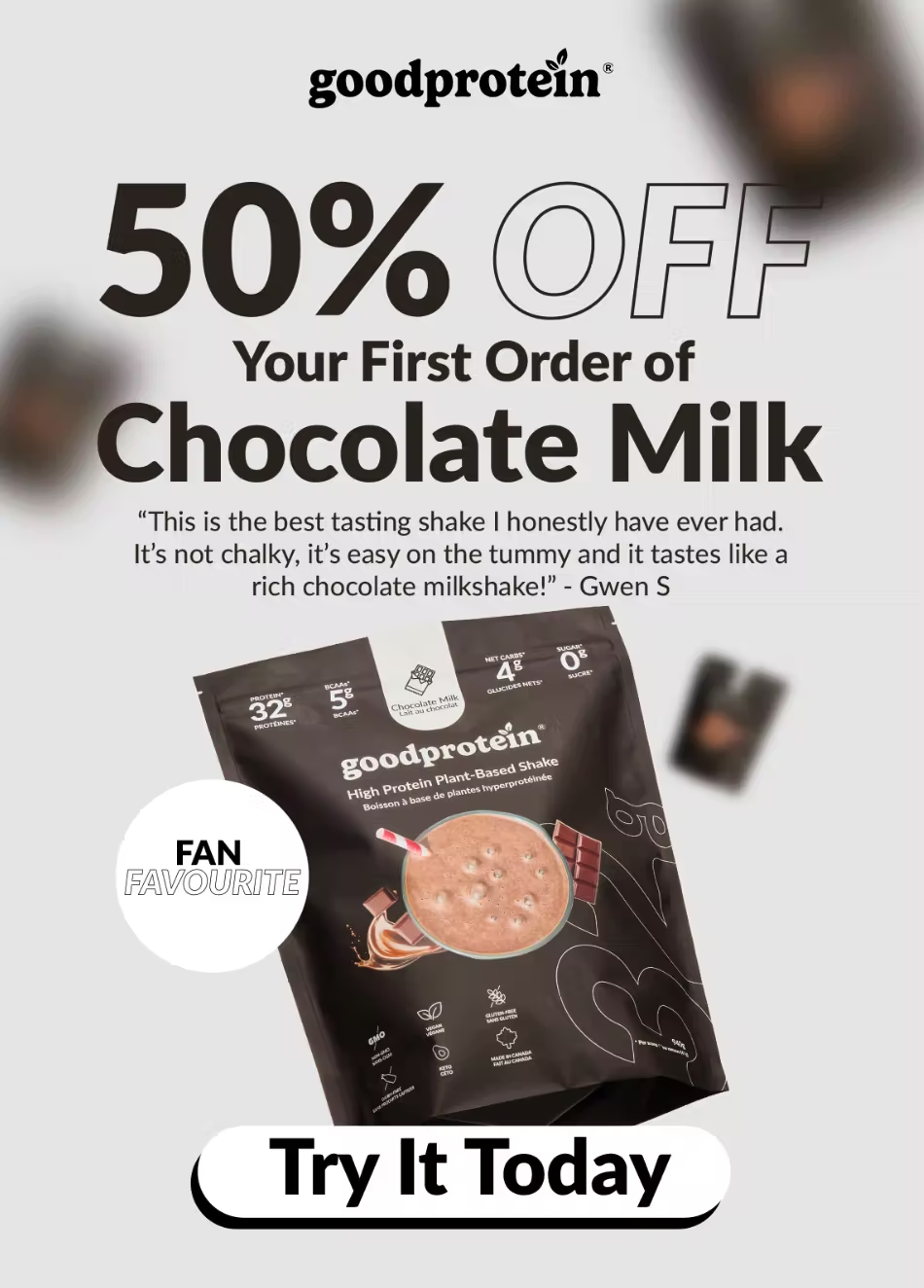
Only after the offer is introduced does the email remind recipients that they already have a subscription, subtly reinforcing the convenience of staying stocked without having to think about it.
The discount lowers friction, while the subscription offer reinforces ease.
The strategy works for two reasons: First, it uses novelty to spark re-engagement. A new flavor feels different from “buy the same thing again.” Second, it reminds customers that there is an easy path forward.
Alo’s anniversary-style “Aloversary” campaign demonstrates another effective angle.
Instead of isolating churned customers with a winback message, the brand creates a broader celebratory moment and invites everyone in. Lapsed customers receive the same energy as active ones.

In this case, reactivation becomes participation in something current, not remediation of something past.
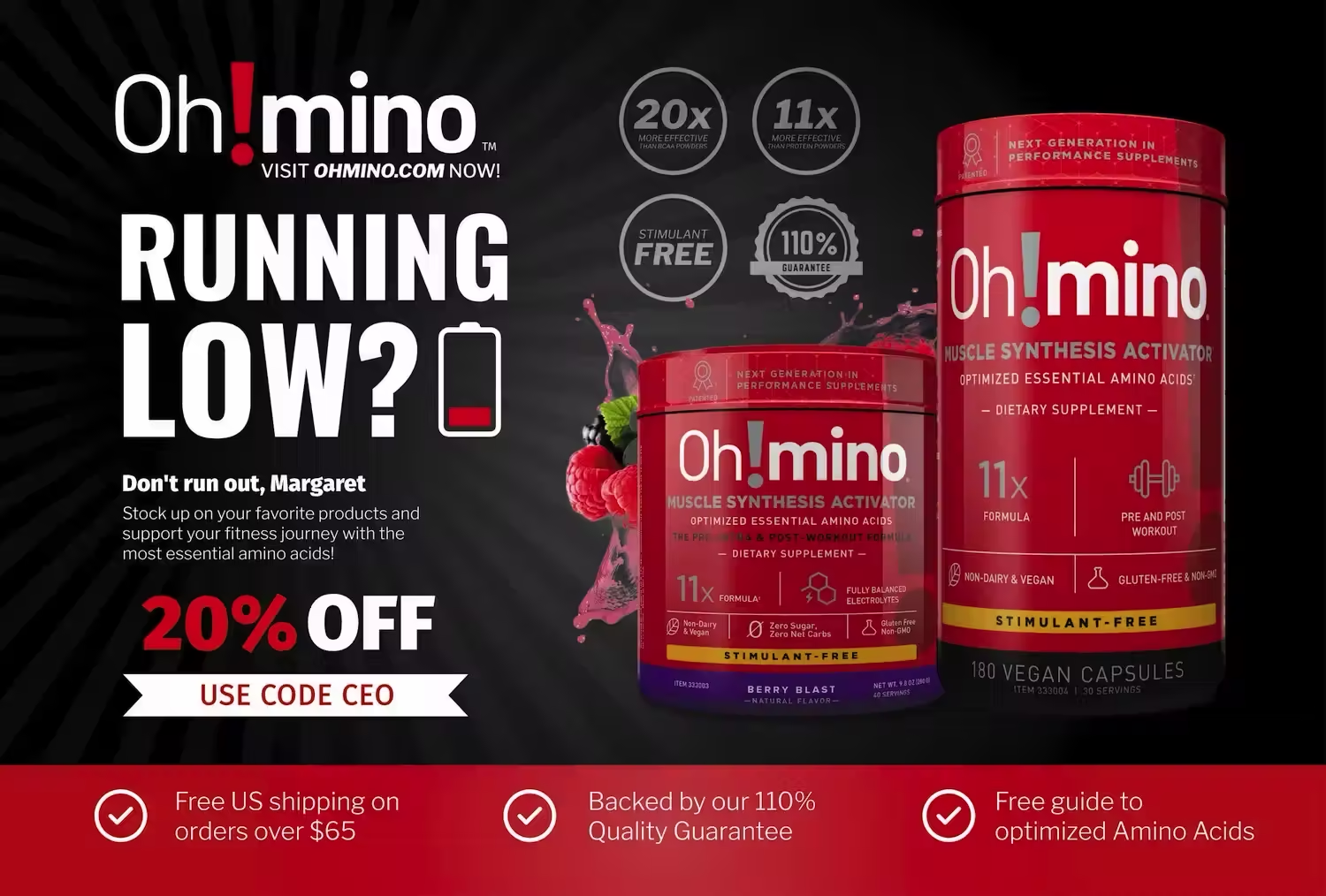
For consumable products, restock reminders like “Running low?” are some of the most efficient reactivation tactics available.
They work because they align with natural usage cycles. The messaging assumes routine and continuity.
There’s no need to introduce new benefits or dramatic storytelling. The customer already understands the value. The brand simply surfaces the right moment to reorder.
And when timed correctly, restock campaigns feel helpful rather than promotional.
And part of building it in is recognizing when digital channels hit a wall.
Email will always matter. Paid ads will always play a role. But when customers suppress, stop opening, or tune out, you need a way to reach them that doesn’t rely on crowded inboxes or unpredictable algorithms.
That’s why direct mail should be built into your strategy.
PostPilot lets you integrate direct mail into your reactivation engine, syncing with Shopify and Klaviyo, targeting high-value segments, triggering postcards at the right moment, and turning what used to be a manual project into an always-on system.
Learn more by booking a demo with our team here.
There’s a moment every brand hits. Revenue dips and repeat purchase softens. When it happens, there’s always someone on the team who says, “Let’s just run a winback campaign.”
It’s a great idea… But usually what follows is a 3-part email campaign that features:
This isn’t the best way to approach customer reactivation.
Why? Not only does steep discounting devalue your brand, but it also doesn’t address the root cause of why someone left in the first place.
The best winbacks remind, reframe, then re-invite.
Let’s break down what that looks like in the wild.
Only 44% of marketers use lifecycle emails. And of that group, only 24% send re-engagement emails.
That means the majority of brands aren’t systematically trying to win customers back. Not because they don’t care about churn, but because they treat it reactively instead of systematically.
Reactivation, at its core, is any effort to regain a lost user or customer. That could be:
They’re people who’ve already shown intent. They’ve interacted with your brand in some meaningful way. That prior engagement makes them fundamentally different from net-new prospects.
And the truth? It’s almost always more efficient to re-engage someone who already knows you than to convince someone entirely new.
Reactivation doesn’t have to live inside one channel, either. It can show up through email, push notifications, in-app messaging, paid ads, and/or direct mail.
The question isn’t whether customers will churn.
Because they will.
The question is whether you have a system designed to bring them back. Here’s a customer reactivation strategy to get you started:
Before building flows or dashboards, start with customer insight.
Reactivation should be informed by real churn reasons, not assumptions. That insight can come from:
Did customers leave because the product didn’t meet expectations? Because pricing felt high? Because onboarding was confusing? Because a competitor offered better flexibility?
Segmenting customers by churn reason allows you to tailor messaging and incentives. If churn is seasonal, your messaging should reframe usage.
If dissatisfaction drove churn, improvement messaging may outperform discounting.
It’s tempting to try to fix everything at once. A better approach is to focus on the segments most likely to generate incremental ROI.
That often includes:
You don’t need a perfect system to start.
An 80% solution launched quickly and refined over time will outperform a flawless strategy that never ships.
Before you attempt to reactivate anyone, make sure your data is reliable.
That includes:
If you can’t clearly identify who is inactive and why, you risk sending irrelevant messaging that accelerates disengagement.
Reactivation can happen across multiple channels: Email, SMS, Direct mail—there isn’t just one answer.
The most common mistake many brands make is relying exclusively on one.
Email is powerful, but suppressed customers are unreachable. Paid ads can scale, but without segmentation they become expensive reminders. Direct mail, while often underused, can reach high-value customers who have disengaged digitally.
Channel selection should align with customer value, churn reason, and timing.
Timing influences performance more than most creative tweaks.
For example, launching a VIP reactivation campaign just before peak season can:
A strong rule of thumb is to leverage RFM segmentation. Even in the AI era, RFM remains an incredibly powerful segmentation strategy that can inform when you can time your winbacks.
Effective reactivation answers the implicit question: “Why now?”
Reactivation creative isn’t the same as acquisition creative.
Acquisition convinces someone to try you. Reactivation reminds someone why they liked you, or gives them a reason to reconsider.
Before writing a single headline, anchor your creative in the churn reason. Every message should answer one of these questions:
If your creative doesn’t answer at least one of those, it’s probably just a discount in disguise.
A reactivation campaign isn’t “done” when it launches. It’s done when it’s either performing… or you’ve learned enough to change it.
The cleanest way to manage this is to treat reactivation like a portfolio:
Your goal is to build a feedback loop that gets tighter every cycle.
The brands that get the most out of reactivation don’t treat it like a seasonal initiative or a manual scramble.
They build it into their lifecycle so it runs consistently, improves over time, and doesn’t rely on someone remembering to “do winbacks.”
That looks like a few key shifts:
That’s when reactivation stops being a rescue mission and becomes part of a healthier lifecycle engine.
The strongest campaigns increase interaction, reinforce belonging, and re-establish momentum.
Below are several strategies that do exactly that.
No matter how robust your email program is, some customers will disengage. Once they’re suppressed, email is no longer an option.
This is where direct mail becomes strategically valuable.
One effective approach is identifying suppressed customers with two or more lifetime purchases and sending them a personalized postcard.
Why this works:
Grande Cosmetics is a strong example of this strategy in action. Facing declining paid performance and crowded inboxes, the beauty brand used postcards to reach VIP customers right when they were due for a refill of their $68 lash serum.
By segmenting customers who hadn’t purchased in three months and delivering a bold, on-brand 20% offer via direct mail, they generated $276,600 from a single VIP campaign and $96,000 across their initial winback sends from coupon codes alone.
Direct mail can also be layered into abandonment flows. For example:
This sequencing balances recency with channel diversification, protecting margins while recovering revenue.
Generic winback ads underperform because they ignore context.
Segmenting audiences based on churn reason allows you to seriously tailor your messaging. If someone left because product selection felt limited, showcase what’s new. If pricing drove churn, highlight value bundles or shipping incentives.
For example, ads that say, “It’s been awhile… there’s a lot to catch up on,” assume familiarity and shared history. That subtle shift positions the brand as continuing a relationship rather than starting a new one.
Contextual relevance increases re-engagement.
If customers churned due to product dissatisfaction, improvement messaging can outperform discounting.
Instead of pushing a generic promotion, the brand highlights what’s changed — new products, improved formulations, expanded wellness content, and easier subscription management.
Here’s an example that Postpilot put together for Laird Superfood. This was sent as a postcard via direct mail to re-engage shoppers.
That messaging works particularly well for customers who may have churned due to dissatisfaction. It signals responsiveness. It suggests that feedback was heard. It reframes the brand as dynamic rather than static.
If a customer left because a product didn’t quite deliver, a discount won’t solve that.
Demonstrated improvement might.
Reminding customers that they already have points available is one of the most margin-protective reactivation tactics. Instead of incentivizing with new discounts, you leverage the value customers have already accumulated.
Messaging like “You have 588 points available” reframes the interaction from spending to redeeming.
It activates earned value psychology and taps into loss aversion at the same time: you have something of value and you don’t want to lose it.
Alo sends these campaigns via email. In the email, they also highlight recent product drops, giving customers a reason to browse and consider using their loyalty points.
Chewy’s re-engagement email is a reminder that simple creative still works.
The headline is straightforward. The tone is warm. The products featured are personalized. There’s an incentive, but it doesn’t overpower the message.
What makes this effective is balance. It doesn’t guilt the customer. It doesn’t escalate immediately to “Last chance.” It creates an easy re-entry point.
This same concept translates well into direct mail, which you can see below with Fresh Chili Co. When a reactivation message is physically personalized and arrives in someone’s mailbox, it feels deliberate in a way that automated digital messages sometimes don’t.
The creative isn’t flashy. It’s thoughtful. And that’s often enough.
Glossier’s “Your cart is calling…” approach works because it maintains brand voice while gently nudging intent.
It’s a good reminder that cart abandonment isn’t necessarily rejection. It’s often distraction. So you don’t always need to tap into heavy urgency or aggressive discounting.
The best recovery sequences treat it that way. They reinforce interest before escalating incentives, and for higher-value carts, some brands layer in direct mail as a secondary reminder when digital touches go unanswered.
The key is sequencing. Recency first. Escalation only when necessary.
The Good Protein example highlights a common churn driver: friction.
The email doesn’t open with “You have a subscription.” It leads with a compelling, flavor-specific discount for customers who try something new for the first time. That incentive grabs attention immediately and gives customers a reason to re-engage.
Only after the offer is introduced does the email remind recipients that they already have a subscription, subtly reinforcing the convenience of staying stocked without having to think about it.
The discount lowers friction, while the subscription offer reinforces ease.
The strategy works for two reasons: First, it uses novelty to spark re-engagement. A new flavor feels different from “buy the same thing again.” Second, it reminds customers that there is an easy path forward.
Alo’s anniversary-style “Aloversary” campaign demonstrates another effective angle.
Instead of isolating churned customers with a winback message, the brand creates a broader celebratory moment and invites everyone in. Lapsed customers receive the same energy as active ones.
In this case, reactivation becomes participation in something current, not remediation of something past.
For consumable products, restock reminders like “Running low?” are some of the most efficient reactivation tactics available.
They work because they align with natural usage cycles. The messaging assumes routine and continuity.
There’s no need to introduce new benefits or dramatic storytelling. The customer already understands the value. The brand simply surfaces the right moment to reorder.
And when timed correctly, restock campaigns feel helpful rather than promotional.
And part of building it in is recognizing when digital channels hit a wall.
Email will always matter. Paid ads will always play a role. But when customers suppress, stop opening, or tune out, you need a way to reach them that doesn’t rely on crowded inboxes or unpredictable algorithms.
That’s why direct mail should be built into your strategy.
PostPilot lets you integrate direct mail into your reactivation engine, syncing with Shopify and Klaviyo, targeting high-value segments, triggering postcards at the right moment, and turning what used to be a manual project into an always-on system.
Learn more by booking a demo with our team here.

Join thousands of ecommerce brands using PostPilot to acquire more customers & keep them coming back again (and again).
No contracts. No minimums.