
October 16, 2026
Ready to increase your revenue?
Join thousands of ecommerce brands using PostPilot to acquire more customers & keep them coming back again (and again).
No contracts. No minimums.


Great targeting with direct mail isn’t some weird, alien thing.
It’s like great targeting in any other element of your marketing.
Ultimately, better data tends to bring better results, and the more dialed-in your campaigns are, the better or more predictably stronger your results will be.
The brands crushing it with direct mail today are running full-funnel programs where targeting shifts based on intent, behavior, and lifecycle stage—and they’re tying direct mail to the rest of their stack to dial in messaging even further.
This guide breaks down exactly how to do that with real success stories from multiple industries.
Most direct mail underperforms for one simple reason. Every recipient is treated the same.
A prospect, a cart abandoner, and a VIP customer should not receive the same message or be targeted the same way.
High-performing direct mail programs answer three questions before anything is mailed:
When targeting aligns with these answers, ROAS improves, creative performs better, and programs scale more cleanly.
Prospecting with direct mail has undergone a revolution in recent years.
Legacy direct mail platforms still retain the old ways (that sounds a hell of a lot more romantic than it actually is): effectively, a strugglesome system of third-party vendors.
More on that.
The old way to do direct mail prospecting is a disjointed system involving data brokers, printers, and design agencies for every prospecting drop.
The timeline to launch is months—audience building alone takes weeks.
The audience isn’t up-to-date, either.
Plus, your team will inevitably get way more involved than originally planned.
And when all is said and done, tracking performance is a nightmare and a half.
Results arrive slowly (generally 3–4 months after catalogs arrive in homes). And by the time you’ve analyzed the data (in spreadsheets), the spend for your next drop is already locked in.
(Don't believe us? Read what Cozy Earth's in-house direct mail manager told us.)
Modern direct mail prospecting uses lookalike audiences modeled on real customers.
AI evaluates hundreds of attributes to identify households that behave like buyers rather than households that simply share a ZIP code.
This approach allows brands to launch infinitely faster, build audiences in HOURS, scale proven segments with confidence, and track all results as they come in.
Basically:
The way it should be.
Kindred Bravely expanded from retention into full-funnel direct mail using AI-powered prospecting, and rather than a weekslong process to get audiences built and locked in, it only took a few hours.
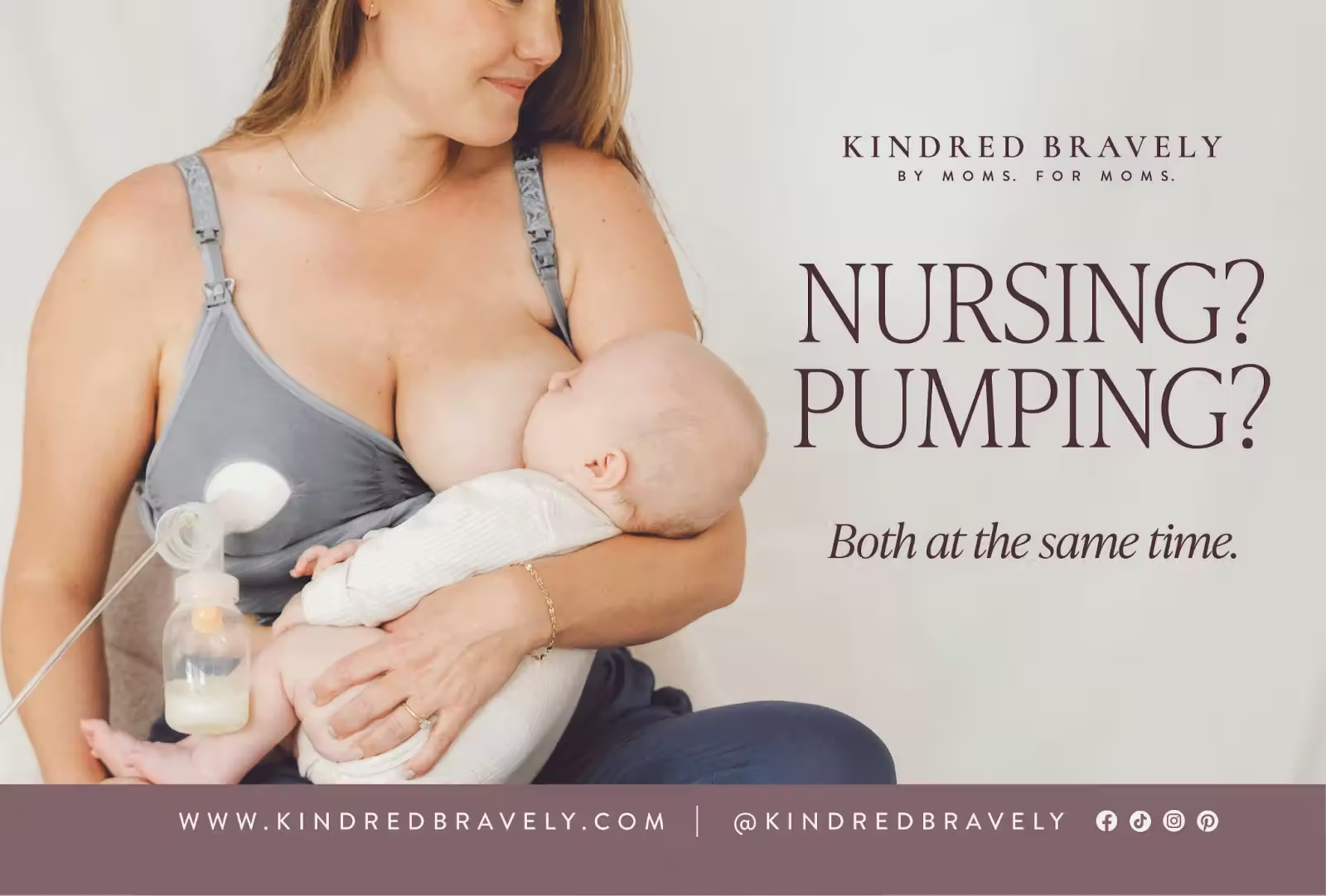
Results included:
These results were driven by audience quality rather than creative experimentation.
Bottom line…
Prospecting works when audiences resemble your best customers.
Retargeting is where direct mail consistently delivers strong returns when sequenced correctly.
Email and SMS should always run first.
When someone subscribes, clicks, adds to cart, starts their checkout, or completes a Klaviyo flow without purchasing, direct mail becomes the next logical step.
Welcome flow non-buyers
Subscribers who finish a welcome series without converting remain warm. A postcard creates a second chance to convert without adding inbox noise.
Abandoned cart or checkout after flows end
Mail triggers after digital reminders stop, allowing the postcard to arrive when attention is no longer divided.
Anonymous site visitors
High-intent visitors often leave without subscribing. Retargeting those visitors unlocks revenue most brands never reach.
Barker Beds layered direct mail into their retargeting strategy:

Results crushed because mail followed demonstrated intent.
It's that simple.
Retention is where targeting either compounds results or quietly erodes them.
The difference is how clearly you define who someone is and when they are most likely to buy again.
That is where RFM comes in. Here’s how we think about it:
Together, these inputs create retention segments precise enough to automate and flexible enough to scale.
RFM segments should be defined with explicit thresholds rather than abstract labels.
Below are examples of how high-performing brands commonly structure retention targeting.
This segment has the highest upside because behavior has already been validated once.
A common RFM definition:
What this tells you:
How to target them with direct mail:
This segment often produces some of the strongest incremental returns.
Repeat buyers already understand the brand. The goal is to keep the buying pattern intact.
A typical RFM definition:
What this tells you:
How to target them with direct mail:
For many brands, this segment drives the most predictable retention revenue.
VIP customers require a different approach. Over-discounting erodes margin and brand equity.
A common VIP RFM definition:
What this tells you:
How to target them with direct mail:
This is where direct mail often outperforms digital channels because it feels intentional rather than automated.
Diane von Furstenberg used RFM-based winback targeting across buyer segments and achieved 11x+ ROAS on retention campaigns

Performance improved because messaging aligned with lifecycle stage.
GOOD AMERICAN’s targeted winback postcards generated:
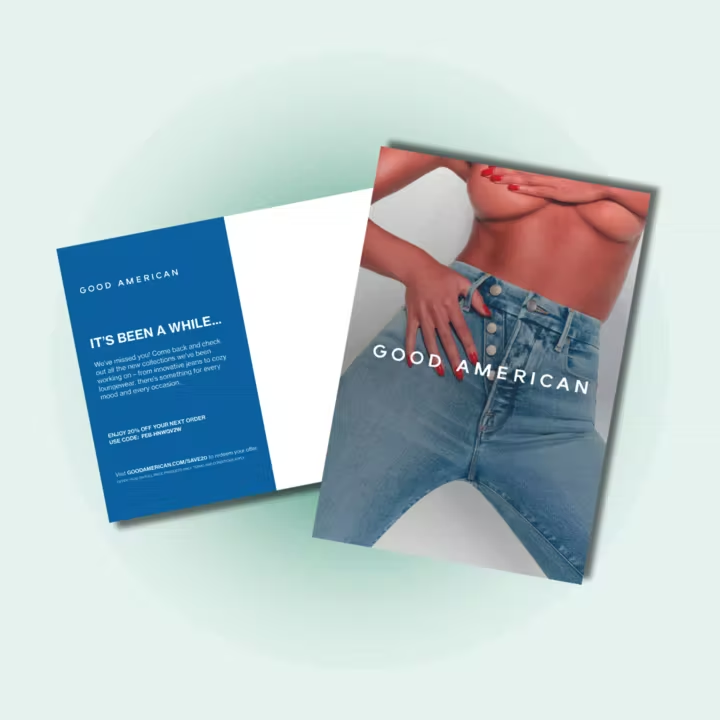
Revenue was driven by disciplined segmentation and timing—these postcards had messaging specifically mentioning "It's been a. while...", and these postcards worked to win back customers who hadn't repurchased in half a year.
Targeting determines who receives the postcard. Personalization determines whether the postcard converts.
High-performing personalization includes:
When these elements align, direct mail feels intensely personalized and relevant.
If you want to run AI-powered prospecting, Klaviyo-triggered retargeting, and RFM-based retention grounded in real customer behavior, PostPilot makes it possible.
The platform supports full-funnel direct mail for Shopify brands with advanced targeting, deep personalization, and incremental measurement built in.
How fast can I launch a targeted direct mail campaign?
Programmatic direct mail campaigns typically launch in about one week for postcards and trifolds.
Can I retarget people who only gave me an email address?
Yes. Non-buyers can be retargeted with direct mail even without a physical address.
Should direct mail replace email or SMS?
No. Direct mail complements digital channels and performs best after automated flows finish.
How do I choose the right timing for retention mail?
Time between orders data provides natural reorder checkpoints.
How do I know my targeting is incremental?
Holdout testing and lift analysis show true impact.
Great targeting with direct mail isn’t some weird, alien thing.
It’s like great targeting in any other element of your marketing.
Ultimately, better data tends to bring better results, and the more dialed-in your campaigns are, the better or more predictably stronger your results will be.
The brands crushing it with direct mail today are running full-funnel programs where targeting shifts based on intent, behavior, and lifecycle stage—and they’re tying direct mail to the rest of their stack to dial in messaging even further.
This guide breaks down exactly how to do that with real success stories from multiple industries.
Most direct mail underperforms for one simple reason. Every recipient is treated the same.
A prospect, a cart abandoner, and a VIP customer should not receive the same message or be targeted the same way.
High-performing direct mail programs answer three questions before anything is mailed:
When targeting aligns with these answers, ROAS improves, creative performs better, and programs scale more cleanly.
Prospecting with direct mail has undergone a revolution in recent years.
Legacy direct mail platforms still retain the old ways (that sounds a hell of a lot more romantic than it actually is): effectively, a strugglesome system of third-party vendors.
More on that.
The old way to do direct mail prospecting is a disjointed system involving data brokers, printers, and design agencies for every prospecting drop.
The timeline to launch is months—audience building alone takes weeks.
The audience isn’t up-to-date, either.
Plus, your team will inevitably get way more involved than originally planned.
And when all is said and done, tracking performance is a nightmare and a half.
Results arrive slowly (generally 3–4 months after catalogs arrive in homes). And by the time you’ve analyzed the data (in spreadsheets), the spend for your next drop is already locked in.
(Don't believe us? Read what Cozy Earth's in-house direct mail manager told us.)
Modern direct mail prospecting uses lookalike audiences modeled on real customers.
AI evaluates hundreds of attributes to identify households that behave like buyers rather than households that simply share a ZIP code.
This approach allows brands to launch infinitely faster, build audiences in HOURS, scale proven segments with confidence, and track all results as they come in.
Basically:
The way it should be.
Kindred Bravely expanded from retention into full-funnel direct mail using AI-powered prospecting, and rather than a weekslong process to get audiences built and locked in, it only took a few hours.
Results included:
These results were driven by audience quality rather than creative experimentation.
Bottom line…
Prospecting works when audiences resemble your best customers.
Retargeting is where direct mail consistently delivers strong returns when sequenced correctly.
Email and SMS should always run first.
When someone subscribes, clicks, adds to cart, starts their checkout, or completes a Klaviyo flow without purchasing, direct mail becomes the next logical step.
Welcome flow non-buyers
Subscribers who finish a welcome series without converting remain warm. A postcard creates a second chance to convert without adding inbox noise.
Abandoned cart or checkout after flows end
Mail triggers after digital reminders stop, allowing the postcard to arrive when attention is no longer divided.
Anonymous site visitors
High-intent visitors often leave without subscribing. Retargeting those visitors unlocks revenue most brands never reach.
Barker Beds layered direct mail into their retargeting strategy:
Results crushed because mail followed demonstrated intent.
It's that simple.
Retention is where targeting either compounds results or quietly erodes them.
The difference is how clearly you define who someone is and when they are most likely to buy again.
That is where RFM comes in. Here’s how we think about it:
Together, these inputs create retention segments precise enough to automate and flexible enough to scale.
RFM segments should be defined with explicit thresholds rather than abstract labels.
Below are examples of how high-performing brands commonly structure retention targeting.
This segment has the highest upside because behavior has already been validated once.
A common RFM definition:
What this tells you:
How to target them with direct mail:
This segment often produces some of the strongest incremental returns.
Repeat buyers already understand the brand. The goal is to keep the buying pattern intact.
A typical RFM definition:
What this tells you:
How to target them with direct mail:
For many brands, this segment drives the most predictable retention revenue.
VIP customers require a different approach. Over-discounting erodes margin and brand equity.
A common VIP RFM definition:
What this tells you:
How to target them with direct mail:
This is where direct mail often outperforms digital channels because it feels intentional rather than automated.
Diane von Furstenberg used RFM-based winback targeting across buyer segments and achieved 11x+ ROAS on retention campaigns
Performance improved because messaging aligned with lifecycle stage.
GOOD AMERICAN’s targeted winback postcards generated:
Revenue was driven by disciplined segmentation and timing—these postcards had messaging specifically mentioning "It's been a. while...", and these postcards worked to win back customers who hadn't repurchased in half a year.
Targeting determines who receives the postcard. Personalization determines whether the postcard converts.
High-performing personalization includes:
When these elements align, direct mail feels intensely personalized and relevant.
If you want to run AI-powered prospecting, Klaviyo-triggered retargeting, and RFM-based retention grounded in real customer behavior, PostPilot makes it possible.
The platform supports full-funnel direct mail for Shopify brands with advanced targeting, deep personalization, and incremental measurement built in.
How fast can I launch a targeted direct mail campaign?
Programmatic direct mail campaigns typically launch in about one week for postcards and trifolds.
Can I retarget people who only gave me an email address?
Yes. Non-buyers can be retargeted with direct mail even without a physical address.
Should direct mail replace email or SMS?
No. Direct mail complements digital channels and performs best after automated flows finish.
How do I choose the right timing for retention mail?
Time between orders data provides natural reorder checkpoints.
How do I know my targeting is incremental?
Holdout testing and lift analysis show true impact.

Join thousands of ecommerce brands using PostPilot to acquire more customers & keep them coming back again (and again).
No contracts. No minimums.